How Difficult Is Gorilla Trekking in Bwindi?
October 12, 2026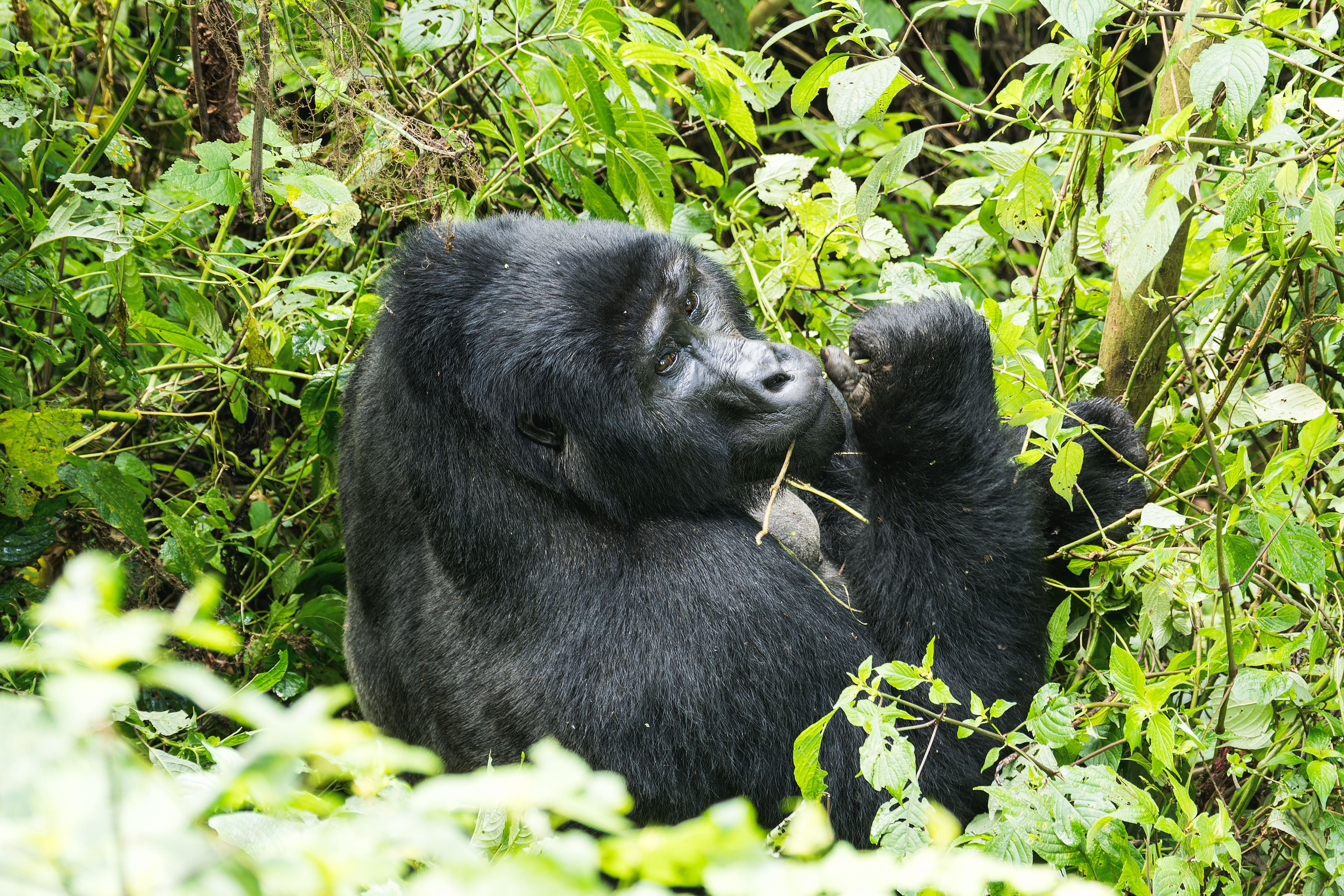
What Happens on the Day of Gorilla Trekking in Uganda?
October 12, 2026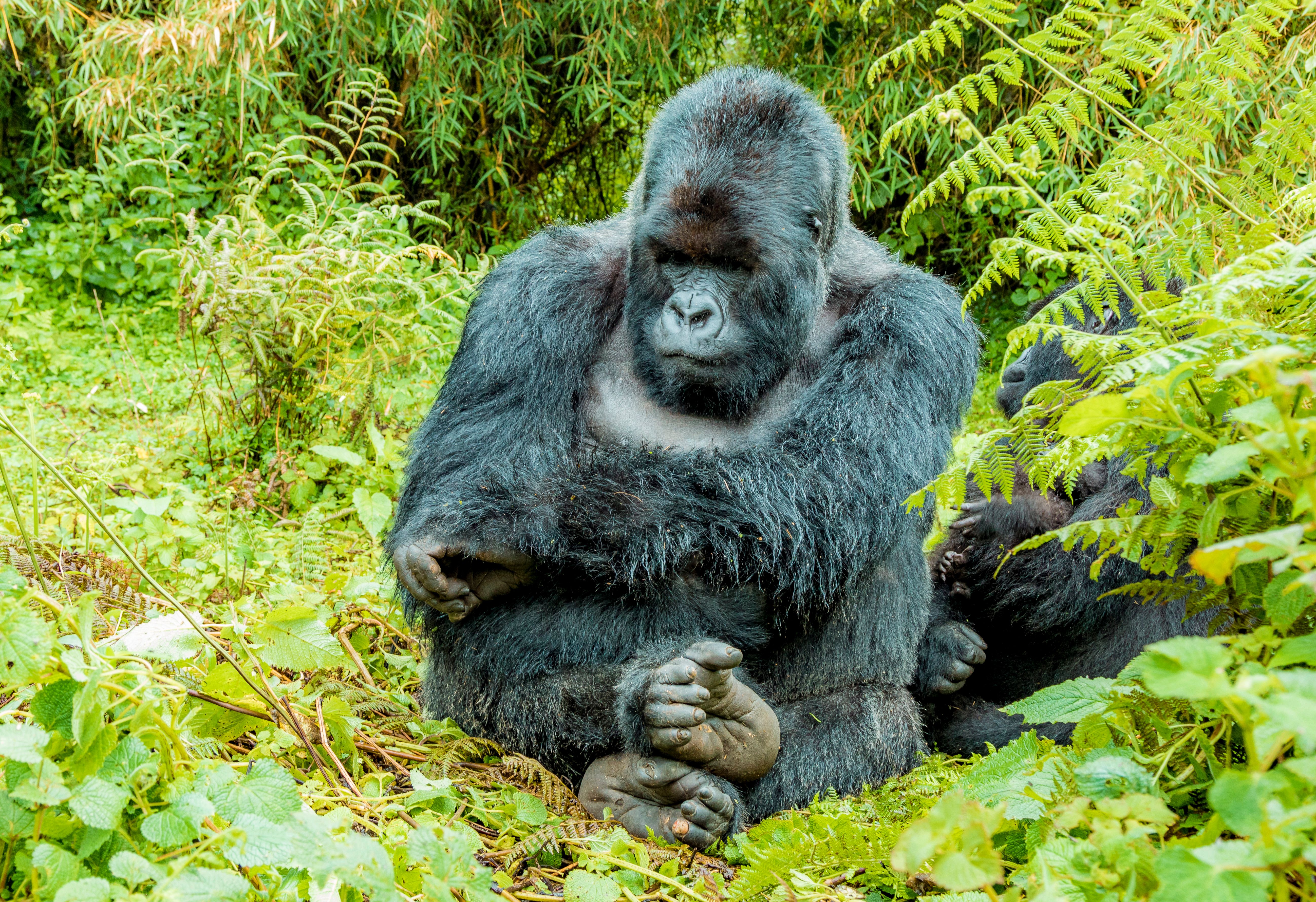
Gorilla trekking in Uganda takes approximately 2 to 7 hours for the forest trek, although some excursions can last longer depending on the location and movement of the mountain gorillas. The complete experience usually occupies most of the morning and may extend into the afternoon. This includes the morning briefing, the hike through the forest, the time spent observing the gorillas, and the return journey to the starting point.
For travellers planning a Uganda safari, understanding how long gorilla trekking takes is essential when choosing accommodation, arranging transportation, selecting a trekking sector, and deciding how many days to spend in southwestern Uganda. Although the highlight is the encounter with a mountain gorilla family, the experience involves much more than the hour spent observing these remarkable primates.
Uganda offers gorilla trekking in Bwindi Impenetrable National Park and Mgahinga Gorilla National Park. Both destinations provide opportunities to encounter endangered mountain gorillas in their natural habitat, but the duration of each trek varies with terrain, weather conditions, gorilla movements, and the location of the assigned family.
This guide explains how long gorilla trekking takes in Uganda, what happens throughout the day, which factors influence trekking time, how the different trekking sectors compare, and how to plan a comfortable and rewarding gorilla trekking safari.
How Many Hours Does Gorilla Trekking Take in Uganda?
A standard gorilla trekking excursion in Uganda generally takes between 2 and 7 hours of hiking and observation, with the possibility of a longer day when gorillas are difficult to locate. The Uganda Wildlife Authority identifies 2 to 7 hours as a typical activity duration, while its park guidance recognises that tracking can extend from a few hours to a full day. <escape></escape>
The actual duration depends largely on how far the gorilla family has moved through the forest since its previous known location. Some families may be found relatively close to the trailhead, allowing visitors to reach them after a short hike. Others may travel deeper into the forest, requiring several hours of walking through steep slopes, dense vegetation, and muddy trails.
The time spent with the gorillas is different from the time spent searching for them. During standard gorilla trekking in Uganda, visitors are permitted to spend one hour observing the habituated gorilla family once it has been located. The remaining time is used for the briefing, hiking to the gorillas, and returning to the starting point.
Travellers should therefore distinguish between the duration of the gorilla encounter and the duration of the entire trekking excursion. The one-hour encounter is a regulated part of the activity, while the overall trekking time varies from one day to another.
For practical planning, it is advisable to reserve the entire day for gorilla trekking rather than scheduling another major activity immediately afterwards. Even when the hike is relatively short, the early start, changing forest conditions, and return journey make a flexible schedule the most reliable option.
What Time Does Gorilla Trekking Start in Uganda?
Gorilla trekking in Uganda normally starts early in the morning. Visitors typically report to their assigned park headquarters or trekking sector at around 7:30 a.m. for registration and briefing, followed by the allocation of gorilla families and guides. The forest trek commonly begins around 8:00 to 8:30 a.m., although the precise schedule can vary by location and park arrangements.
The early start gives visitors sufficient time to search for the gorillas and complete the experience without unnecessary pressure. It also allows the ranger guides to coordinate with trackers who monitor the gorilla families’ movements.
Travellers should arrange to spend the previous night close to the sector where their permits are booked. For example, visitors trekking in the Buhoma sector should ideally stay around Buhoma, while those assigned to Rushaga or Nkuringo should consider accommodation in southern Bwindi.
Staying near the correct trailhead reduces the risk of arriving late and avoids a tiring early-morning drive along winding roads. Bwindi’s trekking sectors are separated by mountainous terrain, and travelling between them can take considerably longer than the distance on a map might suggest.
A well-organised gorilla trekking safari therefore begins before the actual trekking day. Choosing the right lodge, confirming the permit location, and arranging reliable transport help make the morning more comfortable.
A Detailed Timeline of a Gorilla Trekking Day in Uganda
Understanding the daily schedule helps travellers prepare for the physical demands of gorilla trekking and estimate when they are likely to return to their lodge.
7:00 a.m. to 8:30 a.m.: Arrival, Registration, and Briefing
The morning begins with breakfast at the lodge before travelling to the designated gorilla trekking headquarters. Visitors register their permits, meet the ranger guides, and receive instructions on the rules governing the activity.
The briefing explains how to behave around mountain gorillas, maintain the required distance, protect the forest, and minimise the risk of transmitting human diseases to the animals. Visitors also learn what to expect during the hike and how to respond to instructions from their guides.
The trekking team is then organised, and visitors are assigned to an available habituated gorilla family. Group allocation considers the arrangements for the day and may take account of visitor fitness and other practical requirements, although a particular family or easy trek cannot be guaranteed.
This stage generally occupies part of the early morning, and visitors should arrive with sufficient time to complete registration without rushing.
8:30 a.m. to Late Morning: Hiking Through the Forest
Once the briefing is complete, the trekking party enters the forest with authorised ranger guides. Trackers may already have information about the gorillas’ location, but the family can move while visitors are travelling towards it.
The hike may involve climbing steep hills, descending into valleys, crossing small streams, navigating muddy ground, and passing through thick vegetation. The walking pace is adjusted according to the terrain and the group’s ability.
In some cases, visitors reach the gorillas within an hour or two. In other situations, the search can take several hours, particularly when the family has moved deeper into the forest.
The duration is not determined by distance alone. A relatively short route can take considerable time when it includes steep slopes, slippery ground, or sections where the guide must carefully navigate dense vegetation.
Ranger guides and trackers coordinate throughout the experience to improve the chances of locating the gorillas while keeping the group safe.
Late Morning or Afternoon: One Hour With the Gorillas
Finding the gorilla family is the defining moment of the excursion. Once the group reaches the gorillas, the guide explains how to approach and observe them responsibly.
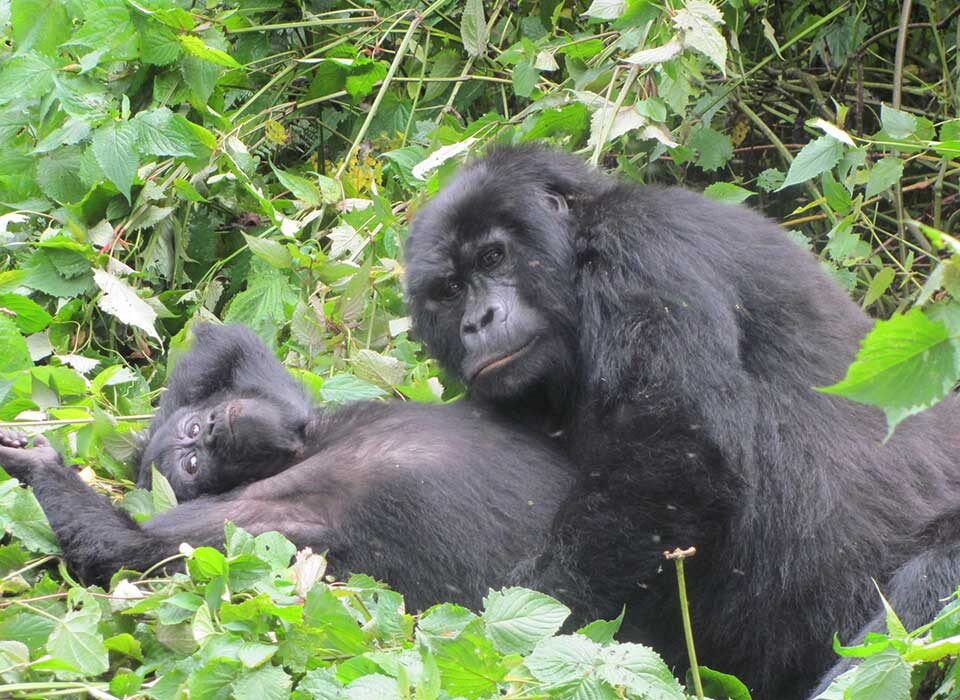
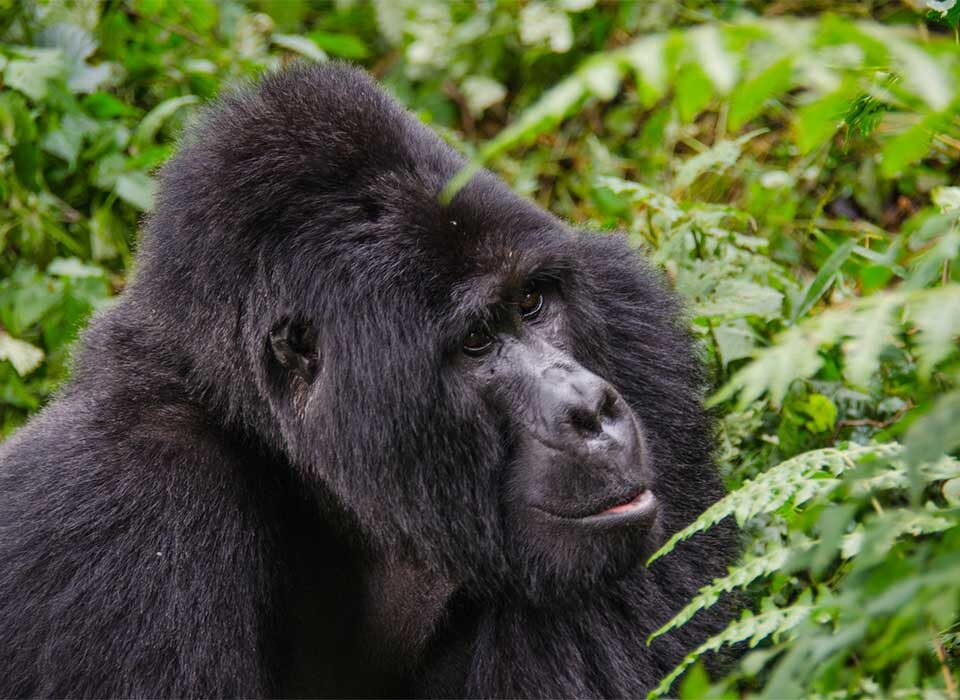
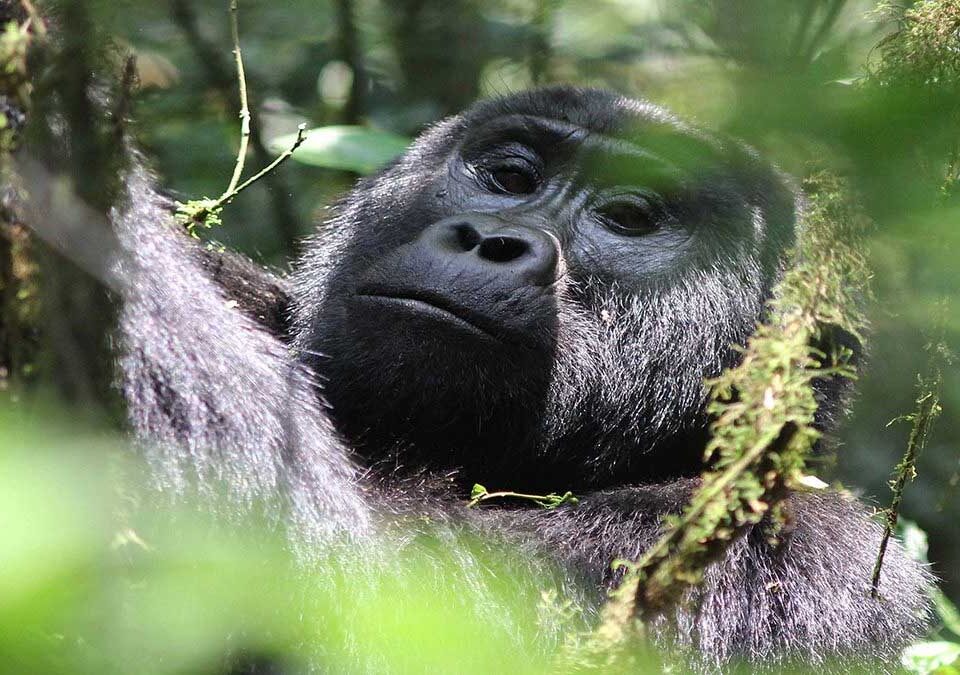
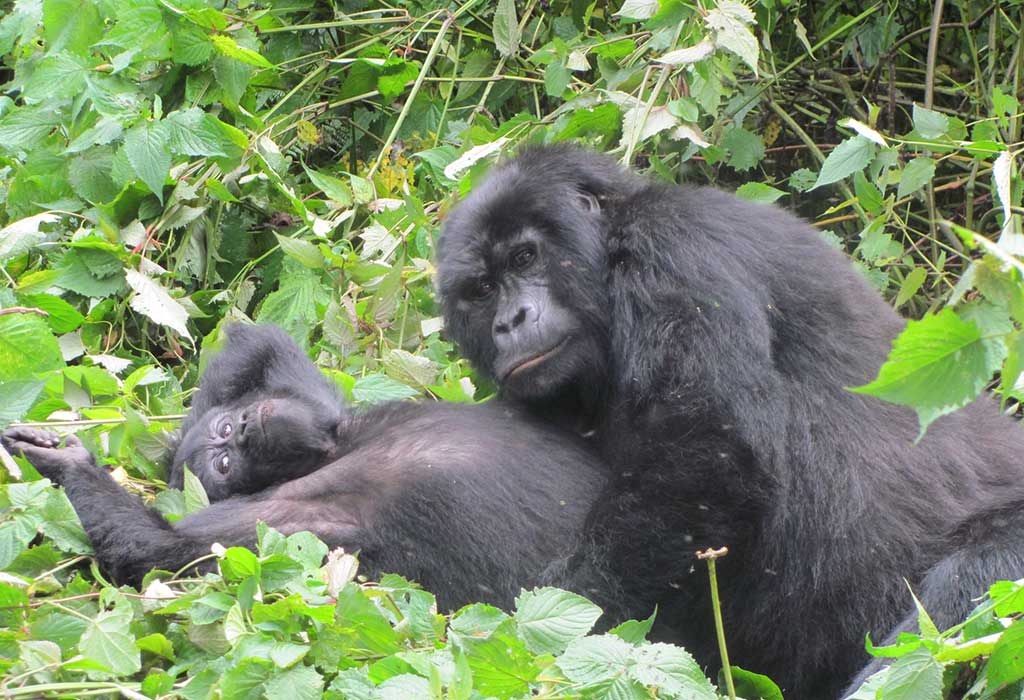
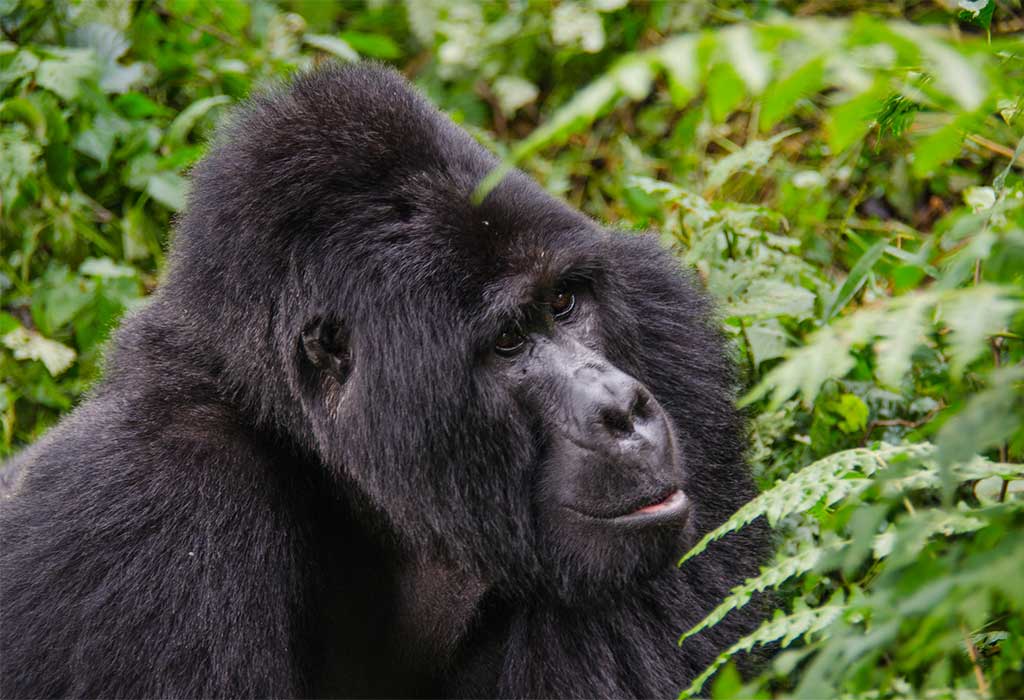
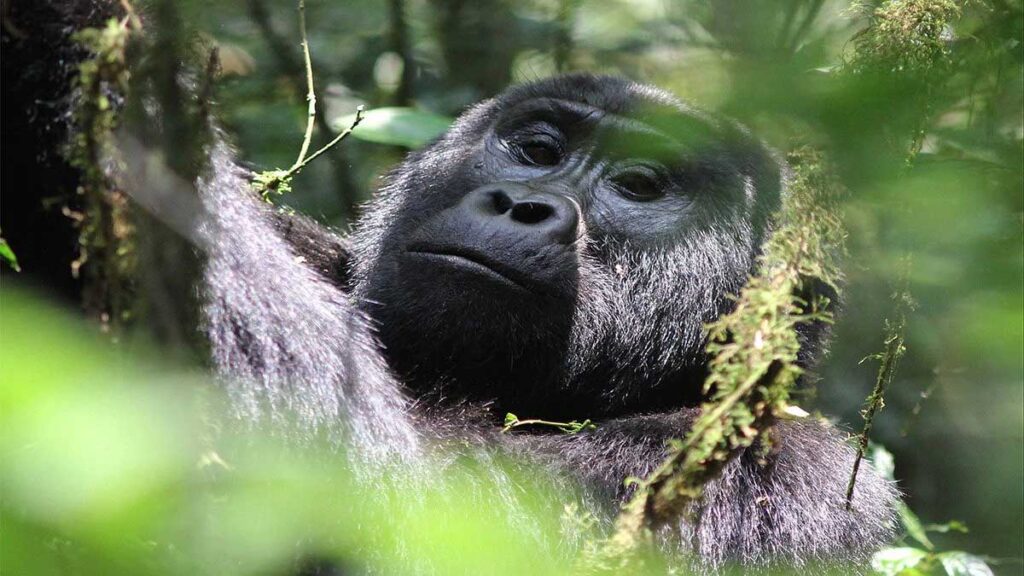
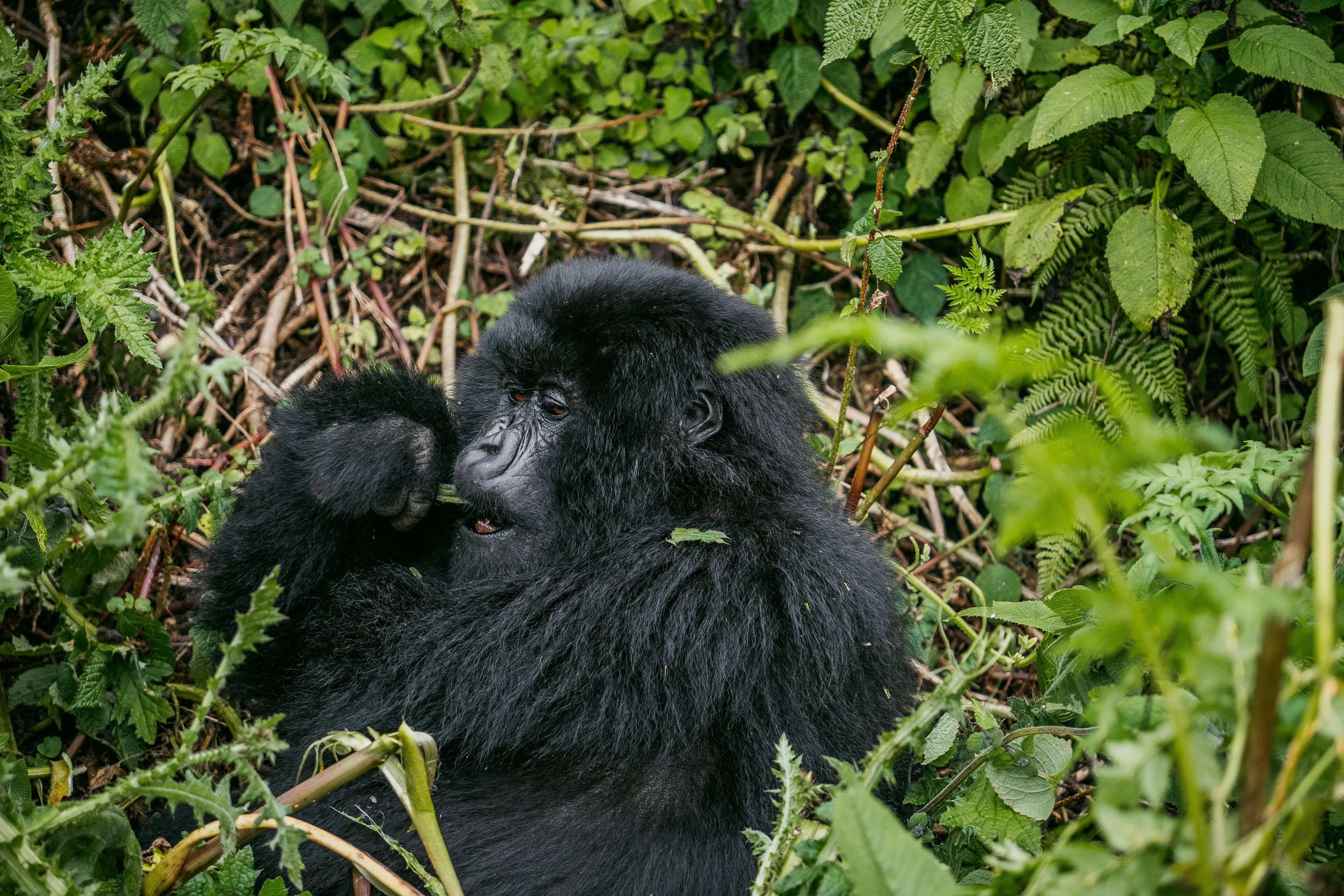
Visitors have one hour with the habituated family during standard gorilla trekking. Within that time, they may observe the silverback, adult females, juveniles, and young gorillas feeding, resting, grooming, playing, or moving through the forest.
The encounter is not a staged wildlife performance. The gorillas continue their natural activities, and their behaviour determines what visitors see. Some encounters involve active movement and playful young gorillas, while others are quieter, with members of the family resting or feeding.
Photography is permitted subject to the applicable rules, but flash photography is prohibited. Visitors must follow the guide’s instructions, maintain the required distance, remain calm, and avoid sudden movements or loud noises.
The one-hour limit supports responsible wildlife tourism by reducing disturbance and limiting prolonged human exposure to the gorillas. It also helps protect the animals from diseases that can pass between humans and great apes.
After the Encounter: Returning to the Trailhead
When the observation period ends, the group begins the return hike. The journey back may follow the same route or another route selected by the guides according to local conditions.
The return journey should not be underestimated. After several hours of walking, the final ascent or descent can feel demanding, especially in wet conditions. Visitors who have reached the gorillas quickly may finish relatively early, while those who have trekked deep into the forest may return during the afternoon.
At the end of the activity, visitors return to the briefing point or designated meeting area. Depending on the arrangements, they may receive a trekking certificate before returning to their accommodation.
The complete day can therefore extend well beyond the one-hour gorilla encounter. Keeping the afternoon free allows travellers to relax, enjoy their lodge, or participate in a light activity if sufficient time and energy remain.
How Long Does Gorilla Trekking Take in Bwindi Impenetrable National Park?
Bwindi Impenetrable National Park is Uganda’s principal gorilla trekking destination and contains four main trekking sectors: Buhoma, Ruhija, Rushaga, and Nkuringo. The park’s mountainous landscape, dense rainforest, and network of valleys mean that trekking durations vary considerably between families and on different days.
A trek in Bwindi may take approximately 2 to 7 hours, but visitors should be prepared for a longer excursion when conditions require it. The specific sector provides useful information about the landscape and access arrangements, but it does not guarantee how long a particular family will take to locate.
How Long Does Gorilla Trekking Take in Buhoma?
Buhoma lies in the northern part of Bwindi and is one of the park’s best-established tourism areas. It has a range of accommodation options and services for visitors undertaking gorilla trekking.
The duration of a Buhoma trek depends on the assigned family, its location, the terrain, and the weather. Some encounters may involve a comparatively manageable walk, while others require several hours of hiking.
Buhoma can be a practical choice for travellers seeking established tourism infrastructure and access to other activities in the surrounding area. However, choosing Buhoma does not automatically mean the trek will be short or easy.
Visitors should confirm that their accommodation and gorilla permit correspond to the Buhoma trailhead. This is especially important for travellers combining different parts of Bwindi in a multi-day safari.
How Long Does Gorilla Trekking Take in Ruhija?
Ruhija is located in the eastern part of Bwindi and is known for its high-altitude forest environment. The cooler conditions and mountainous landscape contribute to the character of the trekking experience.
A trek in Ruhija may last several hours, depending on the gorilla family’s movements and the route selected by the guides. Elevation changes and uneven terrain can make walking demanding even when the distance appears modest.
Visitors planning to trek in Ruhija should allow enough time for the activity and avoid assuming that cooler temperatures will make the hike effortless. Proper footwear, suitable clothing, and a reasonable level of fitness remain important.
Ruhija can also appeal to travellers interested in forest scenery and birdwatching alongside gorilla trekking. Those wishing to explore the surrounding region should arrange additional activities separately rather than trying to fit them into an uncertain trekking schedule.
How Long Does Gorilla Trekking Take in Rushaga?
Rushaga is situated in southern Bwindi and is one of the park’s main gorilla trekking areas. The sector offers access to habituated gorilla families and is also associated with the gorilla habituation experience.
Standard gorilla trekking in Rushaga generally takes several hours, with the exact duration depending on the family’s location and daily movements. Visitors may encounter a family after a relatively short walk or spend much of the morning and afternoon searching.
The sector’s varied terrain means that visitors should be prepared for climbs, descents, muddy trails, and changes in walking conditions. A local ranger guide determines the route according to the situation on the day.
Rushaga is worth considering for travellers interested in standard gorilla trekking or a longer habituation experience. The two activities are different products, however, and require the appropriate permit and advance arrangements.
How Long Does Gorilla Trekking Take in Nkuringo?
Nkuringo lies in southern Bwindi and is well known for its rugged landscape and demanding hiking conditions. The terrain can include steep slopes and substantial elevation changes, making the physical challenge an important consideration when planning a trek.
The time needed to find a gorilla family varies, and some treks can involve extended hiking. Visitors should not assume that a family located within the same sector will always be reached in a predictable period.
Nkuringo can suit travellers who enjoy challenging forest hikes and dramatic highland scenery. Those with limited hiking experience should discuss their fitness level and concerns with their safari operator before choosing accommodation and arranging their itinerary.
As with the other sectors, the best approach is to allow a full day for trekking and follow the instructions of the guides throughout the excursion.
How Long Does Gorilla Trekking Take in Mgahinga Gorilla National Park?
Mgahinga Gorilla National Park offers another opportunity to see mountain gorillas in Uganda. Located in the Virunga Mountains in southwestern Uganda, the park has a dramatic volcanic landscape with forested slopes and mountain scenery.
Gorilla trekking in Mgahinga generally takes several hours, with the total duration influenced by the location and movements of the Nyakagezi gorilla family, the terrain, and prevailing weather conditions. A typical excursion may take around 3 to 5 hours, although visitors should allow for a longer day if the family is difficult to locate.
The landscape differs from Bwindi’s extensive forest environment. Mgahinga’s mountain slopes can involve sustained uphill or downhill walking, and the elevation may make the trek feel more strenuous for visitors who are not accustomed to hiking at altitude.
Mgahinga can be a suitable choice for travellers seeking a mountain gorilla encounter in a smaller national park with striking volcanic scenery. However, the park has fewer habituated gorilla trekking options than Bwindi, so permit availability and travel dates should guide the final decision.
For visitors choosing between Bwindi and Mgahinga, neither destination guarantees a shorter trek. The most appropriate choice depends on permit availability, accommodation, travel logistics, fitness, and the kind of safari experience desired.
What Factors Determine How Long Gorilla Trekking Takes?
Several factors influence the time needed to locate mountain gorillas in Uganda. Understanding these variables helps travellers develop realistic expectations and prepare for different conditions.
The Location and Movement of the Gorilla Family
The most important factor is where the assigned gorilla family is located on the day of the trek. Mountain gorillas move through their habitat in search of food, resting areas, and suitable nesting sites. Their movements mean that a location identified earlier may no longer be accurate when the trekking party enters the forest.
Trackers work to locate the families and communicate useful information to the ranger guides. This improves the chances of finding them efficiently, but it cannot eliminate uncertainty.
A family may remain within a relatively accessible area, making the hike shorter. Alternatively, it may travel deeper into the forest or move across steep terrain, requiring a much longer search.
Travellers should therefore avoid booking their safari around an assumption that the gorillas will be found at a particular time. The experience follows the animals’ movements rather than a fixed tourist schedule.
Terrain and Elevation
The landscape of southwestern Uganda includes steep hills, deep valleys, forested ridges, and uneven trails. These features influence walking speed and the amount of effort required to cover a given distance.
A kilometre through level ground is very different from a kilometre involving a muddy descent followed by a steep climb. In dense forest, guides may also need to move carefully around vegetation, tree roots, and slippery sections.
Elevation can add to the challenge, especially for travellers who are accustomed to walking at lower altitudes. Maintaining a steady pace and taking breaks when necessary can make the experience more manageable.
The most effective preparation is to build general fitness before travelling rather than relying entirely on the distance or estimated duration provided in a safari itinerary.
Weather and Trail Conditions
Bwindi and Mgahinga are rainforest environments, and rain can occur throughout the year. Wet conditions can make the ground slippery and increase the difficulty of both climbing and descending.
After rainfall, some sections of the trail may become muddy, and the group may need to slow down to maintain safe footing. Dry weather can improve conditions, but it does not guarantee a short trek because the gorillas may still be far from the trailhead.
Appropriate footwear, waterproof clothing, and a careful walking pace are essential. Visitors should also carry sufficient drinking water and follow instructions from their guides when navigating difficult sections.
The Fitness and Pace of the Trekking Group
Gorilla trekking groups can include visitors with different levels of hiking experience. The guide manages the pace according to the terrain and the group’s circumstances.
A person who regularly hikes may find the walking easier than someone who spends most of their time sitting at work. However, even experienced hikers can be challenged by steep slopes, humidity, mud, and dense vegetation.
Visitors should communicate any relevant mobility concerns or fitness limitations to their safari operator before the trekking date. This gives the operator an opportunity to discuss realistic expectations and available arrangements.
Porters can also help by carrying daypacks and assisting visitors over difficult sections when appropriate. Hiring a porter can make the trek more comfortable while providing income to people in communities surrounding the national parks.
The Distance Between the Trailhead and the Gorilla Family
The distance covered varies from one trek to another. Some families may be encountered relatively close to the starting point, while others may require several hours of hiking to reach.
It is important to understand that trekking distance and duration are not interchangeable. A longer distance over manageable terrain may take less time than a shorter route across steep, slippery slopes.
For this reason, travellers should focus on preparing for a potentially demanding hike instead of expecting a specific number of kilometres.
Is Gorilla Trekking in Uganda a Full-Day Activity?
Gorilla trekking is best treated as a full-day activity, even though some excursions finish before midday. The uncertainty surrounding the gorillas’ location makes it difficult to guarantee a return time.
Visitors who locate their assigned family relatively early may return to the trailhead in the late morning or around lunchtime. Those undertaking longer treks may not finish until the afternoon.
A full-day allowance also accounts for registration, briefing, walking breaks, photography, the regulated observation period, and the return journey. It prevents travellers from having to rush through an experience that depends on patience and careful coordination.
For a comfortable safari, avoid scheduling a long road transfer, a demanding hike, or a tightly timed flight immediately after gorilla trekking. If onward travel is necessary, discuss the arrangement with your operator well in advance and allow a suitable buffer.
The most rewarding approach is to treat gorilla trekking as the main activity of the day and allow enough time to appreciate the encounter without worrying about the next appointment.
How Long Does the Gorilla Habituation Experience Take in Uganda?
Travellers who want to spend more time with mountain gorillas can consider the Gorilla Habituation Experience in the Rushaga sector of Bwindi Impenetrable National Park.
Unlike standard gorilla trekking, which allows one hour with a habituated family, the habituation experience allows visitors to spend up to four hours with a gorilla family undergoing the habituation process. Participants accompany the relevant trackers and researchers and observe the animals as they gradually become accustomed to controlled human presence.
The habituation experience generally takes longer than a standard trek because the walk into the forest is followed by an extended period with the gorillas. Depending on the family’s location and the time needed to return, the activity may occupy much of the day.
This experience is particularly appealing to wildlife enthusiasts, photographers, researchers, and travellers who want a deeper understanding of gorilla behaviour. It offers more time to observe interactions within the family and appreciate aspects of their daily lives that may not become apparent during a one-hour encounter.
However, a longer viewing period does not necessarily mean the walking portion will be easier. Participants must still navigate the forest, cope with changing terrain, and follow the instructions of the habituation team.
The habituation experience requires a separate permit, and availability is limited. Travellers should confirm the current arrangements, permit price, and eligibility requirements before booking.
What Is the Best Time of Year for Gorilla Trekking in Uganda?
Gorilla trekking takes place throughout the year in Uganda. The dry periods are often preferred because trails may be easier to navigate, although rain remains possible in the rainforest at any time.
June to August and December to February are commonly considered favourable periods for visitors seeking relatively drier trekking conditions. These months can also be busy, so travellers planning to visit during popular holiday periods should arrange their permits and accommodation well in advance.
The wetter periods, often associated with March to May and September to November, can bring more challenging trail conditions. Mud and rain may slow the hike, increase the need for careful footing, and make waterproof clothing especially important.
There is no season that guarantees a shorter trek. Gorilla movements, forest conditions, and the assigned family all influence the duration on a particular day.
The best time to travel therefore depends on your priorities, including preferred weather, accommodation availability, travel budget, and the rest of your Uganda safari itinerary. A well-prepared traveller can enjoy gorilla trekking in different seasons by bringing suitable equipment and allowing enough time.
How Fit Do You Need to Be for Gorilla Trekking?
Gorilla trekking requires a reasonable level of physical fitness because the hike may involve several hours of walking over uneven and steep terrain. Visitors do not need to be professional athletes, but they should be comfortable with sustained walking and prepared for changing conditions.
Before travelling, consider building endurance through regular walks, hikes, stair climbing, or other moderate exercise. Practising on uneven ground can also help prepare your legs and improve your balance.
During the trek, maintain a comfortable pace rather than trying to keep up with the fastest members of the group. Take short breaks when needed, drink water regularly, and communicate with your guide if you feel unwell or need assistance.
Good preparation is particularly important for visitors who have limited hiking experience. It is better to discuss your needs honestly before booking than to underestimate the physical demands of the forest.
The minimum age for gorilla trekking in Uganda is 15 years. Visitors must also comply with the health and conservation rules that protect the gorillas and other participants.
What Should You Pack for a Gorilla Trek That May Last Several Hours?
Packing appropriately makes a significant difference to comfort during a long trek. Because the duration and weather cannot be predicted precisely, visitors should prepare for several hours outdoors.
Waterproof hiking boots with good grip are important for muddy trails and steep slopes. Long trousers and a long-sleeved shirt help protect the skin from vegetation, insects, and scratches. Gardening gloves can be useful when moving carefully through vegetation, although visitors should follow their guide’s instructions and avoid damaging plants.
A lightweight rain jacket is essential, even when the morning begins in sunshine. A small daypack can hold drinking water, a light snack if permitted by the trekking arrangements, sunscreen, insect repellent, and personal essentials.
Photography equipment should be carried in a protective bag, particularly during wet weather. Visitors should also bring spare batteries and ensure that flash photography is disabled.
A walking stick can provide additional stability on steep or muddy sections. Porters may be available to carry bags and assist with difficult terrain, making them a useful option for visitors who want to reduce the physical burden.
Pack only what you need. An unnecessarily heavy bag can make a long hike more tiring, especially when the trail involves repeated climbs and descents.
How to Plan Your Uganda Gorilla Trekking Safari Around the Trek Duration
The duration of gorilla trekking should influence the structure of your entire safari, not just the schedule for the activity itself.
Spend the Night Near Your Assigned Trekking Sector
One of the most practical decisions is to book accommodation near the trailhead associated with your permit. Bwindi’s sectors are separated by difficult terrain, and the road journey between them can be time-consuming.
Staying nearby reduces the likelihood of an early-morning rush and makes it easier to arrive for registration and briefing on time.
When comparing lodges, consider the driving distance to the correct headquarters, meal arrangements, luggage requirements, and whether the property can accommodate an early departure.
Allow a Buffer Day Before or After Trekking
A buffer day can make the trip more comfortable, especially for visitors arriving from Kampala or combining gorilla trekking with other national parks.
The road journey from Kampala to Bwindi can take approximately 8 to 10 hours or longer depending on the destination sector, traffic, road conditions, and stops. Visitors travelling from Kigali may have a shorter drive to some parts of southern Bwindi, but border formalities and the precise destination affect the total journey time.
Arriving the previous day allows you to rest before the trek. An additional night after the activity can also reduce pressure if you have a long onward journey.
Combine Gorilla Trekking With Other Safari Activities
Uganda offers a variety of experiences that can complement a gorilla trekking excursion, including wildlife viewing in Queen Elizabeth National Park, chimpanzee tracking in Kibale Forest, golden monkey tracking in Mgahinga, and cultural experiences around Bwindi.
These activities should be scheduled on separate time blocks whenever possible. A long gorilla trek followed by a lengthy drive may leave little opportunity to enjoy another activity properly.
A multi-day itinerary also provides flexibility if road conditions, weather, or other logistical issues affect the schedule.
Book Your Gorilla Permit in Advance
Gorilla trekking permits are limited because the number of visitors allowed to see each habituated family is restricted. Booking early is particularly important when travelling during busy periods or when you want to visit a specific sector.
The permit date and location should guide your accommodation and transport arrangements. Do not assume that a permit for one sector can be used at another without the necessary confirmation.
Work with an appropriately licensed tour operator or follow the official permit reservation procedures applicable to your visitor category. Confirm the booking details and payment arrangements before making travel commitments.
How Much Does the Duration of Gorilla Trekking Affect Safari Costs?
The length of a gorilla trek can affect the overall cost of a safari indirectly, even though the standard permit is not priced according to how many hours it takes to locate the gorillas.
Accommodation costs depend on the number of nights, the lodge category, and its location. Transport costs depend on the distance travelled, the vehicle used, and the number of days required for the itinerary. Guide services, meals, porter fees, and additional activities can also contribute to the final price.
A safari that includes an overnight stay near Bwindi before and after trekking may cost more than a tightly scheduled itinerary, but it can offer greater comfort and flexibility.
Travellers should compare complete itineraries rather than choosing an option based only on the advertised permit or tour price. A well-planned package should clearly explain what is included, which accommodation is provided, how transfers are arranged, and whether any additional costs may arise.
When requesting a quotation, provide your travel dates, preferred trekking sector, accommodation budget, number of travellers, and other destinations you wish to visit. This information helps the safari operator recommend a practical itinerary based on the available permits and your travel priorities.
Frequently Asked Questions About How Long Gorilla Trekking Takes in Uganda
Can you finish gorilla trekking in two hours?
Yes, a relatively short trek is possible when the assigned gorilla family is located close to the starting point. However, two hours should not be treated as a guaranteed duration. The family may be farther away, and the terrain can make the hike slower than expected.
Can gorilla trekking take an entire day?
Yes. Although many treks take a few hours, the search can extend into the afternoon or, in exceptional circumstances, occupy much of the day. Travellers should allow a full day in their itinerary.
How long do you stay with the gorillas?
Standard gorilla trekking in Uganda allows one hour with the habituated gorilla family. The Gorilla Habituation Experience allows up to four hours with a family undergoing habituation, subject to the applicable rules and arrangements.
What time will I return to my lodge after gorilla trekking?
The return time depends on the length of the hike, the location of the family, the terrain, and the route back to the trailhead. Some visitors return around lunchtime, while others finish during the afternoon. Keeping the remainder of the day flexible is advisable.
Is gorilla trekking in Bwindi longer than in Mgahinga?
Neither park consistently offers shorter treks. Bwindi has four main trekking sectors and a varied forest landscape, while Mgahinga has a mountainous volcanic environment. The duration at either destination depends primarily on the location of the assigned gorilla family and the conditions on the day.
Does the rainy season make gorilla trekking longer?
Rain can make trails muddy and slippery, slowing progress and increasing the time needed to navigate difficult sections. However, rain does not automatically result in a longer trek. Gorilla movements and the route remain important factors.
Can older travellers participate in gorilla trekking?
Older travellers can participate if they meet the applicable requirements and are capable of managing the physical demands of the activity. Fitness varies considerably between individuals, so visitors should discuss mobility concerns and assistance options with their tour operator before booking.
Is gorilla trekking suitable for beginners?
Yes, travellers without previous trekking experience can participate if they are prepared for the physical challenge and follow the guides’ instructions. Regular walking before the trip, suitable equipment, and a porter where appropriate can make the experience more manageable.
Should I book a second gorilla trekking permit?
A second permit may appeal to travellers who want another opportunity to observe gorillas or experience a different sector. However, it requires another trekking day and additional budget. Whether it is worthwhile depends on your interests, available time, and overall safari priorities.
Conclusion: How Long Should You Allow for Gorilla Trekking in Uganda?
Gorilla trekking in Uganda typically takes between 2 and 7 hours, although longer excursions are possible. The activity begins with an early-morning briefing, continues with a guided hike through the forest, includes one hour with a habituated gorilla family, and ends with the return journey to the trailhead.
Bwindi Impenetrable National Park and Mgahinga Gorilla National Park both offer remarkable opportunities to see mountain gorillas, but neither guarantees a particular trekking duration. The location of the gorilla family, terrain, weather, and walking conditions determine how long the experience takes.
For the best experience, plan your safari around a full day of gorilla trekking, stay close to the correct trailhead, prepare physically, and bring suitable hiking equipment. Booking your permit in advance and allowing time for travel before and after the activity will make your trip easier to organise.
If you are planning a Uganda gorilla trekking safari, choosing the right sector, lodge, and transport arrangements can make a significant difference to your experience. A carefully designed itinerary allows you to enjoy the encounter without rushing and provides opportunities to discover more of Uganda’s forests, wildlife, landscapes, and local communities.
Plan your Uganda gorilla trekking safari with us. Request a personalised itinerary based on your travel dates, preferred trekking sector, accommodation budget, and other destinations you wish to explore. With the right preparation, you can enjoy one of Africa’s most extraordinary wildlife encounters while contributing to the conservation of endangered mountain gorillas.