How Gorilla Families Are Assigned in Uganda
October 18, 2026
Gorilla Trekking Photography Rules in Uganda
October 18, 2026
Understanding the Daily Gorilla Trekking Limit
Gorilla trekking is one of the most remarkable wildlife experiences in Africa, giving visitors the opportunity to observe endangered mountain gorillas in their natural habitat. In Uganda, travelers can encounter these magnificent primates in Bwindi Impenetrable National Park and Mgahinga Gorilla National Park. Rwanda also offers mountain gorilla trekking in Volcanoes National Park. Across these destinations, visitor numbers are carefully controlled to protect gorillas, support conservation, and maintain a respectful wildlife experience.
One of the most common questions travelers ask when planning a gorilla safari is: How many people can visit a gorilla family each day?
For standard mountain gorilla trekking in Uganda and Rwanda, the maximum is eight visitors per habituated gorilla family per day. This restriction means that a gorilla family does not receive unlimited tourist groups throughout the day. Instead, the number of visitors is carefully restricted to reduce disturbance, limit potential disease transmission, and allow the gorillas to continue their natural activities.
Uganda also offers a special activity known as the Gorilla Habituation Experience, which allows a smaller group of visitors to spend more time with a gorilla family that is still undergoing habituation. This experience generally accommodates a maximum of four visitors per habituating family, subject to the applicable permit arrangements.
At Exclusive Gorilla Journeys, we believe understanding these rules helps travelers plan a rewarding and responsible safari. Knowing how many people can visit a gorilla family, why the limit exists, and how permits are allocated makes it easier to choose the right destination, secure the appropriate permits, and prepare for an unforgettable encounter.
This guide explains the daily visitor limit, the reasons behind it, how it affects permit availability, and what travelers should know before booking a gorilla trekking safari in Uganda or Rwanda.
How Many Tourists Are Allowed to Visit One Gorilla Family Per Day?
The standard gorilla trekking limit is eight tourists per habituated gorilla family per day. The rule applies to the regular gorilla trekking experience in Uganda’s Bwindi Impenetrable National Park, Mgahinga Gorilla National Park, and Rwanda’s Volcanoes National Park.
This limit is important because mountain gorillas are endangered wildlife that require careful protection. Although habituated gorillas have become accustomed to the presence of people, they remain wild animals with complex social relationships, natural feeding patterns, and a need for undisturbed time in the forest.
The eight-person limit controls the number of tourists who can join a particular gorilla family during its designated visitor session. It is not a general allowance for eight people to enter the forest at any time and approach any gorilla they encounter. Visitors must have valid permits and follow the family allocation and instructions provided by park authorities.
Each permit is issued for an individual traveler. Therefore, a family of four traveling together generally requires four permits if everyone wishes to participate in the standard trek. A couple requires two permits, while a group of eight needs eight permits associated with an available gorilla family and trekking date.
If a family has already reached its visitor limit, additional travelers cannot simply join the group because they are traveling with the same tour operator, staying at the same lodge, or willing to pay more. The established limit applies regardless of the visitor’s budget or preferred level of service.
This restriction is one of the reasons gorilla trekking differs from conventional wildlife viewing. During a typical savannah game drive, several vehicles may observe the same herd of antelopes or buffaloes, subject to park rules. Gorilla trekking is more tightly controlled because people enter the forest on foot and approach a vulnerable species at relatively close range.
For travelers, the result is a more intimate wildlife encounter with a defined group size and a limited period for observing the gorillas.
Does the Eight-Person Limit Include Guides and Trackers?
An important distinction exists between the maximum number of tourists and the total number of people accompanying a trekking group.
The eight-person limit refers to the visitors permitted to participate in a standard gorilla trekking encounter. It does not mean that only eight human beings, including tourists, rangers, trackers, and other authorized personnel, can be present in the wider area.
Gorilla trekking involves trained park personnel who help locate the family, guide visitors through the forest, manage the encounter, and ensure that conservation rules are followed. Depending on the circumstances, the team may include ranger-guides, trackers, and other authorized staff.
These personnel perform essential roles. Trackers may enter the forest ahead of the visiting group to establish the gorillas’ location and monitor their movements. Ranger-guides lead tourists along the appropriate route, explain the rules, and determine how visitors should position themselves when the family is found.
Porters may also accompany tourists who hire their services to carry daypacks or provide assistance on difficult terrain. Their presence does not give a traveler permission to bring additional tourists beyond the permitted limit.
The distinction is important when reading about gorilla trekking group sizes. A visitor group may contain eight tourists and several authorized personnel, but the number of tourist permits remains limited to eight for a standard family visit.
This system allows park authorities to provide the supervision needed for a safe, controlled encounter without increasing the number of paying visitors beyond the conservation limit.
Why Are Only Eight Visitors Allowed to Visit a Gorilla Family?
The limit of eight visitors is a conservation measure rather than an arbitrary restriction. Mountain gorillas face threats that include habitat loss, disease, and human-related disturbance. Regulating the number of tourists who visit each family helps reduce some of these risks while allowing carefully managed tourism to contribute to conservation.
Protecting gorillas from human diseases
One of the most important reasons for restricting visitor numbers is the risk of disease transmission between humans and gorillas. These primates share many biological similarities with humans and can be susceptible to certain respiratory infections and other illnesses carried by people.
A common cold that causes mild discomfort for a traveler can potentially become a serious health problem for a gorilla. Mountain gorillas live in closely connected family groups, meaning an infection affecting one individual may expose other members of the family.
Limiting the number of visitors reduces the number of people directly exposed to the gorillas during a tourist encounter. Although the restriction cannot eliminate disease risk entirely, it forms part of a broader set of precautions that includes minimum viewing distances, hygiene requirements, and rules against visiting when sick.
Travelers planning a gorilla safari should take these precautions seriously. Anyone experiencing a cold, flu-like symptoms, or another potentially infectious illness should inform their tour operator and park authorities rather than assuming that a paid permit guarantees permission to enter the forest.
Reducing stress and disturbance
Gorillas need time to feed, rest, groom one another, care for their young, and maintain their social relationships. Their daily routines should not be unnecessarily disrupted by human activity.
A large crowd surrounding a gorilla family could create more noise, movement, and pressure than a small, well-managed group. Restricting tourist numbers helps keep the encounter controlled and gives visitors a better opportunity to observe natural behavior without creating an unnecessarily crowded environment.
Even habituated gorillas need space. Habituation means that a family has gradually become accustomed to the presence of people under controlled conditions. It does not mean the gorillas are domesticated, trained to perform, or comfortable with unlimited human contact.
The eight-person rule helps maintain the balance between wildlife viewing and the animals’ welfare.
Maintaining a natural wildlife experience
A smaller visitor group can also improve the quality of the trekking experience. Each traveler has a better opportunity to listen to the ranger-guide, observe interactions within the family, and appreciate the gorillas’ behavior.
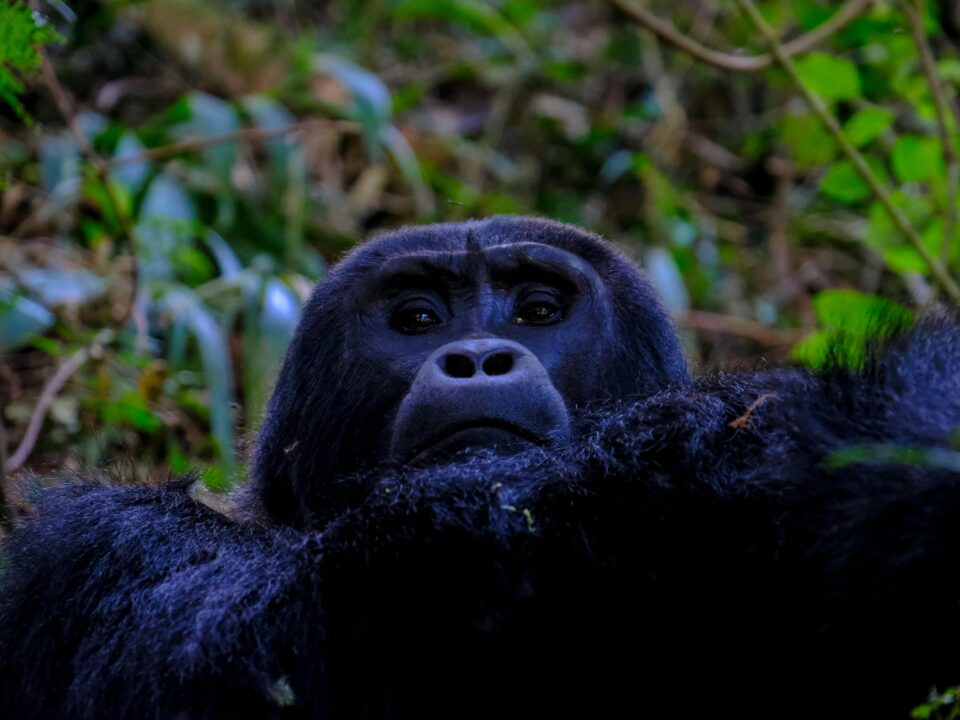
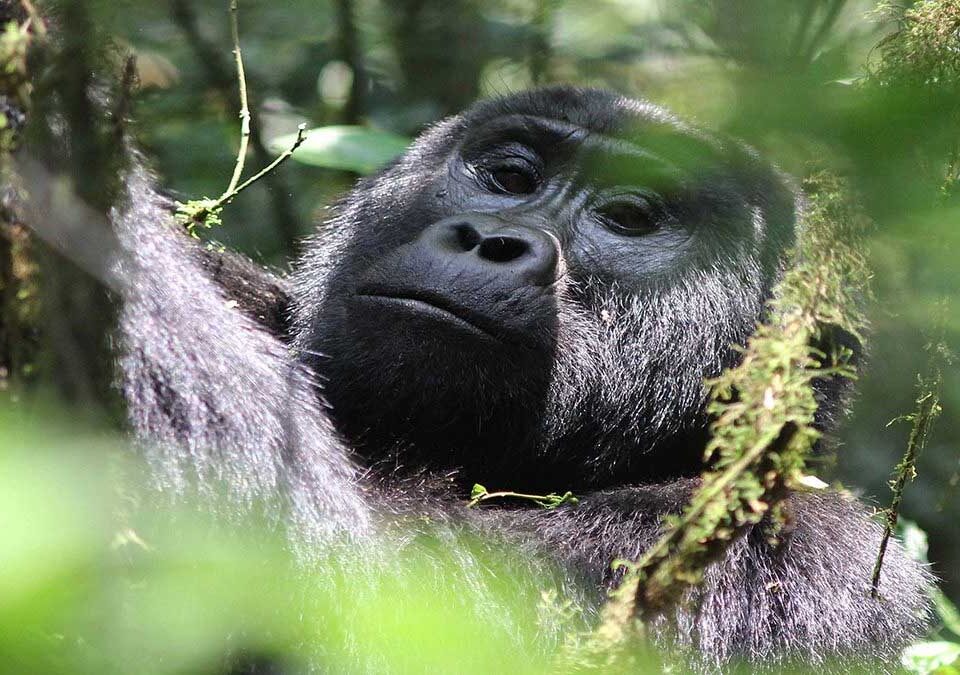
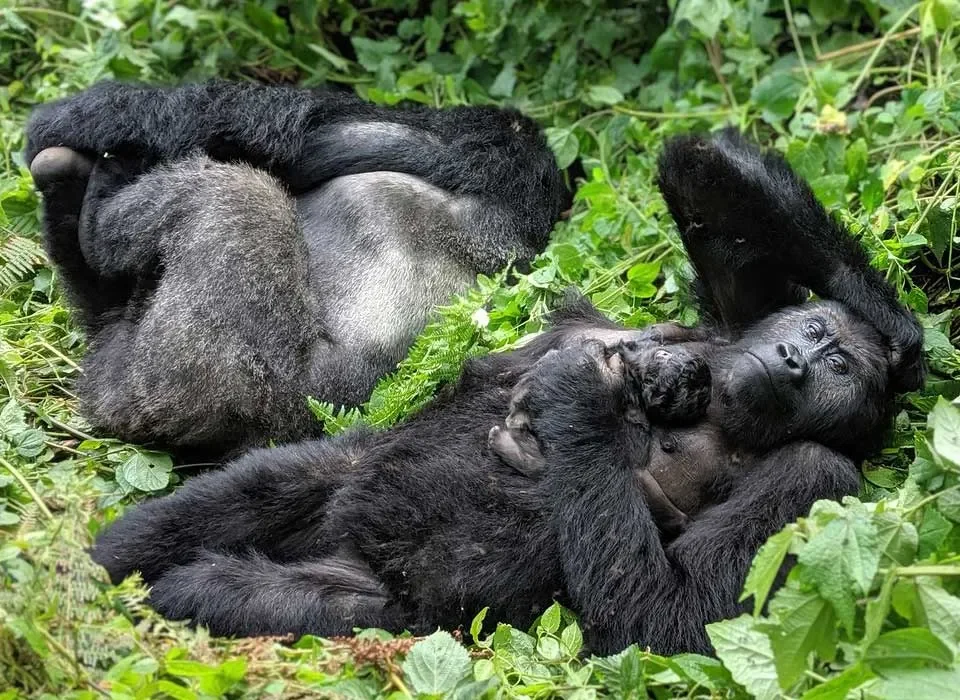
Visitors may witness a silverback resting, juveniles playing, females grooming one another, or infants staying close to their mothers. These are natural behaviors rather than performances arranged for tourists.
When the encounter is properly managed, visitors can concentrate on what the gorillas are doing instead of competing with a large crowd for space and visibility.
For Exclusive Gorilla Journeys, responsible gorilla tourism means helping travelers understand that the quality of the encounter depends on respecting the animals, not on maximizing the number of people who can approach them.
How Long Can Eight Visitors Stay With a Gorilla Family?
The standard gorilla trekking experience generally allows one hour with the habituated gorilla family once the group has located it. The one-hour limit applies alongside the maximum of eight tourists per family.
This viewing period begins when the trekking party reaches the gorillas under the supervision of the ranger-guide. It does not include the journey through the forest, the initial briefing, or the time spent searching for the family.
The trek itself can take several hours, depending on where the gorillas are located, the terrain, the weather, and how far the family has moved since trackers last observed it. In Bwindi, the forest can be steep, densely vegetated, and muddy, so travelers should allow sufficient time for the full excursion.
Once the family is located, the guide manages the viewing session and informs visitors when the allocated hour has ended. The group must then leave the gorillas and follow the instructions given by park personnel.
The limited viewing time serves an important conservation purpose. It prevents a family from being surrounded by tourists for an extended period and reduces the duration of direct human exposure.
For visitors, one hour can feel surprisingly short because the encounter is often emotionally powerful. However, it is usually enough to observe several members of the family, take permitted photographs without flash, and appreciate the behavior of these remarkable primates.
Travelers should avoid assuming that purchasing a more expensive standard trekking package will provide extra time with the gorillas. Accommodation standards, private transportation, meals, and other safari services can vary, but they do not automatically extend the official viewing period.
How Many People Can Visit a Gorilla Family During the Habituation Experience?
Uganda offers a different option for travelers who want a longer and more immersive experience: the Gorilla Habituation Experience.
Under the established habituation experience arrangement, a maximum of four visitors can join the authorized team visiting a habituating gorilla family. The experience can allow up to four hours with the gorillas, subject to the program’s rules and the circumstances of the encounter.
The difference between standard trekking and habituation is important.
A fully habituated family has undergone a lengthy process that enables it to tolerate the controlled presence of tourists. A habituating family is still progressing through that process, so its response to people may be less predictable. Visitors participate alongside the authorized personnel who are working with the family rather than simply joining a conventional viewing session.
The smaller visitor limit helps keep this specialized activity controlled. It also provides more time to understand the gradual process through which gorillas become accustomed to human presence.
For wildlife enthusiasts, photographers, conservation-minded travelers, and repeat visitors, habituation can be an appealing choice. However, it should not be viewed as a guaranteed opportunity to get closer to gorillas or interact with them. The same principles of animal welfare, safety, and respect continue to apply.
The habituation experience also requires careful planning because its permits are limited and availability depends on the program’s operating arrangements. Travelers interested in this option should confirm the current permit conditions, location, price, and available dates before making other travel arrangements.
Does Uganda Allow More Than Eight Visitors Across the Entire Park Each Day?
Yes. The eight-person restriction applies to an individual gorilla family, not to the entire national park.
Bwindi Impenetrable National Park contains multiple habituated gorilla families distributed across its four principal trekking sectors: Buhoma, Ruhija, Rushaga, and Nkuringo. Mgahinga Gorilla National Park is another destination for mountain gorilla trekking in Uganda.
Because different families can be visited under the applicable permit system, the total number of tourists trekking in a park on a particular day can exceed eight. The total depends on how many families are available for tourism, which permits have been issued, and the park’s current operating arrangements.
For example, if five eligible gorilla families each have eight visitor permits available for a particular day, their combined theoretical capacity would be 40 tourists. This is a simple illustration of how the per-family limit works, not a statement of the actual number of permits available in Uganda on any given date.
The total capacity can change when additional families become available, when a family is temporarily unavailable, or when management decisions affect permit allocation.
This distinction matters when planning a safari. A traveler may hear that Uganda offers many gorilla trekking permits daily and assume that the experience will be crowded. In reality, the permits are distributed across different families and trekking locations, with each family subject to its own visitor limit.
The number of permits issued across a park should therefore never be confused with the number of tourists allowed to gather around one gorilla family.
How Many People Can Visit a Gorilla Family in Rwanda?
Rwanda follows the same basic visitor limit for standard mountain gorilla trekking: a maximum of eight tourists per habituated gorilla group per day.
Gorilla trekking in Rwanda takes place in Volcanoes National Park, part of the Virunga mountain landscape. As in Uganda, the restricted group size is designed to support conservation and provide a controlled wildlife-viewing experience.
Rwanda’s approach also limits the time visitors spend with a family during a standard trek. Travelers generally receive one hour of viewing time after locating the gorillas, under the supervision of park personnel.
Although the visitor limit is the same, the overall safari experience can differ between Uganda and Rwanda. The countries have different park landscapes, permit arrangements, accommodation options, travel logistics, and pricing structures.
Uganda offers trekking in both Bwindi and Mgahinga, while Rwanda’s mountain gorilla trekking is concentrated in Volcanoes National Park. The best destination depends on the traveler’s budget, preferred itinerary, accommodation expectations, and interest in combining gorilla trekking with other wildlife or cultural experiences.
For visitors deciding between the two countries, the eight-person rule should not be the only consideration. Both destinations regulate encounters with mountain gorillas, and the choice should also account for travel time, available permits, overall safari costs, and the kind of trip the traveler wants.
How Does the Daily Visitor Limit Affect Gorilla Permit Availability?
The eight-person limit directly influences how many standard gorilla trekking permits can be issued for a particular family on a specific date. Because each family has a restricted visitor allocation, permits cannot be issued in unlimited quantities, even when demand is high.
This is particularly important during popular travel periods, when international visitors plan gorilla safaris alongside holidays, school breaks, and other African wildlife experiences.
Travelers who want to trek with friends or relatives should consider permit availability early in their planning process. A family of six, for example, needs six permits for the same trekking date. Finding six permits together can be more challenging than finding a single permit, especially when preferred dates are approaching.
At Exclusive Gorilla Journeys, we recommend checking permit availability before making non-refundable accommodation or transport commitments. This helps travelers build an itinerary around a confirmed trekking date instead of discovering later that their preferred date is unavailable.
Can a private group book all eight permits?
Yes, a private party may be able to reserve all eight visitor places associated with a gorilla family if the necessary permits are available and the relevant booking arrangements permit it.
However, purchasing all eight permits does not increase the permitted group size. It simply means the eight available visitor places are occupied by members of the same private party rather than by unrelated travelers.
A private group can make the experience feel more personal because everyone present as a tourist belongs to the same traveling party. Nevertheless, the official rules concerning viewing time, distance, behavior, and wildlife protection continue to apply.
Private allocation is not guaranteed for every date or family, so travelers who want this arrangement should discuss it with their tour operator before booking.
What Happens If More Than Eight Tourists Want to Visit the Same Gorilla Family?
When demand exceeds the available allocation, additional tourists cannot simply join the family visit. They need permits associated with another available family or a different trekking date.
This is why advance planning matters for couples, families, photography groups, and organized tours. The challenge is not merely finding accommodation near a national park; it is securing the correct number of permits for the desired date and destination.
A reputable safari operator can help establish which dates have availability, whether the group can be accommodated together, and which trekking sector best suits the itinerary.
Travelers should also understand that gorilla family allocation and operational arrangements are managed by the responsible park authorities. The location of a family, the allocation of permits, and the conditions on the day of trekking are not entirely controlled by the tour operator.
The safest approach is to confirm the booking details, follow the official allocation process, and remain flexible when planning other activities around the trek.
What Rules Must Visitors Follow When They Reach the Gorillas?
The eight-person restriction is only one part of responsible gorilla trekking. Visitors must also follow the instructions of their ranger-guide and comply with the current rules governing behavior around mountain gorillas.
Maintain the required viewing distance
Visitors must respect the minimum viewing distance specified by the park authorities. Uganda’s published conservation rules have specified a distance of 10 metres, while Rwanda’s guidance has specified 7 metres; travelers should confirm the applicable instructions for their destination before trekking.
Gorillas can sometimes move closer to visitors on their own. In such circumstances, travelers should remain calm and follow the ranger-guide’s instructions rather than attempting to approach the animals.
Do not trek when you are sick
Anyone with a potentially infectious illness should inform the tour operator and park authorities. Because gorillas can contract certain human diseases, avoiding contact when sick is an important conservation responsibility.
Keep noise and movement to a minimum
Visitors should speak quietly, avoid sudden movements, and never attempt to attract a gorilla’s attention by shouting or making noises. The goal is to observe the animals without unnecessarily disturbing them.
Follow photography restrictions
Flash photography is prohibited. Visitors should use their cameras responsibly and avoid movements that could disturb the gorillas or interfere with other members of the group.
Follow the ranger-guide’s instructions
Ranger-guides are responsible for managing the encounter and advising visitors on appropriate conduct. Travelers should follow their instructions immediately, particularly if the gorillas change position or display behavior that requires the group to adjust.
These measures work alongside the daily visitor limit to help protect the animals and maintain a respectful experience for everyone involved.
How Can You Book a Gorilla Trekking Safari With Exclusive Gorilla Journeys?
Planning a gorilla trekking safari involves more than choosing a date and reserving a lodge. Travelers need to secure permits, select a suitable trekking destination, arrange transportation, and decide how many nights to spend near the national park.
Exclusive Gorilla Journeys helps travelers plan gorilla trekking experiences in Uganda and build itineraries around their preferred travel dates, budget, and interests.
The first step is to establish the number of people traveling and the dates on which they want to trek. This makes it easier to check whether the required number of permits is available for the group.
The next step is choosing between Bwindi Impenetrable National Park and Mgahinga Gorilla National Park, taking into account the trekking experience, accommodation preferences, and the rest of the safari itinerary.
Travelers should then arrange accommodation and transportation. Bwindi has four principal trekking sectors, and the most suitable lodge depends partly on the sector associated with the permit. Staying in an appropriate location helps reduce unnecessary early-morning transfers and makes the trekking day easier to manage.
Visitors interested in the Gorilla Habituation Experience should communicate this preference at the beginning of the planning process because its four-person visitor limit and longer viewing session differ from standard trekking.
When booking through Exclusive Gorilla Journeys, travelers can request assistance with permit arrangements, accommodation, transfers, and additional safari activities. All permit details and applicable conditions should be confirmed before final payment and travel.
Frequently Asked Questions About Gorilla Family Visitor Limits
Can more than eight people visit the same gorilla family in one day?
For a standard tourist trek, the maximum is eight visitors per habituated gorilla family per day. Authorized rangers, trackers, researchers, and other personnel may also be present under their respective responsibilities, but they are not additional tourist permit holders.
Can eight tourists visit a gorilla family twice in one day?
The standard tourist arrangement limits a habituated family to one visitor group per day. The eight-person allowance should not be interpreted as permission for multiple tourist groups to visit the same family throughout the day.
Is the Gorilla Habituation Experience limited to eight people?
No. Uganda’s Gorilla Habituation Experience generally allows a maximum of four visitors per habituating family under the applicable permit arrangement. It differs from standard trekking in both group size and viewing duration.
Can I pay extra to spend more than one hour with a habituated gorilla family?
A standard gorilla trekking permit generally allows one hour with the family once it is located. Paying more for luxury accommodation, private transport, or other safari services does not automatically extend that period. The habituation experience is a separate activity with its own permit conditions.
Should I book my gorilla permit in advance?
Yes. Advance booking is advisable, especially if you are traveling during a busy season or need several permits for the same date. The number of permits is restricted by the available gorilla families and the maximum number of visitors permitted for each family.
Does the eight-person limit apply to children?
Uganda’s published gorilla trekking rules set a minimum age of 15 years. Travelers should verify the current age requirements and permit conditions for their destination before booking. The standard visitor limit applies to eligible tourists regardless of whether they are traveling as couples, families, or private groups.
Conclusion, Responsible Gorilla Trekking Begins With Limited Visitor Numbers
The maximum number of tourists allowed to visit a habituated mountain gorilla family during a standard trek in Uganda and Rwanda is eight visitors per family per day. Uganda’s Gorilla Habituation Experience generally has a smaller limit of four visitors per habituating family.
These restrictions help manage human contact, reduce potential disease transmission, limit disturbance, and maintain a meaningful wildlife encounter. They also explain why gorilla trekking permits are limited and why travelers should arrange their trips carefully.
For anyone planning a gorilla safari, understanding the visitor limit is an essential first step. The number of people traveling, the desired trekking date, and the preferred destination all influence the permit arrangements and overall itinerary.
Exclusive Gorilla Journeys encourages travelers to plan ahead, respect the conservation rules, and choose an experience that fits their interests. With the right preparation and a responsible approach, gorilla trekking can become one of the most memorable highlights of an African safari while contributing to the continued protection of mountain gorillas.
Plan your gorilla trekking safari with Exclusive Gorilla Journeys and let us help you explore Uganda’s remarkable mountain gorillas through a carefully arranged and conservation-conscious travel experience.