
How Many People Can Visit a Gorilla Family Each Day?
October 18, 2026
Can You Use a Phone While Gorilla Trekking?
October 18, 2026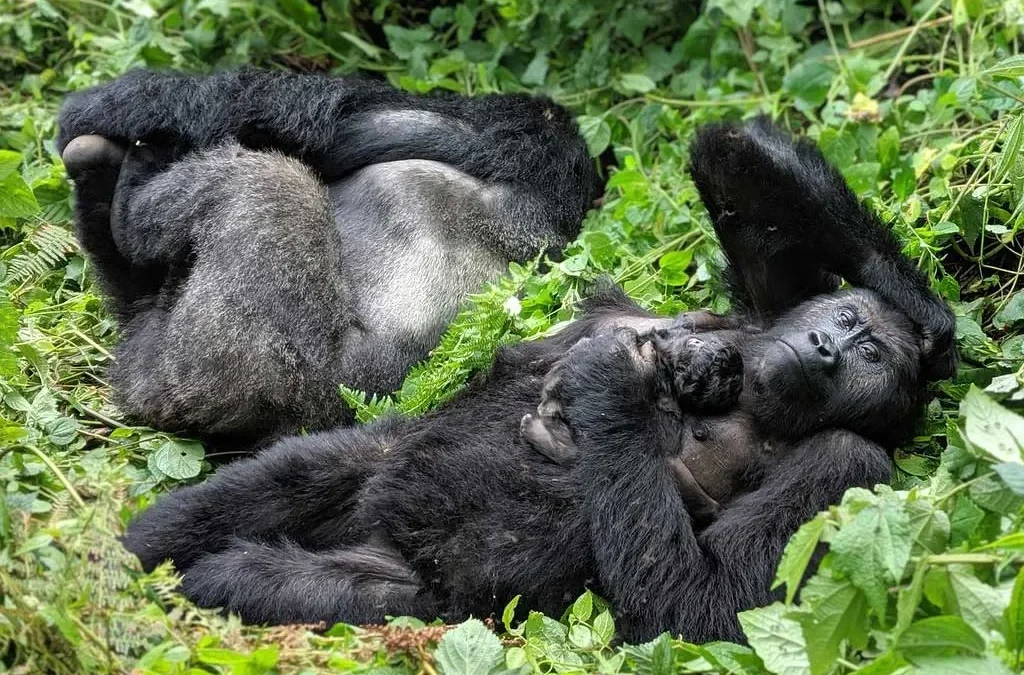
Introduction to Gorilla Trekking Photography in Uganda
Gorilla trekking in Uganda is one of the most remarkable wildlife experiences in Africa. It gives visitors an opportunity to observe endangered mountain gorillas in their natural forest habitat, watch their family interactions and capture photographs that preserve memories of an extraordinary encounter. For many travelers, photographing a silverback, a mother caring for her infant or young gorillas playing among the vegetation is a major highlight of their Uganda safari.
However, gorilla trekking photography in Uganda comes with important rules designed to protect the gorillas, ensure visitor safety and support responsible wildlife tourism. Photographing mountain gorillas is not the same as taking pictures of animals in an open savanna. The forest environment is dense, the light can be limited, the animals are sensitive to human disturbance, and every visitor must respect the instructions provided by the ranger guides.
At Exclusive Gorilla Journeys, we believe that a successful gorilla trekking experience combines memorable photography with responsible behavior. The objective is not simply to obtain the perfect picture but to observe these endangered primates without compromising their welfare or conservation.
Uganda’s principal mountain gorilla trekking destinations are Bwindi Impenetrable National Park and Mgahinga Gorilla National Park. Both offer opportunities to photograph habituated mountain gorillas under established conservation guidelines. Visitors must follow the applicable Uganda Wildlife Authority rules and the instructions of the rangers accompanying their trekking group.
Understanding these requirements before traveling helps you prepare the right equipment, use available light effectively and make the most of the limited time spent with a gorilla family.
This guide explains the essential gorilla trekking photography rules in Uganda, the reasons behind them, the camera equipment worth considering and the techniques that help visitors take excellent photographs without disturbing wildlife.
Understanding the Main Gorilla Trekking Photography Rules in Uganda
The most important principle is that gorilla welfare takes priority over photography. A photograph is never worth approaching an animal too closely, ignoring a ranger’s instructions or creating unnecessary disturbance.
Uganda’s established gorilla tracking rules prohibit flash photography, require visitors to maintain the prescribed distance from the gorillas, restrict the duration of encounters and prohibit visiting when suffering from an infectious illness. Visitors must also avoid eating, drinking or smoking during the encounter and must follow their guides’ directions throughout the experience.
The commonly applied minimum viewing distance is seven metres, although visitors should follow any updated instructions issued by their ranger and should give the gorillas additional space whenever possible. If an animal approaches the group, visitors must not attempt to touch it or move towards it for a photograph.
These rules apply whether you use a professional camera, a compact digital camera or a smartphone. Expensive equipment does not provide an exemption from conservation regulations.
Photography is a privilege made possible by conservation work and the habituation of particular gorilla families to carefully managed human presence. Responsible visitors help preserve that privilege for future generations.
Why Flash Photography Is Prohibited During Gorilla Trekking
Flash photography is one of the most important restrictions visitors must understand before entering Uganda’s gorilla trekking destinations. Whether you are using a professional DSLR, a mirrorless camera, a compact camera or a smartphone, you must not use flash when photographing mountain gorillas.
A sudden burst of artificial light can startle wildlife and interfere with a calm encounter. The restriction also helps prevent unnecessary disturbance to gorillas that are accustomed to carefully controlled visits. Repeated flashes from several visitors can create additional disturbance when a gorilla family is feeding, resting, grooming or caring for young ones.
For this reason, prepare your equipment before the trek begins. Switch off the built-in flash on your camera or smartphone, and leave external flash units behind. Check your settings carefully because some devices automatically activate a flash in low-light conditions.
How to Photograph Gorillas Without Flash
Photographing mountain gorillas without artificial lighting requires an understanding of exposure, shutter speed and available light. The dense vegetation of Bwindi Impenetrable National Park can make photography challenging, even on a bright day.
Use a lens with a wide maximum aperture whenever possible. An aperture such as f/2.8 or f/4 allows more light to reach the camera sensor than a smaller aperture. This can help you capture clear photographs while maintaining a sufficiently fast shutter speed.
Increasing the ISO setting is another practical way to photograph gorillas under the forest canopy. Depending on the available light, a setting between ISO 1600 and ISO 6400 may be useful, although darker conditions can require a higher setting. Modern cameras can often produce usable images at elevated ISO levels, particularly when exposure is handled correctly.
A shutter speed of around 1/250 second can be a useful starting point for relatively calm gorillas. Faster speeds may be necessary when young gorillas are playing, moving quickly or interacting with other members of the family. Image stabilization can reduce blur caused by camera movement, but it cannot freeze a moving animal.
The most effective approach is to practice these settings before arriving in Uganda. Learning how to adjust exposure quickly allows you to concentrate on the gorillas instead of struggling with camera controls during your limited viewing time.
Maintaining the Required Distance When Photographing Gorillas
Maintaining an appropriate distance is essential for responsible gorilla trekking photography. Uganda Wildlife Authority guidance has specified a minimum viewing distance of 10 metres in its 2024–2026 conservation tariff, although visitors should always follow the current instructions issued by the responsible park authorities and their ranger guides.
This distance helps reduce the risk of transmitting human respiratory infections to mountain gorillas. Because gorillas are closely related to humans, they can be vulnerable to some of the same infectious diseases. Even a seemingly harmless cold can pose a serious conservation concern.
The distance requirement also helps prevent unnecessary stress and allows gorillas to continue their natural activities without excessive human interference.
Do Not Move Closer to Get a Better Photograph
One of the most common mistakes wildlife photographers can make is stepping forward to improve a composition. A photographer might want a closer portrait of a silverback’s face, a clearer view of a mother carrying her infant or a photograph without vegetation obstructing the subject.
However, the appropriate response is to work within the permitted viewing distance rather than approach the animal.
A telephoto lens can help you photograph gorillas from the required distance. Lenses in the 70–200mm, 100–400mm or similar range can be useful, depending on your camera system and the composition you want. A longer lens is not always necessary, particularly when a gorilla is visible in a wider setting.
If a gorilla approaches your group, do not attempt to reach out, touch it or deliberately move towards it for a closer image. Stay calm and follow the ranger’s instructions. If the animal’s movement changes the distance between you and the group, the ranger will manage the situation.
The correct distance is determined by conservation and safety requirements, not by the focal length of your lens.
What If a Gorilla Walks Close to You?
Mountain gorillas move naturally through the forest, and their movements can occasionally bring them near visitors. This does not give visitors permission to initiate contact or ignore instructions.
Remain calm, avoid sudden movements and follow the ranger’s directions. Do not extend your camera towards the gorilla or turn an unexpected close encounter into an opportunity for a close-up photograph.
Your safety and the animal’s welfare take priority over obtaining an image. A photograph taken from farther away is preferable to one that puts the gorilla, other visitors or yourself at risk.
Respecting the One-Hour Gorilla Viewing Limit
Gorilla trekking in Uganda includes a limited period with the assigned gorilla family. Under the established tracking rules, visits are limited to one hour per gorilla group per day, although a ranger may end an encounter earlier when conditions require it.
The time limit helps manage the effects of tourism on gorilla behavior and welfare. It also means that visitors must use their viewing time thoughtfully.
Photographers should avoid spending the entire encounter concentrating on a single subject. A gorilla family may include a dominant silverback, adult females, juveniles and infants, each offering different opportunities for observation and photography.
You may wish to capture a few portraits, photographs of feeding or grooming, images of family interactions and wider compositions showing the gorillas in their forest environment. However, these goals should never take precedence over listening to the ranger or remaining aware of the group.
Prepare Your Camera Before the Encounter
Check your battery level, memory card capacity, focus mode and exposure settings before reaching the gorillas. If you need to change lenses, do so when it is safe and appropriate, following your guide’s instructions.
Avoid spending valuable viewing time scrolling through hundreds of photographs to inspect every image. Take a moment to check your exposure when necessary, but remain attentive to what is happening around you.
It is also important to experience the encounter beyond the camera screen. Watching a young gorilla play, observing a mother care for her infant or listening to the sounds of the forest can be just as memorable as the photographs you take home.
Keep Quiet While Photographing Mountain Gorillas
A quiet environment helps maintain a calm gorilla encounter. Visitors should speak softly, avoid shouting and refrain from making sudden noises to attract an animal’s attention.
Do not imitate gorilla calls, whistle at the animals or make sounds intended to encourage them to look towards the camera. These actions can disturb their behavior and distract them from their normal activities.
Camera operation should also be as unobtrusive as possible. Some cameras have a silent or electronic shutter mode that can reduce shutter noise. If your camera offers this option, consider using it, provided the setting works well for the conditions and does not introduce image distortion or other technical problems.
Avoid unnecessary movements, repeated repositioning and loud conversations with other photographers. A calm approach allows you to observe more naturally occurring behavior and reduces disturbance to the gorilla family.
Are Smartphones Allowed for Gorilla Trekking Photography in Uganda?
Smartphones can be useful for documenting a gorilla trekking experience, provided their use complies with the park rules and ranger instructions. A modern smartphone can capture good photographs in suitable lighting, and its small size makes it convenient to carry during a forest hike.
However, smartphone users should be especially careful with automatic flash settings. A phone may activate its flash when the environment is dark unless the feature has been disabled. Check the camera settings before the trek rather than waiting until you are standing near the gorillas.
Smartphones also have limitations in dense forest conditions. Digital zoom can reduce image quality, and small sensors may struggle with moving subjects in low light. If you want more detailed wildlife photographs, a dedicated camera with an optical zoom lens may offer greater flexibility.
Regardless of the device, never use a flash to compensate for poor lighting. Do not move closer to the gorillas because your phone cannot zoom sufficiently, and do not obstruct other visitors while trying to compose a photograph.
Can You Record Videos of Gorillas?
Video recording may be possible during an ordinary gorilla trekking encounter, subject to the current park rules and the ranger’s instructions. Visitors should use their equipment without flash or artificial lighting and should avoid excessive noise or movement.
Keep video clips steady and relatively short. Rather than following every movement of an animal with rapid camera pans, choose a stable position and record natural behavior when it occurs.
Professional film productions, commercial shoots or other organized filming activities may require separate authorization. Anyone planning a production beyond ordinary personal holiday documentation should confirm the relevant permissions with the Uganda Wildlife Authority before traveling.
Choosing the Right Camera Equipment for Gorilla Trekking
The right equipment makes it easier to photograph mountain gorillas while remaining at the required distance. However, the best camera is not necessarily the most expensive one. Reliability, ease of use, low-light performance and suitability for a forest hike are more important than owning the latest equipment.
A mirrorless camera or DSLR with good high-ISO performance can be an excellent choice for serious wildlife photography. A versatile zoom lens allows you to adjust your composition without moving towards the animals. A 70–200mm lens is useful for portraits and environmental photographs, while a 100–400mm lens can offer greater reach when the gorillas are farther away.
A fast prime lens can also perform well in dim conditions, although its fixed focal length requires more careful composition. Travelers using compact cameras should choose a model with a useful optical zoom and dependable auto focus.
Why a Tripod Is Usually Not the Best Choice
A full-size tripod can be cumbersome on steep, muddy and densely vegetated forest trails. It can also slow down your movements when the ranger needs the group to reposition.
For most visitors, handheld photography is more practical. A camera with effective image stabilization, a comfortable grip and a manageable lens will be easier to use during the encounter.
A monopod may be useful in certain circumstances, but it should only be carried or used when permitted and when it does not obstruct other trekkers or interfere with the ranger’s instructions.
Protecting Your Camera From Rain and Humidity
Bwindi and Mgahinga are high-altitude forest environments where weather conditions can change quickly. Rain, mist and moisture may affect camera equipment even when the morning begins with clear skies.
Use a rain cover or a waterproof protective bag, and keep a clean microfibre cloth accessible for wiping moisture from the lens. Carry spare batteries in a protected pocket because frequent photography, cold conditions and extensive screen use can reduce battery life.
Protect memory cards and other small accessories in secure compartments. Avoid changing lenses unnecessarily in wet conditions or in places where dust, water and vegetation could enter the camera body.
Before leaving your accommodation, make sure your camera strap is secure and that the equipment can be carried comfortably throughout the trek. You may need to walk uphill, cross muddy ground or move through thick vegetation before reaching the gorillas.
Understanding Natural Light in Bwindi and Mgahinga
One of the greatest challenges of gorilla trekking photography in Uganda is working with natural light. Both Bwindi Impenetrable National Park and Mgahinga Gorilla National Park contain forest habitats where thick vegetation blocks much of the sunlight.
The lighting can change considerably within a short distance. An open patch of forest may provide enough light for a fast shutter speed, while a nearby shaded area may require a higher ISO setting or a wider aperture.
Photographers should avoid assuming that bright weather outside the forest guarantees bright conditions beneath the canopy. Preparing for low light is essential if you want sharp photographs without flash.
Photographing Black Fur and Facial Details
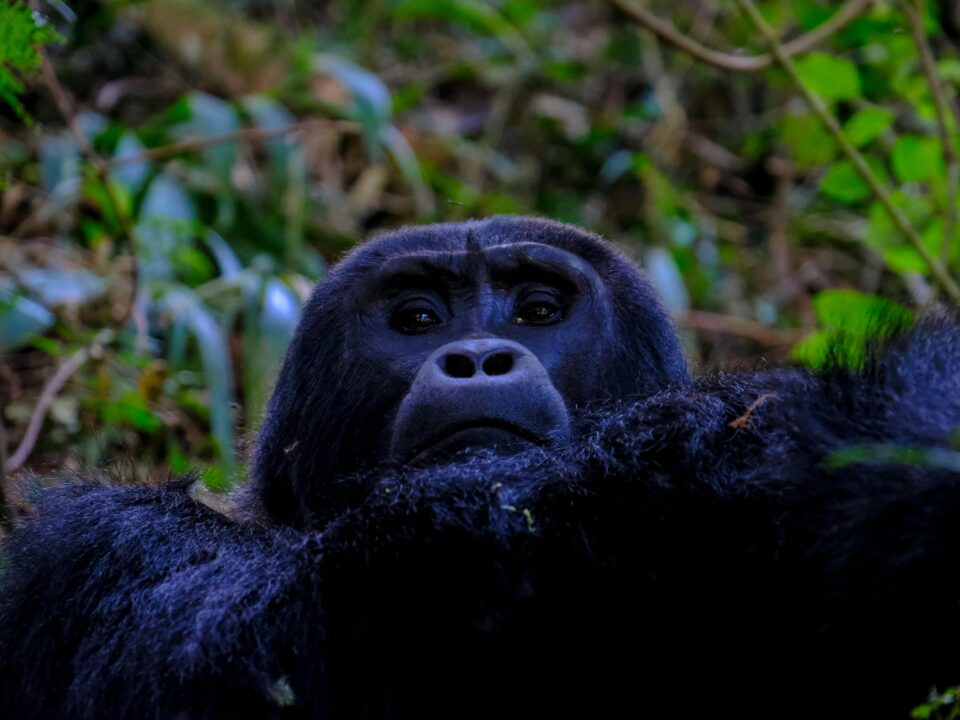
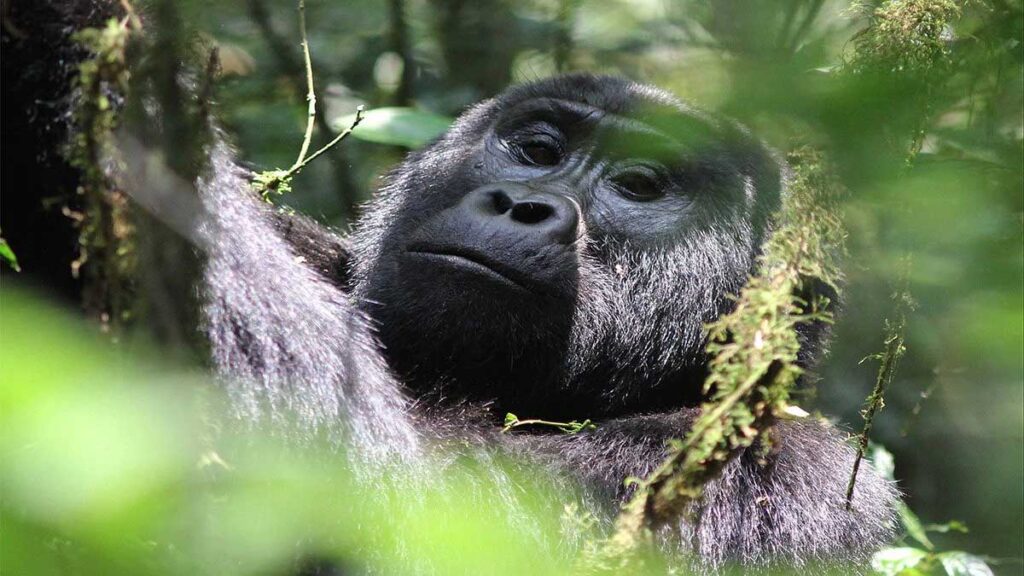
Mountain gorillas have dark fur, which can make exposure challenging in dim environments. If the camera underexposes the image, facial details and the texture of the fur may disappear into deep shadows. If exposure is too bright, lighter areas of the face or patches of sunlight can lose detail.
Use your camera’s exposure preview and histogram when appropriate. These tools can help you determine whether your photographs are too dark or whether bright areas are losing detail.
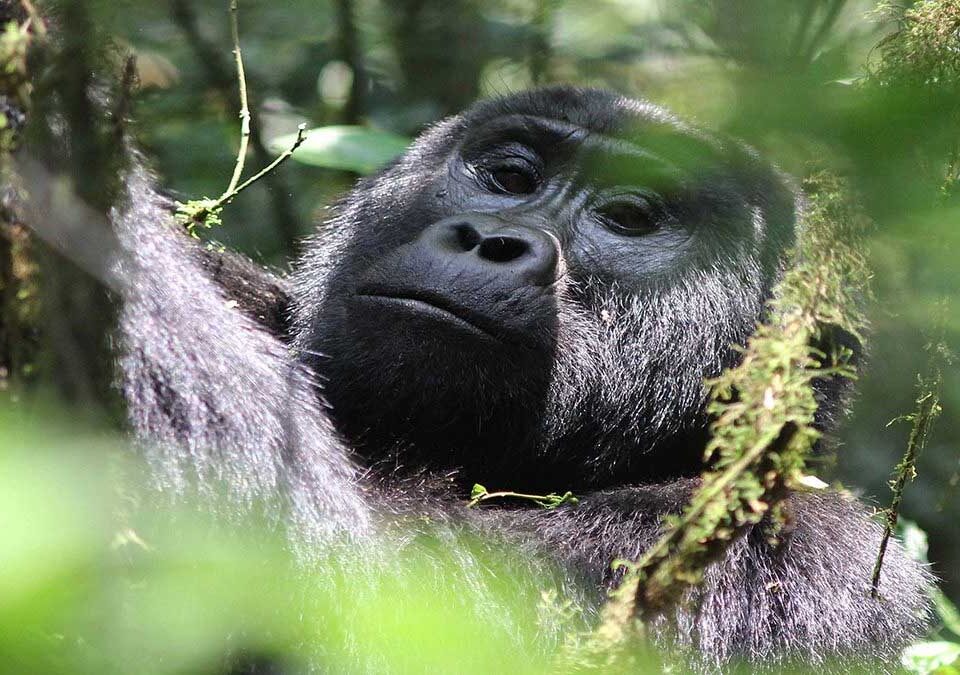
Pay attention to the gorilla’s face, especially when it is partly shaded. Autofocus can sometimes struggle when the animal’s face is obscured by leaves or when the background contains dense vegetation. Selecting an appropriate focus point and taking a moment to confirm focus can improve your results.
Avoid making every photograph a tightly framed portrait. An image showing the gorilla surrounded by forest vegetation can communicate more about its natural habitat and create a stronger sense of place.
Making the Most of Available Light
Look for naturally illuminated areas without attempting to influence where the gorillas move. Soft, indirect light can reveal facial features and fur texture without the harsh contrast that sometimes occurs when sunlight passes directly through gaps in the canopy.
Do not ask a ranger to move the gorillas into a brighter area for photographic reasons. Wildlife photography must adapt to the animal’s natural behavior, not the other way around.
When the light is particularly low, prioritise photographs that you can capture clearly. A sharp, well-composed photograph at a higher ISO is often more useful than a heavily blurred image taken with an unnecessarily slow shutter speed.
Rules for Photographing Gorilla Families and Infants
Gorilla families provide a wide range of photographic opportunities, from portraits of dominant silverbacks to images of mothers caring for their infants. Juveniles may play, climb or interact with other members of the group, creating memorable moments for visitors.
Nevertheless, photographing these interactions requires patience and respect. Never approach an infant, attempt to touch a gorilla or position yourself between family members to obtain a better composition.
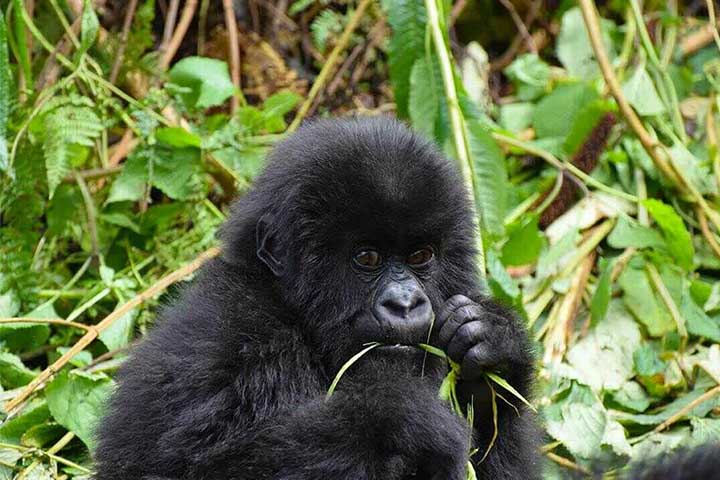
The presence of a baby gorilla can be particularly exciting, but visitors must not disturb the mother or encourage the infant to approach them. Do not make noises, gestures or sudden movements intended to attract the young gorilla’s attention.
Remain within the position established by your ranger and photograph the animals as they behave naturally. If foliage obscures an infant or another gorilla, wait for a clearer view rather than stepping closer or pushing through vegetation.
The same principle applies when a silverback is resting, feeding or displaying social behavior. Give the animals space to continue their activities without interference.
At Exclusive Gorilla Journeys, we encourage travelers to value authentic wildlife encounters over staged photographs. Images that document natural behavior without disturbance are a meaningful way to remember a gorilla trekking safari.
Can You Use Drones for Gorilla Photography in Uganda?
Visitors should not assume that drones are permitted for photography in Uganda’s national parks. Drone operations are subject to aviation requirements, protected-area regulations and applicable authorisation procedures.
For an ordinary gorilla trekking safari, leave the drone behind unless you have obtained explicit confirmation that the proposed operation is legally authorised. A standard gorilla trekking permit does not automatically grant permission to fly a drone.
Drones can produce noise and visual disturbance, and their use around wildlife requires particularly careful management. Operating one without the necessary permissions may result in enforcement action.
A drone is also unnecessary for most gorilla trekking photographs. A suitable handheld camera or smartphone is sufficient for documenting the experience while respecting the forest environment.
If your objective is professional aerial filming, contact the relevant authorities well in advance to establish whether the activity can be authorised and what additional permissions may be necessary.
Respecting Other Visitors During Gorilla Photography
Gorilla trekking is a shared experience. Even when visitors are eager to photograph the animals, they must remain considerate of the other people in their group.
Avoid pushing forward, standing in front of another visitor for an extended period or repeatedly changing positions in a way that obstructs the viewing area. Follow the ranger’s instructions regarding where to stand and when to move.
If you are using a long telephoto lens, be mindful of the space it occupies. Keep your equipment under control and avoid swinging the lens across other visitors as you reposition yourself.
Photography should not become a competition to obtain the closest-looking image. Everyone in the group has a limited opportunity to observe the gorillas, and responsible conduct helps make that opportunity enjoyable for all.
If traveling with a professional photographer, discuss the expectations before the trek. The photographer must follow the same wildlife protection rules as every other visitor unless separate authorisation explicitly establishes otherwise.
Health and Hygiene Rules That Affect Gorilla Photography
The health of mountain gorillas is a major consideration throughout the trekking experience. Visitors can unintentionally expose them to respiratory infections and other illnesses, making hygiene an important part of responsible tourism.
Do not enter the forest to visit gorillas if you have a cold, flu symptoms or another potentially infectious illness. Inform your tour operator and the relevant park staff so that they can advise you on the appropriate next steps.
During the encounter, cover your mouth and nose if you need to cough or sneeze, and turn away from the gorillas as instructed. Follow any current requirements concerning masks, distancing or other health precautions.
Photography equipment should never take priority over these responsibilities. If you feel unwell during the trek, inform your guide rather than attempting to continue simply because you want to obtain photographs.
Avoid eating, drinking or smoking during the gorilla encounter. Food and drink restrictions are part of the established tracking rules, and visitors should follow the ranger’s instructions about when and where refreshments may be consumed.
These precautions are especially important because the success of gorilla conservation depends on maintaining the health of relatively small, vulnerable populations.
Responsible Photography and Gorilla Conservation
Responsible gorilla photography extends beyond the immediate encounter. Every photograph should be obtained in a way that respects the animal, its habitat and the people who make conservation tourism possible.
Do not remove vegetation, break branches or damage plants to create a clearer view. Do not leave litter in the forest, and do not attempt to attract wildlife with food or other objects.
When sharing photographs online, consider the information you reveal about wildlife locations. Avoid publishing sensitive location details that could expose vulnerable animals to unnecessary risks. Follow any restrictions on photography or location sharing communicated by the park authorities.
It is also important to respect the privacy of other people. Ask permission before taking identifiable photographs of fellow travelers, guides, porters or community members, particularly when you intend to publish those images commercially or on social media.
A responsible photographer recognises that the gorillas are not performers and the forest is not a studio. Their natural behavior, welfare and habitat must remain the priority.
How Responsible Tourism Supports Gorilla Conservation
Gorilla trekking contributes to conservation through regulated tourism, employment and economic opportunities for communities around protected areas. Permits, guiding services, accommodation and related travel activities form part of the wider tourism system supporting visits to Uganda’s gorilla habitats.
By following the rules, visitors help maintain the conditions under which gorilla tourism can continue. A calm and well-managed encounter is better for the animals, safer for visitors and more rewarding for photographers.
When you book a gorilla safari with Exclusive Gorilla Journeys, planning should include not only permit arrangements and transport but also preparation for responsible wildlife viewing. Knowing what to expect before entering the forest allows you to concentrate on the experience rather than trying to learn the rules at the last minute.
Common Gorilla Trekking Photography Mistakes to Avoid
Many photography problems can be prevented through preparation. One frequent mistake is arriving with a camera that has not been tested in low light. A visitor may discover only after reaching the gorillas that the auto focus is difficult to use, the memory card is full or the battery is nearly exhausted.
Another mistake is relying entirely on automatic camera settings. Automatic exposure can be helpful, but it may struggle with dark animals against bright patches of vegetation. Learning to adjust exposure compensation, shutter speed and ISO before the safari can make a significant difference.
Some visitors also use excessive digital zoom, which reduces image quality without providing the advantages of optical magnification. Others attempt to take every photograph through a viewfinder or phone screen, missing opportunities to observe the animals directly.
The most serious mistake is ignoring the rules for the sake of a photograph. Using flash, approaching too closely, making loud noises or disregarding a ranger’s instructions is never justified by the possibility of capturing an unusual image.
A good photograph should represent a responsible encounter. If obtaining the picture requires disturbing the gorillas, it is better not to take it.
Planning a Gorilla Trekking Safari for Photography in Uganda
Travellers who want to photograph mountain gorillas should plan their safari around both the trekking experience and their photographic priorities. Bwindi and Mgahinga offer different landscapes and trekking experiences, but neither park guarantees a particular photographic composition, lighting condition or gorilla behavior.
Bwindi Impenetrable National Park is known for its extensive forest habitat and several gorilla trekking sectors. Mgahinga Gorilla National Park offers another opportunity to encounter mountain gorillas in a forest landscape associated with the Virunga mountain range.
Your choice of destination should consider permit availability, accommodation, transport arrangements, fitness and the wider itinerary. Photography equipment should complement these practical considerations rather than determine every decision.
Book Your Gorilla Permit in Advance
A valid gorilla trekking permit is essential for the standard gorilla tracking experience. Demand can be high during popular travel periods, so arranging permits early is an important part of planning.
Confirm the applicable permit requirements, the assigned trekking location and any current visitor guidelines before departure. Permit prices and regulations can change, so obtain current details when making your booking.
A permit allows access to the authorised tracking experience under the applicable conditions. It does not guarantee that a particular gorilla will pose for photographs, that every family member will be visible or that lighting conditions will be ideal.
Choose Accommodation That Supports Your Itinerary
Accommodation near the appropriate trekking sector can reduce early-morning travel and make the experience more comfortable. The best option depends on your budget, preferred level of comfort and the location of your assigned trek.
If photography is an important part of your trip, allow enough time to prepare your camera and equipment the evening before trekking. Charge batteries, format memory cards after safely backing up any existing images, and pack rain protection.
A relaxed start can help you concentrate on the briefing and understand the instructions before entering the forest.
Consider Adding Other Wildlife Experiences
A gorilla trekking safari can be combined with other destinations in Uganda, depending on the duration of your holiday. Travellers may choose to explore savanna wildlife, birdwatching locations, cultural experiences or other primate destinations.
These additions provide opportunities to practice wildlife photography in different environments. Open savanna landscapes, for example, offer very different lighting and composition challenges from dense tropical forest.
Exclusive Gorilla Journeys can help travelers consider how gorilla trekking fits into a broader Uganda safari, taking account of travel time, accommodation preferences and the activities they would like to experience.
Frequently Asked Questions About Gorilla Trekking Photography Rules in Uganda
Is flash photography allowed during gorilla trekking in Uganda?
No. Flash photography is prohibited during gorilla encounters. Switch off the built-in flash on your camera or smartphone before entering the forest, and do not use an external flash or artificial lighting to illuminate the animals.
How far away must I stay from mountain gorillas when taking photographs?
Follow the minimum distance specified by the current park authorities and your ranger guide. Uganda Wildlife Authority’s published 2024–2026 conservation tariff specifies 10 metres. Always follow the latest instructions provided at your briefing, and do not move towards gorillas for a closer photograph.
Can I use a professional camera during gorilla trekking?
Yes, professional cameras can be suitable for ordinary personal photography, provided their use complies with the applicable rules. Choose equipment that performs well in low light, disable flash and carry your camera safely during the hike.
Commercial filming or organised professional productions may require additional authorisation.
Can I take pictures with my smartphone?
Yes, smartphones can be convenient for photography when used responsibly. Make sure the flash is disabled, avoid excessive digital zoom and follow the ranger’s instructions throughout the encounter.
How long can I take photographs of the gorillas?
The established gorilla tracking rules limit visits to one hour per gorilla group per day. The ranger may end the encounter earlier if necessary, so visitors should be prepared to follow instructions immediately.
Can I take selfies with mountain gorillas?
You may take photographs of yourself during the trek only when doing so is consistent with the rules and instructions of the ranger. Do not move closer to the gorillas, attempt to touch them or position yourself in a way that compromises the required distance. A selfie must never take priority over wildlife safety.
Can I use a drone to photograph gorillas?
Do not use a drone in a national park without explicit authorisation from the relevant authorities. A standard gorilla trekking permit does not grant permission for drone operations. Confirm all applicable aviation and protected-area requirements before considering aerial photography.
What camera lens is best for gorilla trekking?
A versatile zoom lens, such as a 70–200mm or 100–400mm lens, can be useful for portraits and wider compositions. The ideal lens depends on your camera system, available light and the permitted viewing distance. A fast aperture is particularly valuable in the forest.
What should I do if a gorilla approaches while I am taking pictures?
Remain calm, stop any movement that might disturb the animal and follow your ranger’s instructions. Do not reach out, touch the gorilla or attempt to move closer. Put the camera aside if necessary to respond safely.
Do I need special permission to take ordinary holiday photographs?
A valid gorilla trekking permit covers the authorised tracking experience, subject to its terms and the applicable rules. Ordinary personal photographs should be distinguished from commercial filming or organised productions, which may require additional permissions. Confirm the requirements for your intended use before traveling.
Conclusion: Enjoy Gorilla Trekking Photography Responsibly With Exclusive Gorilla Journeys
Gorilla trekking photography in Uganda offers a rare opportunity to document one of the world’s most remarkable wildlife encounters. Whether you are using a professional camera or a smartphone, the best results come from preparation, patience and respect for the animals.
Understanding the prohibition on flash photography, maintaining the required distance, respecting the one-hour viewing limit and following the ranger’s instructions are essential parts of the experience. Preparing for low light, choosing suitable equipment and practising your camera settings beforehand can help you obtain memorable photographs without compromising gorilla welfare.
Most importantly, remember that the purpose of gorilla trekking is to encounter mountain gorillas in their natural habitat, not to control their behavior for a photograph. Allow the animals to feed, rest, groom and interact naturally, and accept that some moments are best experienced without a camera.
At Exclusive Gorilla Journeys, we are committed to helping travelers plan meaningful and responsible gorilla trekking experiences in Uganda. From choosing the right destination to arranging permits and preparing for the trek, careful planning helps you enjoy the forest, appreciate its wildlife and preserve memories of an extraordinary safari.
If you are planning a gorilla trekking holiday, contact Exclusive Gorilla Journeys to discuss your itinerary, preferred trekking destination and travel dates. With the right preparation and a responsible approach to photography, your Uganda gorilla safari can become an unforgettable experience.