
Gorilla Trekking Photography Rules in Uganda
October 18, 2026
What Happens If You Don’t Find the Gorillas?
October 18, 2026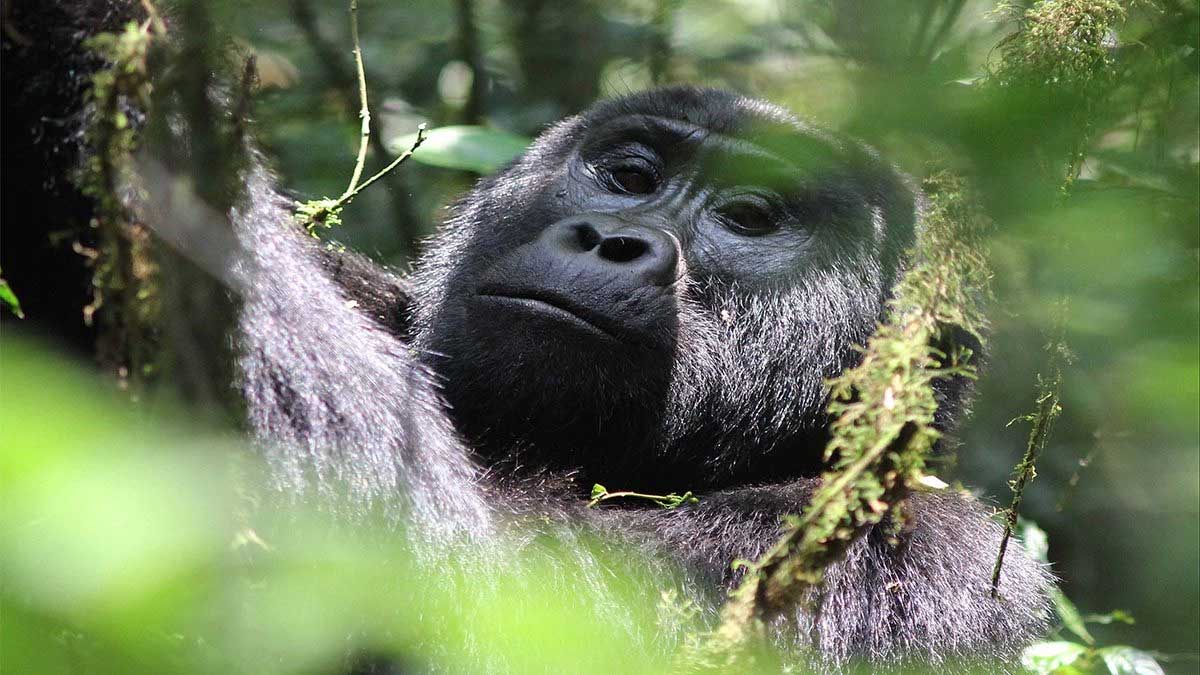
A Complete Guide by Exclusive Gorilla Journeys
Gorilla trekking is one of the most remarkable wildlife experiences in Africa, offering travellers the opportunity to encounter endangered mountain gorillas in their natural forest habitat. In Uganda, visitors travel to destinations such as Bwindi Impenetrable National Park and Mgahinga Gorilla National Park to observe these extraordinary primates in the wild. Rwanda offers a similar experience in Volcanoes National Park. As travellers prepare for their adventure, one common question arises: Can you use a phone while gorilla trekking?
The answer depends on where you are trekking and how you intend to use your phone. A smartphone can be useful for taking photographs, recording memories before and after the encounter, checking essential travel information and communicating with your tour operator when network coverage is available. However, using a phone around mountain gorillas requires care, and certain activities may be restricted by the park authorities or the guide responsible for your trek.
In Uganda, visitors are generally permitted to take photographs of mountain gorillas without using flash, provided they comply with the applicable gorilla trekking regulations. However, visitors should not assume that every phone function is acceptable during the encounter. Loud calls, music, sudden movements, flash photography and any activity that distracts from the guide’s instructions can disturb the animals or compromise the safety of the group.
At Exclusive Gorilla Journeys, we encourage travellers to prepare their phones before entering the forest so that technology supports their experience rather than becoming a distraction. Understanding the rules in advance helps you capture meaningful memories while respecting the welfare of the gorillas and the conservation efforts that protect them.
This guide explains whether you can use a phone while gorilla trekking in Uganda, when phone photography is appropriate, how to prepare your device, what to avoid during the encounter and how to plan a responsible gorilla trekking safari.
Can You Use a Phone While Gorilla Trekking in Uganda?
Yes, you can generally use your phone to take photographs during a gorilla trek in Uganda, provided you follow the rules issued by the Uganda Wildlife Authority and the instructions given by your guide and ranger. Smartphone photography can be an excellent way to document your encounter without carrying a large camera or complicated equipment.
However, using a phone during gorilla trekking is different from using it during an ordinary holiday. You will be visiting wild animals that are sensitive to human behaviour, noise and potential disease transmission. Your actions must therefore be guided by conservation requirements rather than convenience.
The most important distinction is between using your phone as a camera and using it as a communication or entertainment device. Taking a few quiet photographs without flash is generally compatible with the experience. Answering calls, playing music, watching videos or repeatedly checking notifications is unnecessary and can interfere with the encounter.
Your guide may also ask you to put your phone away at particular moments, especially when the gorillas are moving, when the group needs to reposition itself or when your attention must remain on the ranger’s instructions. Such directions should always take priority over photography.
Visitors should also understand that rules can differ between protected areas and may be updated. The safest approach is to confirm the current requirements with your tour operator before departure and listen carefully during the morning briefing.
For travellers booking a gorilla trekking safari with Exclusive Gorilla Journeys, preparing your phone correctly is a simple but important part of getting ready for the forest.
Why Are Phones Useful During Gorilla Trekking?
Smartphones offer several advantages for travellers visiting Uganda’s mountain gorillas. Modern phones have increasingly capable cameras, convenient storage, image stabilisation and simple controls that make photography accessible even to people who do not have professional photography experience.
A phone also reduces the amount of equipment you need to carry. Gorilla trekking can involve steep slopes, muddy trails, thick vegetation and long periods of walking. Carrying a lightweight device instead of a large camera system may make your trek more comfortable.
Another advantage is convenience. You can photograph your journey to the trekking headquarters, the forest scenery, your guide and the landscapes surrounding Bwindi or Mgahinga before and after your gorilla encounter. These photographs help preserve the full story of your safari rather than recording only the time spent with the gorillas.
A phone can also hold your digital travel documents, accommodation details, emergency contacts and copies of your booking information. Keeping these materials available offline is particularly useful in remote areas where mobile data may be unreliable.
Nevertheless, a smartphone should not become the centre of your experience. Mountain gorillas display fascinating natural behaviours, including feeding, grooming, resting, playing and interacting with family members. Watching these moments directly can be more rewarding than viewing everything through a screen.
The best approach is to use your phone selectively, capture a few meaningful photographs and then spend time observing the gorillas without a device between you and the experience.
Can You Take Photos of Gorillas Using a Smartphone?
Smartphone photography is one of the easiest ways to preserve memories of your gorilla trekking experience in Uganda. You do not necessarily need an expensive camera to take meaningful photographs of mountain gorillas, provided you understand the conditions in which you will be photographing them.
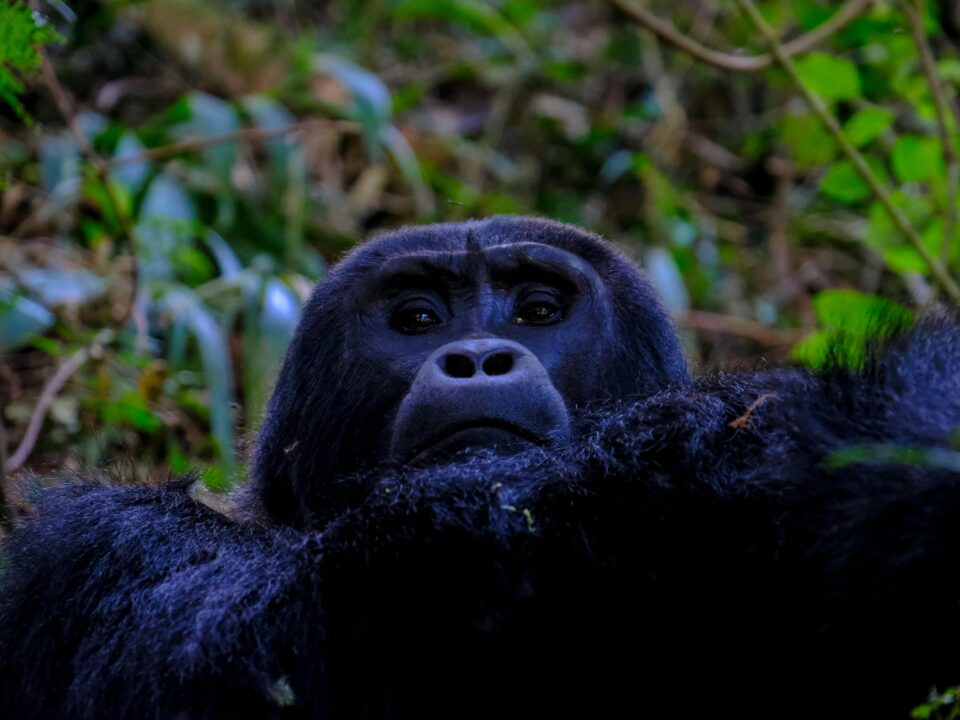
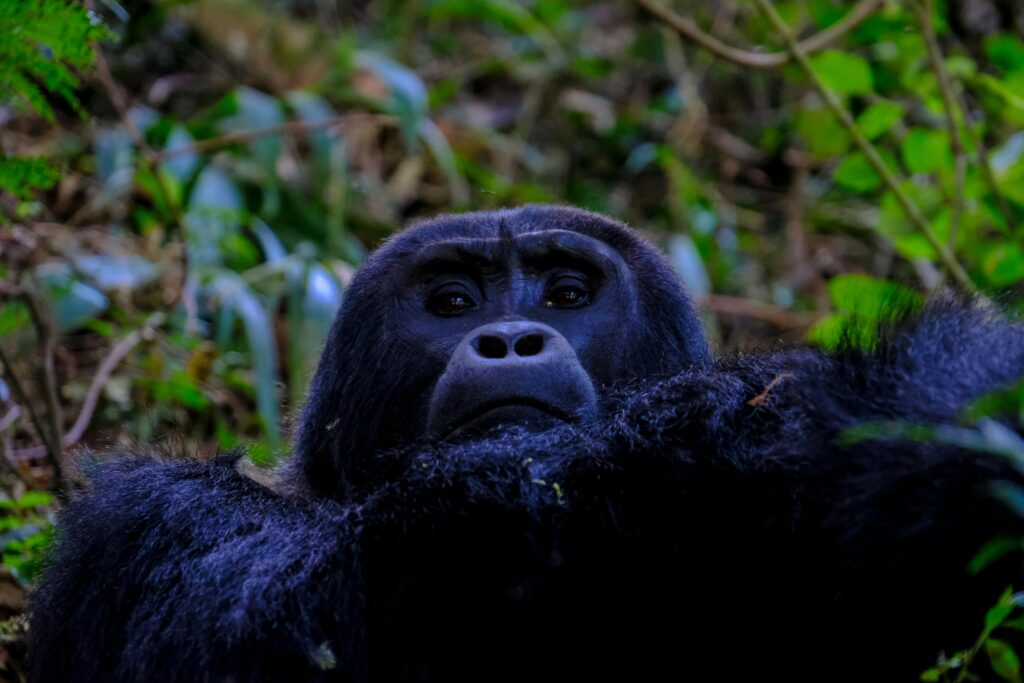
The forest environment presents several challenges. Bwindi Impenetrable National Park has dense vegetation, shaded trails and areas where natural light is limited. Gorillas may sit beneath trees, move through thick undergrowth or remain partially hidden behind leaves and branches. These conditions can make smartphone photography difficult, particularly when you are relying on automatic camera settings.
Despite these challenges, a modern smartphone can capture excellent photographs when the lighting is sufficient and the gorillas are within a suitable distance. The most important consideration is not the sophistication of your phone but your ability to use it without disturbing the animals.
Before your trek, familiarise yourself with the camera controls. Learn how to open the camera quickly, adjust exposure if necessary and take photographs without activating the flash. This preparation reduces the time spent handling your phone during the encounter.
You should also avoid repeatedly stepping forward, moving sideways or extending your phone towards a gorilla to improve your composition. Your position must remain consistent with the distance requirements and the instructions given by the ranger.
At Exclusive Gorilla Journeys, we recommend treating smartphone photography as a supporting activity rather than the main purpose of your trek. A few well-timed photographs can preserve the memory of your encounter without preventing you from appreciating the gorillas’ natural behaviour.
Is Phone Flash Photography Allowed During Gorilla Trekking?
No. Flash photography is prohibited during gorilla trekking in Uganda. This restriction applies to smartphone cameras as well as conventional digital cameras.
The flash on a phone may appear small, but a sudden burst of bright light can startle gorillas and disturb their behaviour. Mountain gorillas are wild animals, and their welfare depends on visitors behaving calmly and predictably in their presence.
A smartphone camera may automatically activate its flash when the surrounding environment becomes dark. This is particularly relevant in Bwindi’s forest, where the canopy can significantly reduce the amount of natural light reaching the ground.
To avoid accidentally violating the rules, switch off the flash before entering the forest. Check that it is disabled in the camera settings rather than assuming your phone will make the correct decision automatically.
If your phone offers a night mode, you may be able to use it for photographs in low light, but remember that this feature does not guarantee a sharp image. Gorillas move naturally, and a long exposure can produce blurred photographs. It is better to accept a less-than-perfect image than to use prohibited lighting or move closer to the animals.
Do not attach an external flash or introduce additional lighting equipment without explicit authorisation. Ordinary tourist photography must remain within the applicable park regulations.
The same principle applies when recording video. A phone’s video mode does not provide an exemption from the no-flash rule. Before your safari, practise recording video with the flash disabled so that you do not have to experiment with settings while standing near the gorillas.
Can You Make Phone Calls During Gorilla Trekking?
Making phone calls during the actual gorilla encounter is not recommended. Although your phone may have a signal in some parts of the forest, the encounter is not an appropriate time for ordinary conversations.
A ringing phone can interrupt the quiet atmosphere, while a conversation may distract you and other members of the trekking group. Loud voices and sudden sounds can disturb wildlife, and your attention should remain on the guide’s instructions.
There is also a practical consideration. Gorilla trekking is physically demanding, and the forest floor may be uneven, slippery or steep. Handling your phone while walking can make it harder to maintain your balance, watch the trail and respond to instructions.
Before the trek begins, inform family members or colleagues that you may be unavailable for several hours. Set your phone to silent mode and disable unnecessary notifications. If you need to remain reachable for an important reason, discuss the situation with your guide before entering the forest and follow the instructions provided by park staff.
You can make calls before departing from the trekking headquarters or after returning from the forest, subject to network coverage.
For travellers on a longer Uganda safari, this simple arrangement allows you to remain connected when practical without compromising your wildlife experience.
Should You Put Your Phone on Silent Mode?
Yes. Putting your phone on silent mode is one of the simplest ways to prepare for gorilla trekking.
Modern smartphones can produce a wide range of sounds, including incoming-call alerts, message notifications, alarms, camera sounds and application reminders. Even when these sounds seem harmless in an ordinary setting, they are unnecessary during a wildlife encounter.
Before leaving your lodge, silence notifications and disable vibration if it could create a noticeable disturbance. Check scheduled alarms, calendar reminders and other automatic alerts that might activate during your trek.
You should also avoid playing music, voice recordings or videos through your phone’s speakers. Headphones are unnecessary during the encounter because you need to hear your guide and remain aware of your surroundings.
Silent mode does not mean ignoring important instructions. Instead, it helps remove distractions so that you can respond promptly when the ranger asks the group to move, remain still or change position.
Remember that your phone is only one potential source of noise. Whispering loudly, laughing excessively or moving equipment abruptly can also disturb the group. Responsible behaviour involves maintaining a calm atmosphere throughout the encounter.
Can You Record Videos of Mountain Gorillas on Your Phone?
Recording videos with a smartphone may be possible during a gorilla trek in Uganda, provided you comply with current park rules and your guide’s instructions. Video recording must follow the same basic principles of responsible wildlife photography, including no flash, appropriate distance and minimal disturbance.
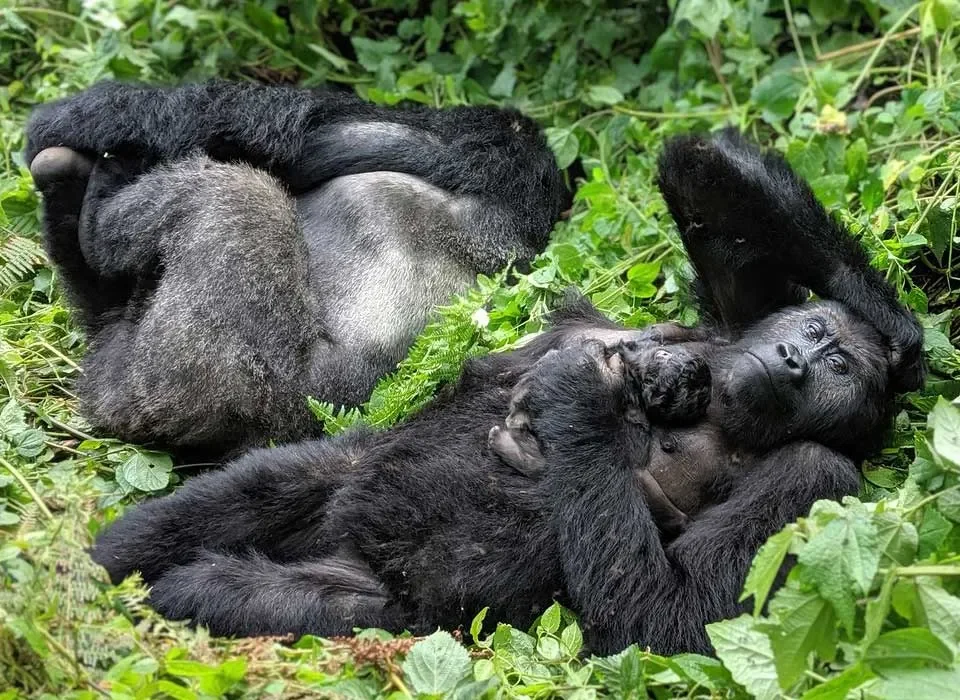
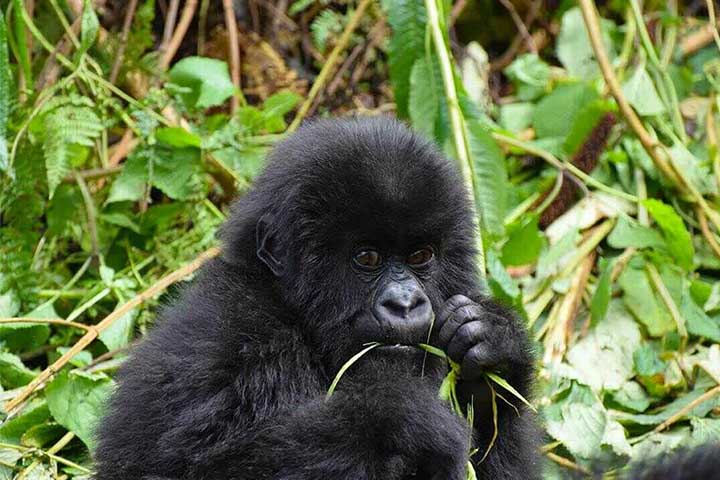
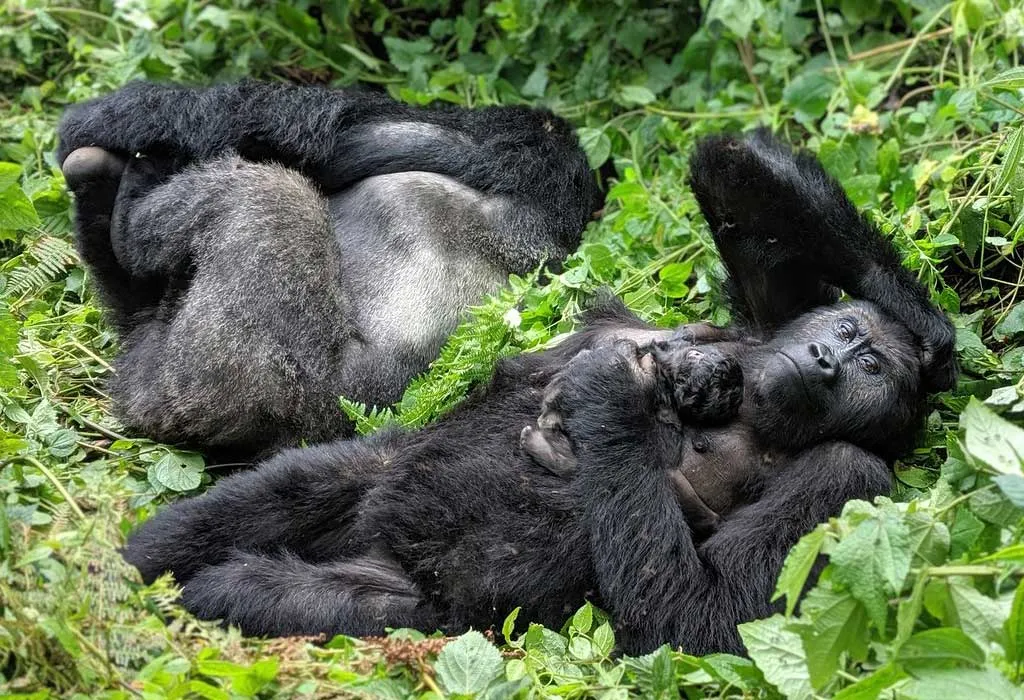
Short video clips can capture behaviours that still photographs cannot fully communicate. You may record a gorilla feeding, a juvenile playing with another family member or an adult resting beneath the forest canopy. These moments can make your safari memories particularly meaningful.
However, recording continuously throughout the encounter is not always the best approach. The gorillas may move unexpectedly, and you may need to change position according to the ranger’s directions. Holding your phone in front of your face for an extended period can also prevent you from noticing what is happening around you.
A better approach is to record a short clip when the opportunity is appropriate, lower your phone and observe the animals directly. You can repeat this process if conditions allow and your guide has no objection.
Keep your movements slow and avoid sweeping your phone rapidly across the group. Do not extend your arm towards the gorillas or attempt to obtain footage from a position that violates the required viewing distance.
Professional filming and commercial productions may require separate authorisation. If you intend to create promotional content, a documentary or a commercial video rather than ordinary holiday footage, confirm the applicable filming requirements before travelling.
Phone Rules for Gorilla Trekking in Uganda and Rwanda
Uganda and Rwanda are both leading destinations for mountain gorilla trekking, but travellers should not assume that every operational rule is identical in the two countries.
In Uganda, gorilla trekking takes place in Bwindi Impenetrable National Park and Mgahinga Gorilla National Park. Visitors follow the requirements of the Uganda Wildlife Authority, alongside instructions from their assigned guide and ranger. Flash photography is prohibited, and visitors must respect the applicable distance, health and behavioural rules.
Rwanda’s mountain gorilla trekking takes place in Volcanoes National Park. Visitors must follow the regulations established by the relevant park authorities, including any instructions concerning phones and electronic devices during the gorilla encounter.
Some published Rwanda gorilla rules have explicitly listed mobile phones among the prohibited items or activities during the encounter. Consequently, a traveller should not assume that permission to take phone photographs in Uganda automatically applies in Rwanda.
If you are considering a gorilla trekking safari in both countries, ask your tour operator to confirm the current phone-use policy for each park before departure. This is particularly important if taking photographs with a smartphone is an essential part of your travel plans.
Exclusive Gorilla Journeys can help travellers understand the practical requirements of their chosen destination and prepare for a responsible gorilla trekking experience.
Why Must You Keep Your Phone at a Safe Distance from Gorillas?
Maintaining the required distance is one of the most important aspects of responsible gorilla trekking. In Uganda, the published tracking rules specify a minimum distance of 10 metres between visitors and gorillas. Visitors must follow the current instructions of the ranger, including any stricter directions given during the encounter.
Your phone does not provide an exception to this rule. You should never approach a gorilla, stretch your arm towards it or move into restricted space simply to take a closer photograph.
Mountain gorillas can be curious, and their movements are not always predictable. A juvenile may approach the group, or an adult may move through the vegetation near visitors. If a gorilla comes closer, remain calm and follow the ranger’s instructions rather than reaching out to touch it or trying to capture a close-up photograph.
The distance requirement is important for both animal welfare and disease prevention. Gorillas are susceptible to some human respiratory infections, and reducing close contact helps limit the risk of transmitting illness.
It also helps preserve the animals’ natural behaviour. When visitors remain calm and maintain the required space, gorillas have a better opportunity to continue feeding, resting and interacting without unnecessary disturbance.
If your smartphone cannot capture a detailed image from your permitted position, accept the limitation. The priority is to observe the animals responsibly, not to obtain a photograph at any cost.
Can You Use Mobile Data or Internet in Bwindi Impenetrable National Park?
Mobile network coverage in and around Bwindi varies according to your location, network provider, terrain and surrounding vegetation. Some accommodation facilities and nearby communities may have usable connectivity, while remote forest trails may have weak or unavailable signals.
You should not rely on continuous mobile internet during your gorilla trek. Maps, messaging applications, cloud storage and online travel documents may not work reliably when you need them.
Before leaving your accommodation, download essential information for offline access. This may include your itinerary, permit details, accommodation address, emergency contact information and any transport arrangements you may need after the trek.
If you use your phone for navigation during your wider Uganda safari, remember that the gorilla trekking route itself is managed by authorised guides and trackers. You should not leave the group or attempt to navigate independently through the forest.
Mobile connectivity is more useful before and after the trek, when you may want to contact your tour operator, communicate with your family or share your experience.
Visitors travelling from abroad should also check international roaming charges and consider obtaining a suitable local SIM or eSIM where compatible. However, purchasing a local SIM does not guarantee coverage inside the forest.
At Exclusive Gorilla Journeys, we encourage travellers to plan for limited connectivity in remote destinations. Doing so helps prevent unnecessary stress and allows you to concentrate on the wildlife experience.
How to Prepare Your Phone Before a Gorilla Trek
Preparing your phone before the trek makes it easier to use responsibly and reduces the likelihood of accidental disturbances.
Begin by charging your phone fully the night before your excursion. You may need it for photographs, travel documents and communication after returning from the forest. If you intend to take many photographs, consider carrying a fully charged power bank in your daypack, provided you can transport it safely and conveniently.
Next, check the camera settings. Disable flash and familiarise yourself with the controls for taking photographs and recording video. Practising beforehand will help you avoid fumbling with the device when the gorillas are nearby.
Clean your camera lens before leaving your accommodation. Fingerprints, dust and moisture can reduce image quality, especially in a forest environment where lighting may already be limited.
Protect your phone against rain and moisture. Bwindi is a humid rainforest, and weather conditions can change quickly. A suitable waterproof pouch or protective case can help prevent damage, although you should still avoid exposing the device unnecessarily.
Set your phone to silent mode and turn off distracting notifications. If you need offline access to booking details or maps, download them in advance rather than depending on a live internet connection.
Finally, secure your phone in a zipped pocket or a suitable daypack while walking. The forest can be slippery, and dropping a device on a muddy slope or into thick vegetation can be difficult to recover from.
What Should You Avoid Doing with Your Phone During Gorilla Trekking?
Responsible phone use involves more than switching off the flash. The way you handle your device can influence the comfort of other visitors and the behaviour of the animals.
Avoid holding your phone too close to a gorilla, even when you believe the animal is accustomed to people. Never attempt to touch a gorilla with your phone, use it to attract the animal’s attention or move towards the family to obtain a better view.
Do not play sounds, imitate gorilla calls through your device or use music to create a particular atmosphere for a video. Such behaviour is inappropriate during a wildlife encounter and may disturb the animals.
Avoid using your phone while walking along challenging sections of the trail. Concentrate on your footing, use available support where necessary and keep your device securely stored until you are in a safe position.
You should also avoid arguing with the guide about taking photographs. If the ranger asks you to lower your phone or stop recording, comply immediately. The guide is responsible for managing the encounter, and conditions may change rapidly.
Finally, do not allow photography to prevent other members of your group from seeing the gorillas. Keep your movements controlled and follow instructions about where to stand so that everyone can enjoy the encounter without unnecessary interference.
Is It Better to Use a Smartphone or a Professional Camera?
The choice between a smartphone and a dedicated camera depends on your photography interests, experience and travel preferences.
A smartphone is convenient, lightweight and easy to operate. It is a practical option for travellers who want to record a few memories without carrying additional equipment. It also works well for photographing landscapes, accommodation and safari experiences outside the gorilla encounter.
A professional camera may offer better performance in low light, more optical zoom and greater control over exposure. These advantages can be useful in a dense forest, where gorillas may be partially obscured by vegetation or positioned in shaded areas.
However, professional equipment can be heavier and more complicated to operate. A traveller who spends too much time changing settings may miss important moments or become distracted from the ranger’s instructions.
Neither option guarantees excellent photographs. Lighting, distance, vegetation and the gorillas’ natural movements all influence the results.
If you are primarily interested in experiencing the gorillas rather than producing professional wildlife images, a smartphone may be sufficient. If photography is an important part of your safari, consider discussing suitable equipment with your tour operator before departure.
Regardless of the device you choose, the rules remain the same: keep your flash off, maintain the required distance, avoid disturbing the animals and follow the guide’s instructions.
Can You Share Gorilla Trekking Photos on Social Media?
Yes, you can generally share photographs from your Uganda gorilla trekking experience, provided you obtained them lawfully and complied with the relevant park rules.
Many travellers enjoy sharing their encounters on social media because the photographs help friends and family understand the importance of mountain gorilla conservation. Responsible posts can also encourage other visitors to explore Uganda’s national parks and support conservation-oriented tourism.
However, consider the message your photographs communicate. Images that appear to show visitors touching gorillas, standing too close to them or ignoring their guides may create the wrong impression, even when the circumstances are unclear.
When sharing your photographs, explain that gorilla trekking is a regulated activity and that visitors must follow the instructions of authorised guides. Avoid encouraging others to approach wildlife or imitate unsafe behaviour for photographs.
You should also respect the privacy of other travellers. Before publishing identifiable photographs or videos of members of your trekking group, obtain their permission.
If you are creating promotional content for a business or producing commercial material, check whether additional authorisation is required.
Sharing responsible wildlife photographs can help promote awareness, but the quality of your experience should not be measured by the number of images you publish.
Does Phone Use Affect Gorilla Conservation?
Phone use can affect the gorilla trekking experience when it encourages visitors to ignore rules, make unnecessary noise or prioritise photography over animal welfare. Responsible use, on the other hand, can help travellers document their encounter without adding significant disturbance.
Mountain gorillas face conservation challenges that include habitat pressures, disease risks and the need for continued protection. Regulated tourism contributes to conservation through permit revenue, employment and economic opportunities for communities surrounding protected areas.
The success of gorilla tourism depends on keeping encounters carefully managed. Visitor numbers are restricted, viewing time is limited and guides supervise behaviour around habituated gorilla families.
In Uganda, ordinary gorilla tracking allows a maximum of one hour with the gorilla family under the standard viewing rules. The limited viewing period makes it especially important to listen to the ranger and avoid distractions.
Phones can support conservation awareness when travellers use their photographs to explain the importance of protecting wildlife and respecting natural habitats. However, no photograph is worth breaking the rules or causing unnecessary stress to an endangered animal.
By using your phone carefully, you help maintain the responsible tourism practices that make mountain gorilla encounters possible.
Phone Use During Gorilla Trekking in Bwindi and Mgahinga
Uganda offers two principal destinations for mountain gorilla trekking: Bwindi Impenetrable National Park and Mgahinga Gorilla National Park. Both provide opportunities to observe habituated mountain gorilla families under the supervision of authorised guides and rangers.
Bwindi is known for its extensive forest habitat and four main trekking sectors: Buhoma, Ruhija, Rushaga and Nkuringo. The terrain and vegetation vary across the park, so lighting and photographic conditions may differ considerably between encounters.
Mgahinga lies within the Virunga volcanic landscape and offers a different setting for gorilla trekking. Its forested slopes and mountainous terrain also require visitors to prepare for changing weather and demanding walking conditions.
In both destinations, visitors should prepare their phones in the same practical way: charge the battery, disable flash, silence notifications and protect the device from moisture. Most importantly, follow the instructions provided by your guide and the current regulations for the specific park.
Your choice of trekking destination should not depend solely on the opportunities for smartphone photography. The trekking sector, accommodation location, permit availability, physical fitness and overall safari itinerary are more important considerations when planning your visit.
Exclusive Gorilla Journeys can help you select a suitable destination and arrange the practical details of your Uganda gorilla trekking safari.
How Phone Use Fits into Your Gorilla Trekking Safari
A gorilla trekking safari involves much more than the hour spent observing the gorillas. Your experience begins with travel to the protected area, preparation at your accommodation, a morning briefing and a guided walk through the forest.
You may want to use your phone to photograph the landscapes on the journey, keep track of your itinerary or communicate with your driver before reaching the park headquarters. These are practical uses that can make your safari more convenient.
During the briefing, listen carefully to the instructions about photography, distance, health precautions and behaviour. This is the appropriate time to ask questions about smartphone use and clarify any uncertainty about the rules.
Once the trek begins, keep your phone securely stored while walking through difficult terrain. When you reach the gorillas, use it only when permitted and when doing so does not distract you from the ranger’s directions.
After the encounter, you can return to using your phone for ordinary communication, photography and sharing your memories, subject to the applicable park requirements.
This balanced approach ensures that technology remains useful without becoming a source of distraction.
Plan Your Gorilla Trekking Safari with Exclusive Gorilla Journeys
At Exclusive Gorilla Journeys, we understand that travellers want to make the most of their mountain gorilla encounter. For many visitors, photographs are an important way to preserve memories of an experience that may be a once-in-a-lifetime adventure.
We encourage every traveller to prepare carefully, understand the rules and approach the encounter with respect for the gorillas and their habitat. Knowing when to use your phone, when to put it away and how to follow your guide’s instructions can make a meaningful difference to your experience.
When planning your safari, consider your preferred trekking destination, the location of your accommodation, the physical demands of the trek and the availability of permits for your intended travel dates. These details help create a more comfortable and organised journey.
If you are visiting Uganda for the first time, a well-planned itinerary can also combine gorilla trekking with other wildlife and cultural experiences, depending on your interests, available time and budget.
Whether you choose Bwindi Impenetrable National Park or Mgahinga Gorilla National Park, our aim is to help you prepare for an unforgettable and responsible wildlife adventure.
Contact Exclusive Gorilla Journeys to discuss your preferred travel dates, gorilla trekking destination and safari arrangements. With appropriate preparation, you can enjoy the encounter, take photographs when permitted and return home with lasting memories of Uganda’s remarkable mountain gorillas.
Frequently Asked Questions About Using a Phone While Gorilla Trekking
Can I carry my phone into Bwindi Impenetrable National Park?
Yes, you can carry a phone for practical purposes and, where permitted, photography. Keep it securely stored while walking and follow the instructions of your guide and ranger during the encounter.
Can I use my phone camera without flash?
In Uganda, visitors can generally photograph gorillas without flash, subject to park rules and the guide’s instructions. Check your camera settings before entering the forest to prevent the flash from activating automatically.
Can I use WhatsApp during gorilla trekking?
You should not rely on WhatsApp or other internet-based communication services during the trek. Network coverage may be unreliable, and messaging during the gorilla encounter can distract you from the experience and your guide’s instructions.
Can I use my phone to take selfies with gorillas?
You must not approach gorillas or violate the required distance to take a selfie. Keep a safe distance, follow the ranger’s instructions and never attempt to touch a gorilla or extend your phone towards it.
Can I record videos of gorillas with my phone?
Phone video recording may be possible in Uganda when permitted by the park authorities and your guide. Flash and artificial lighting restrictions still apply, and commercial filming may require separate authorisation.
Can I use my phone while trekking in Rwanda?
You should confirm the current rules for Volcanoes National Park before your visit. Phone restrictions can differ from Uganda’s rules, so do not assume that smartphone photography is permitted during the encounter.
Will my phone have network coverage in Bwindi?
Coverage varies by location, provider and terrain. Download essential documents and travel information in advance, and do not depend on mobile data being available inside the forest.
Should I bring a power bank for gorilla trekking?
A fully charged phone is usually sufficient for ordinary photography, but a small power bank can be useful during a longer safari. Keep it securely packed and avoid handling equipment unnecessarily near the gorillas.
What is the most important phone rule during gorilla trekking?
The most important principle is to follow the current park regulations and your guide’s instructions. In Uganda, this includes avoiding flash photography, maintaining the required distance and behaving quietly and responsibly around the gorillas.
Final Thoughts: Use Your Phone Responsibly During Gorilla Trekking
So, can you use a phone while gorilla trekking? In Uganda, the answer is generally yes for permitted activities such as smartphone photography, provided you follow the applicable rules and the instructions of your guide. However, you should not assume that every phone function is acceptable or that the same rules apply in every destination.
Prepare your device before entering the forest, switch off the flash, silence notifications and keep your phone securely stored while walking. During the encounter, take photographs only when appropriate, maintain the required distance and put the device away whenever the ranger asks you to do so.
Above all, remember that gorilla trekking is an opportunity to observe endangered mountain gorillas in their natural habitat. The experience is about much more than photographs. Watching a gorilla family feed, rest and interact in the forest can create memories that no smartphone image can fully reproduce.
With thoughtful preparation and responsible behaviour, you can enjoy your gorilla trekking safari while respecting the wildlife that makes it so special.
Exclusive Gorilla Journeys is ready to help you plan your Uganda gorilla trekking adventure, from choosing the right destination to arranging permits, accommodation and transport.