
Bwindi Gorilla Trekking and Lake Bunyonyi Safari
November 25, 2026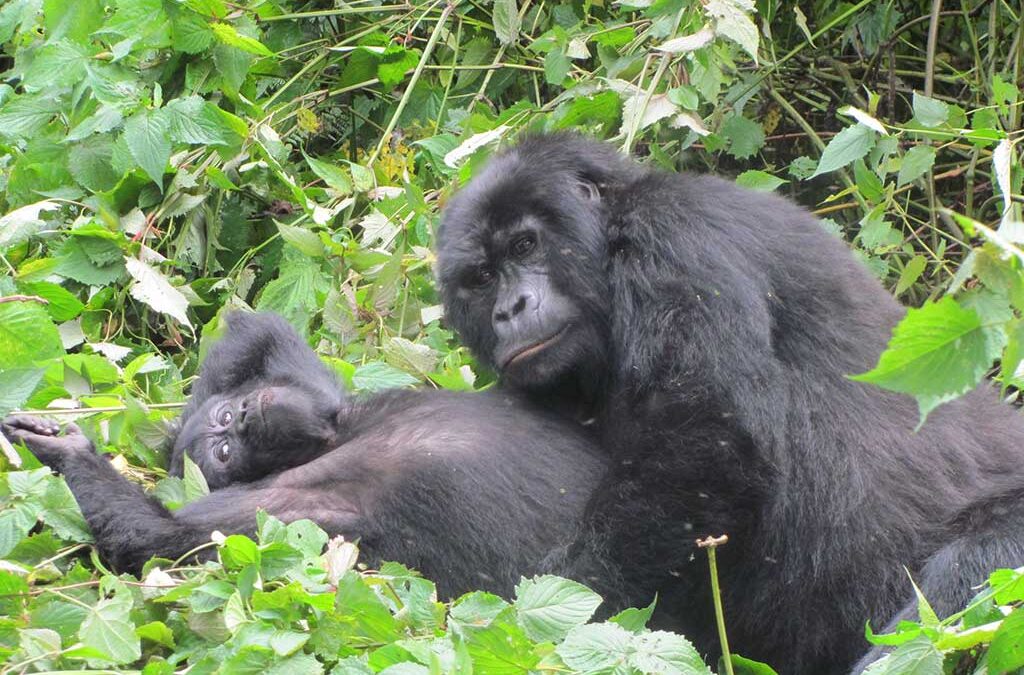
A safari combining gorilla trekking in Bwindi Impenetrable National Park and wildlife viewing in Queen Elizabeth National Park is one of the most rewarding ways to experience Uganda. It brings together two extraordinary wildlife destinations, offering travellers an opportunity to encounter endangered mountain gorillas in their natural rainforest habitat before exploring the open savannahs, wetlands, lakes and wildlife-rich plains of western Uganda.
Bwindi offers an intimate encounter with mountain gorillas, one of the world’s most remarkable wildlife experiences. Its ancient tropical rainforest shelters approximately half of the world’s remaining mountain gorilla population. Guided treks through the forest lead visitors into the habitat of habituated gorilla families, where they can spend a strictly regulated hour observing these extraordinary primates.
Queen Elizabeth National Park provides a completely different safari atmosphere. Its extensive savannah landscapes, crater lakes, woodland areas and wetlands support elephants, buffaloes, lions, leopards, Uganda kobs, hippos, crocodiles and numerous bird species. Visitors can enjoy traditional game drives, boat cruises along the famous Kazinga Channel, chimpanzee tracking in Kyambura Gorge and wildlife viewing in the Ishasha sector, which is particularly famous for its tree-climbing lions.
Combining these two destinations creates a diverse Uganda safari that appeals to honeymooners, families with eligible-age children, photographers, wildlife enthusiasts, adventure travellers and visitors experiencing Africa for the first time.
At Exclusive Gorilla Journeys, we organise Uganda gorilla trekking and wildlife safaris that connect these remarkable destinations through carefully planned itineraries. Whether you have five days, seven days or more, a Bwindi and Queen Elizabeth safari can be designed around your travel dates, accommodation preferences, budget and wildlife interests.
This guide explains everything you need to know about planning a successful Bwindi gorilla trekking and Queen Elizabeth safari, including the best time to travel, gorilla trekking arrangements, safari activities, accommodation, transport, costs and recommended itineraries.
Understanding the Two Destinations
Before planning your safari, it is important to understand what makes Bwindi and Queen Elizabeth National Park different and why they complement each other so well.
Bwindi Impenetrable National Park: Home of the Mountain Gorillas
Bwindi Impenetrable National Park is a UNESCO World Heritage Site recognised for its exceptional biodiversity and conservation importance. The park covers approximately 321 square kilometres of mountainous rainforest, with steep slopes, deep valleys, thick vegetation and an extensive network of forest trails.
Its most celebrated attraction is mountain gorilla trekking. The forest protects a substantial proportion of the world’s remaining mountain gorillas, making it one of the most important destinations for gorilla conservation and responsible wildlife tourism.
Unlike a conventional game drive, gorilla trekking involves walking through the forest with trained guides and Uganda Wildlife Authority rangers. The gorillas move freely through their natural environment, so the location of each habituated family can change from day to day.
The experience therefore combines adventure, nature exploration and wildlife observation. Some treks involve relatively manageable forest paths, while others require navigating steep slopes, muddy trails, thick vegetation and uneven ground.
Bwindi is divided into four main gorilla trekking sectors: Buhoma, Ruhija, Rushaga and Nkuringo. Each sector has its own accommodation options, landscapes and trekking characteristics. The appropriate sector depends on permit availability, accommodation arrangements and the overall safari route.
Queen Elizabeth National Park: Uganda’s Classic Wildlife Safari Destination
Queen Elizabeth National Park is among Uganda’s most celebrated savannah wildlife destinations. Covering approximately 1,978 square kilometres, the park features open grasslands, woodland, wetlands, crater lakes, forested gorges and the spectacular Kazinga Channel.
The park’s varied ecosystems support a remarkable range of wildlife. Elephants, buffaloes, lions, leopards, Uganda kobs, warthogs, hyenas, hippos and crocodiles are among the animals visitors may encounter during a safari.
Queen Elizabeth National Park is particularly attractive because it offers several different wildlife experiences within one protected area. Game drives provide opportunities to search for large mammals across the Kasenyi Plains and Ishasha sector. Boat cruises reveal hippos, crocodiles, elephants and waterbirds along the Kazinga Channel, while guided chimpanzee tracking introduces visitors to the primates inhabiting Kyambura Gorge.
The park is also an outstanding birdwatching destination, with habitats supporting numerous resident and migratory species.
Why Combine Bwindi and Queen Elizabeth National Park?
The combination works exceptionally well because the two destinations provide different but complementary wildlife experiences.
Bwindi focuses on mountain gorilla conservation and rainforest exploration, while Queen Elizabeth offers classic African savannah wildlife viewing. Visitors can therefore experience two very different ecosystems within one holiday.
The geographical location of the destinations also makes the combination practical. Travellers can move between Queen Elizabeth and Bwindi through the Ishasha region, depending on their selected gorilla trekking sector and accommodation.
This route creates an opportunity to enjoy a wildlife safari in Queen Elizabeth before or after trekking gorillas in Bwindi. Visitors travelling through Ishasha may also have an opportunity to search for its famous tree-climbing lions.
For travellers interested in Uganda’s primates and larger mammals, this combination provides excellent diversity without requiring a journey across the entire country.
Gorilla Trekking in Bwindi: What to Expect
Gorilla trekking is the main reason many international visitors travel to Bwindi. It provides an opportunity to observe mountain gorillas in their natural habitat while supporting conservation programmes that protect these endangered primates.
The experience begins early in the morning at the designated visitor information centre in the sector where the visitor has booked a permit. Travellers register, present their identification and permits, and attend a briefing conducted by Uganda Wildlife Authority rangers.
During the briefing, visitors learn about gorilla behaviour, forest safety, trekking procedures and the conservation rules that must be followed throughout the experience.
After the briefing, visitors are allocated to gorilla families and organised into trekking groups. The allocation is managed by park authorities, taking into account factors such as the location of the gorillas, trekking arrangements and visitor considerations.
The guides then lead visitors into the forest to search for their assigned gorilla family. The duration of the trek varies considerably. Some groups are found after a relatively short walk, while others require several hours of hiking through challenging terrain.
The Uganda Wildlife Authority indicates that gorilla treks can take approximately two to seven hours, depending on the circumstances and location of the gorillas. The actual encounter with a habituated family is limited to one hour for standard gorilla tracking. Uganda Wildlife Authority+1
Meeting a Mountain Gorilla Family
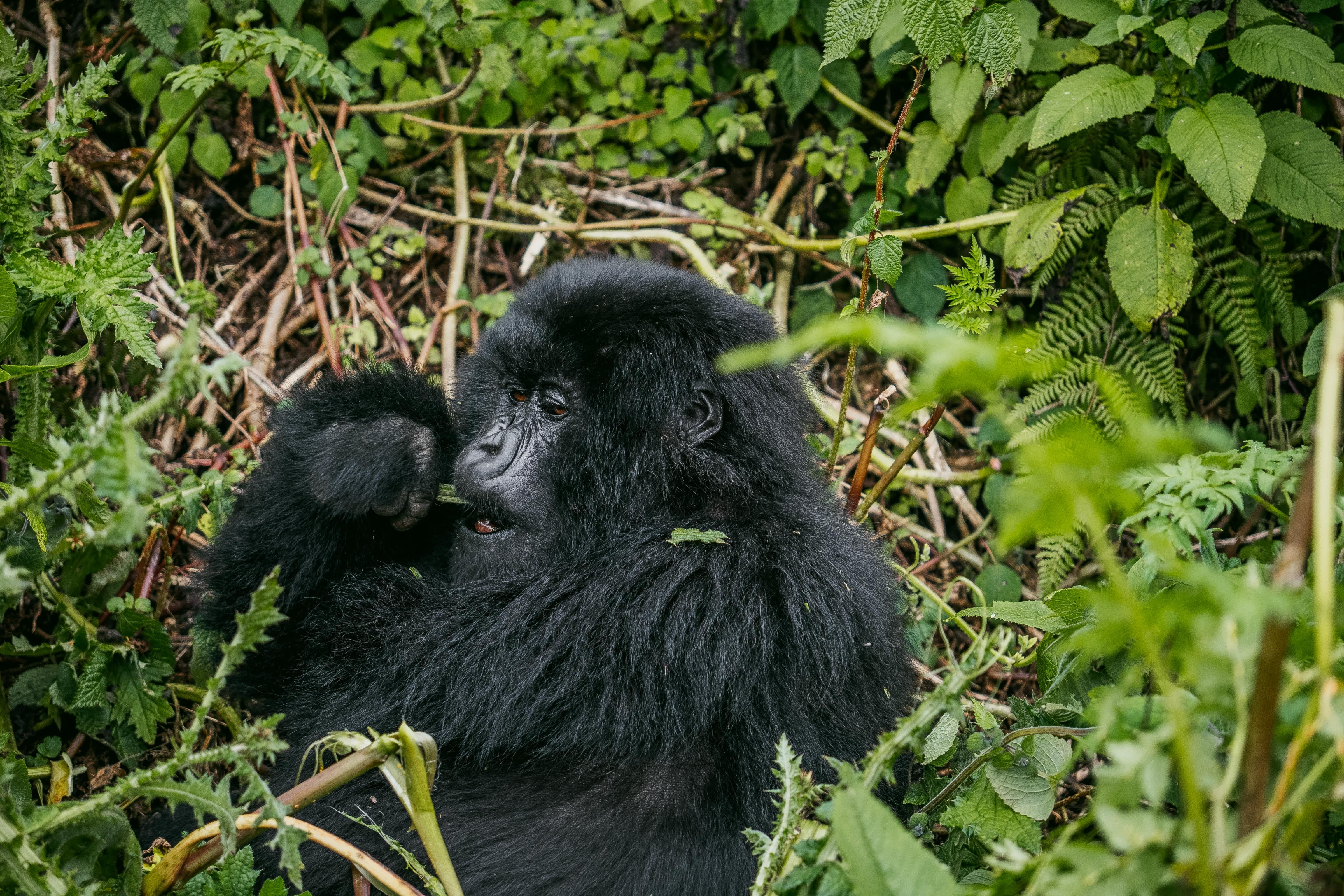
The most exciting moment of the trek occurs when visitors finally encounter the gorillas. Seeing a large silverback resting in the vegetation, mothers caring for their infants and young gorillas playing among the trees is an unforgettable wildlife experience.
Mountain gorillas live in family groups led by dominant silverbacks. These groups may include adult females, juveniles, infants and other members of the family.
During the encounter, visitors observe the gorillas feeding, resting, moving through the forest and interacting with one another. Their social relationships, gentle behaviour and impressive physical presence make the experience particularly fascinating.
Visitors must remain with their guides, maintain the prescribed distance from the gorillas and avoid actions that could disturb them. Flash photography is prohibited, and visitors must follow all instructions provided by the rangers.
The one-hour viewing period allows travellers to appreciate the gorillas while minimising the impact of tourism on their daily activities.
The Four Gorilla Trekking Sectors of Bwindi
Bwindi has four main trekking sectors, and choosing the appropriate one is an important part of organising a successful safari.
Buhoma Sector
Buhoma is located in the northern part of Bwindi and is among the park’s best-established tourism areas. It is particularly convenient for travellers combining gorilla trekking with Queen Elizabeth National Park because the route through Kihihi and Ishasha provides a practical connection between the two destinations.
Buhoma has a selection of accommodation facilities ranging from comfortable midrange lodges to luxury forest retreats. The surrounding community also offers cultural experiences, guided nature walks and opportunities to explore the forest’s biodiversity.
For travellers planning to visit Queen Elizabeth after gorilla trekking, Buhoma can be an excellent choice because of its geographical position.
Ruhija Sector
Ruhija is located in the eastern part of Bwindi at a relatively high altitude. Its surroundings feature beautiful mountain scenery, forested slopes and excellent birdwatching opportunities.
The sector is particularly attractive to travellers interested in combining gorilla trekking with nature photography and birding. The forest is home to numerous bird species, including several Albertine Rift endemics.
Ruhija’s elevation can make the weather cooler, particularly during early mornings and evenings. Visitors should therefore carry warm clothing in addition to their normal trekking equipment.
Travellers connecting Ruhija with Queen Elizabeth should allow sufficient time for the road journey, as the mountain roads can be winding and affected by rainfall.
Rushaga Sector
Rushaga lies in the southern part of Bwindi and is known for its multiple habituated gorilla families and gorilla trekking opportunities. It is also the principal location for the Gorilla Habituation Experience in Bwindi.
The sector is suitable for travellers approaching from Kisoro, Mgahinga or the Rwanda border through the Cyanika or Katuna routes, depending on the chosen itinerary.
Rushaga has accommodation ranging from budget guesthouses to high-end safari lodges. Its location also makes it possible to combine gorilla trekking with visits to Lake Mutanda and Lake Bunyonyi.
Visitors travelling from Rushaga to Queen Elizabeth should plan their transfer carefully, particularly if they intend to visit the Ishasha sector.
Nkuringo Sector
Nkuringo is situated in the southern part of Bwindi and is known for its dramatic mountainous landscapes and scenic views. The area is characterised by steep terrain, making some gorilla treks physically demanding.
It is an excellent choice for adventurous travellers who appreciate remote wilderness settings and beautiful forest scenery.
Nkuringo also provides access to community experiences and guided walks through the surrounding countryside. Accommodation options include luxury lodges positioned to take advantage of the spectacular views.
Travellers combining Nkuringo with Queen Elizabeth should discuss the most suitable transfer route with their safari operator before booking accommodation and permits.
How to Choose the Right Gorilla Trekking Sector
The best sector depends on the complete safari itinerary rather than simply the number of gorilla families available.
For a trip combining Bwindi and Queen Elizabeth, Buhoma is particularly convenient for travellers who want to connect through Ishasha. However, Rushaga, Nkuringo and Ruhija can also be incorporated depending on permit availability and the wider route.
At Exclusive Gorilla Journeys, we recommend confirming the gorilla trekking sector before selecting accommodation. This avoids unnecessary driving on the day of the trek and helps ensure that visitors arrive at the correct briefing location on time.
Queen Elizabeth National Park Safari Activities
Queen Elizabeth National Park offers several safari activities that make it an excellent complement to gorilla trekking. Visitors can explore its savannah plains, wetlands, forested areas and waterways through guided wildlife experiences.
Game Drives in Queen Elizabeth National Park
Game drives are among the most popular activities in Queen Elizabeth National Park. They provide opportunities to explore the park’s open grasslands and woodland habitats in search of wildlife.
The Kasenyi Plains are particularly popular for morning and afternoon game drives. These open landscapes support large populations of Uganda kobs, which attract predators such as lions.
Visitors may encounter elephants moving across the plains, buffaloes grazing in open grasslands, warthogs feeding in the vegetation and antelopes moving between different habitats.
Leopards are also present, although they are generally more difficult to find because of their secretive behaviour.
Early morning game drives are especially rewarding because many animals are active before temperatures rise. Afternoon drives offer another opportunity to explore the park, observe wildlife and enjoy the changing light across the savannah.
A professional safari guide improves the experience by understanding animal behaviour, identifying wildlife tracks and knowing areas where particular species are frequently encountered.
Game drives should never be treated as guaranteed opportunities to see every animal. Wildlife moves freely, and sightings depend on natural conditions, seasonal changes and animal movements.
The Kazinga Channel Boat Cruise
The Kazinga Channel boat cruise is one of the highlights of a Queen Elizabeth safari.
The channel connects Lake George and Lake Edward, creating an important aquatic habitat for numerous wildlife species. Its banks attract animals seeking water, food and suitable resting places.
During a boat cruise, visitors can observe large groups of hippos resting in the water, crocodiles along the shoreline and buffaloes grazing near the channel. Elephants sometimes approach the water to drink and bathe, creating excellent opportunities for wildlife photography.
The channel is also an important habitat for waterbirds. Visitors may encounter African fish eagles, pied kingfishers, pelicans, cormorants, herons, egrets and numerous other species.
One of the advantages of the boat cruise is that it offers a different perspective from traditional game drives. Instead of searching for wildlife across the savannah, visitors observe animals gathering along the water.
The experience is suitable for travellers of different ages and fitness levels, making it an excellent addition to a family safari or honeymoon.
A boat cruise can be organised around the safari schedule, often in the afternoon when wildlife activity along the channel is particularly interesting.
Searching for Tree-Climbing Lions in Ishasha
The Ishasha sector is one of the most distinctive areas of Queen Elizabeth National Park. It is particularly famous for its tree-climbing lions, which are frequently associated with large fig trees in the region.
Unlike lions that are commonly observed resting on the ground, Ishasha’s lions sometimes climb into trees and spend considerable time resting on branches.
The behaviour makes the sector particularly attractive to wildlife photographers and visitors interested in unusual animal sightings.
The Ishasha plains also support Uganda kobs, topis, buffaloes, elephants and other savannah wildlife. The landscape is relatively open, providing opportunities to observe animals across the grasslands.
For travellers combining Bwindi and Queen Elizabeth, Ishasha is strategically important because it lies along a popular route connecting the southern part of Queen Elizabeth with the Buhoma area of Bwindi.
Visitors travelling between the two parks can organise a game drive through Ishasha, depending on the route, road conditions and available time.
However, tree-climbing lions are wild animals, and their presence in particular trees cannot be guaranteed. A successful search requires patience, an experienced guide and sufficient time in the sector.
Chimpanzee Tracking in Kyambura Gorge
Travellers interested in primates can extend their safari by including chimpanzee tracking in Kyambura Gorge.
Kyambura Gorge is a forested valley within Queen Elizabeth National Park, creating a striking contrast with the surrounding savannah. Its vegetation provides habitat for chimpanzees and other forest wildlife.
Chimpanzee tracking involves walking through the gorge with trained guides who help visitors locate the habituated chimpanzee community.
Once the chimpanzees are located, visitors can observe their behaviour, movement, feeding activities and social interactions. Chimpanzees are highly intelligent and active primates, and watching them communicate and move through the forest can be fascinating.
This activity complements gorilla trekking because it allows travellers to experience two different types of great ape encounters during one Ugandan safari.
However, chimpanzee tracking is a separate activity requiring its own permit and advance arrangements. The minimum age for chimpanzee tracking is 12 years, compared with 15 years for mountain gorilla trekking. Uganda Wildlife Authority
Kyambura Gorge is not a guaranteed chimpanzee sighting destination. The animals move through their natural habitat, and the length and difficulty of the tracking experience can vary.
Birdwatching in Queen Elizabeth National Park
Queen Elizabeth National Park is one of Uganda’s outstanding birdwatching destinations. Its combination of savannah, wetlands, forests, lakes and riverine habitats supports a diverse bird population.
Birdwatchers can encounter African fish eagles, saddle-billed storks, grey crowned cranes, malachite kingfishers, pelicans, African jacanas and numerous other species.
The Kazinga Channel is particularly rewarding for waterbird observation, while the open plains and woodland areas support raptors, ground-dwelling birds and savannah specialists.
Travellers interested in birdwatching should communicate their interests when booking the safari. A specialised guide can adjust the game drive schedule to spend more time exploring productive birding locations.
Crater Lakes and Scenic Landscapes
Another attraction of Queen Elizabeth National Park is its beautiful crater lake scenery.
The region contains several volcanic crater lakes surrounded by green hills, vegetation and rural communities. These landscapes provide excellent opportunities for sightseeing and photography.
The Katwe area is particularly interesting because of its traditional salt extraction activities. Visitors can learn about the local salt industry and its importance to surrounding communities.
Crater lake viewpoints can also be incorporated into a safari itinerary, offering a relaxing break between wildlife activities.
For travellers who enjoy landscapes and cultural experiences, these stops add another dimension to the safari.
How to Travel Between Bwindi and Queen Elizabeth National Park
One of the major advantages of combining these destinations is that they can be connected through a scenic road journey in southwestern Uganda.
The actual driving time depends on the gorilla trekking sector, the selected accommodation, road conditions and the section of Queen Elizabeth National Park being visited.
From Buhoma to Queen Elizabeth National Park
The journey from Buhoma towards Queen Elizabeth commonly follows the Kihihi and Ishasha route.
This is particularly attractive because visitors can pass through the Ishasha sector and organise a game drive while travelling between the destinations.
The route provides opportunities to enjoy rural landscapes, agricultural communities and wildlife habitats before reaching the northern or central parts of Queen Elizabeth.
Driving time should be planned with sufficient flexibility because some sections involve winding or unpaved roads.
From Queen Elizabeth to Buhoma Through Ishasha
Visitors travelling from Queen Elizabeth to Buhoma can also use the Ishasha route.
This is an excellent arrangement for travellers who want to enjoy a safari in Queen Elizabeth before completing their holiday with mountain gorilla trekking.
The route passes through landscapes associated with the park’s tree-climbing lions and offers opportunities for wildlife viewing.
A private 4×4 safari vehicle is recommended, especially during the rainy seasons when some roads become muddy or difficult to navigate.
Connecting Rushaga and Nkuringo with Queen Elizabeth
The southern sectors of Bwindi require different route planning from Buhoma.
Visitors travelling between Rushaga or Nkuringo and Queen Elizabeth may connect through the Kisoro and Ishasha areas or use other suitable routes depending on the accommodation and park entry points.
These transfers can take longer than expected, so it is important to avoid scheduling activities too tightly.
A well-planned itinerary should allow sufficient time for road travel, meals, photography stops and unexpected delays.
Recommended Transport for the Safari
A private 4×4 safari vehicle is the most convenient transport option for a Bwindi and Queen Elizabeth safari.
The roads around Bwindi involve steep gradients, winding sections and unpaved surfaces. A suitable four-wheel-drive vehicle provides better handling and comfort, particularly during rainy conditions.
A safari vehicle with a pop-up roof is useful for game drives in Queen Elizabeth because it allows passengers to observe and photograph wildlife while remaining safely inside the vehicle.
An experienced driver-guide also improves the safari by providing information about the destinations, coordinating park activities and adjusting the schedule when necessary.
Exclusive Gorilla Journeys can organise private ground transportation and coordinate transfers between accommodation facilities, gorilla trekking centres and safari activity locations.
Best Time to Combine Bwindi Gorilla Trekking and Queen Elizabeth Safari
Uganda is a year-round safari destination, and both Bwindi and Queen Elizabeth National Park can be visited throughout the year. However, seasonal weather conditions influence road accessibility, trekking difficulty, wildlife viewing and the general travel experience.
Understanding the differences between the seasons helps visitors choose the most suitable travel dates.
Dry Seasons: June to September and December to February
The dry seasons are generally popular for combining gorilla trekking and savannah wildlife viewing.
In Bwindi, reduced rainfall can make forest trails less muddy and slippery. This may improve trekking conditions, although the terrain remains steep and challenging in certain areas.
In Queen Elizabeth, the relatively dry conditions can make some roads easier to navigate. Wildlife may also become easier to observe in open areas, particularly where animals gather around water sources.
June, July, August and September are popular months for Uganda safaris. December, January and February also attract visitors seeking relatively favourable weather conditions.
Travellers planning to visit during these periods should book gorilla permits and preferred accommodation well in advance because demand can be high.
Wet Seasons: March to May and October to November
The wetter months offer a different safari experience.
Bwindi receives rainfall throughout the year because of its tropical rainforest environment. During wetter periods, forest trails can become muddy, slippery and more physically demanding.
However, the forest becomes particularly lush, creating beautiful scenery for nature photography and wildlife observation.
Queen Elizabeth also experiences seasonal rainfall, which can influence road conditions and game drive arrangements. Some wildlife viewing areas may become more challenging to access after heavy rain.
One advantage of travelling during less busy periods is that visitors may have more accommodation choices and greater flexibility when organising their holiday.
The wet seasons can be suitable for experienced travellers who appreciate quieter safari environments and are comfortable with changing weather conditions.
Which Month Is Best for the Combined Safari?
June to September is an excellent period for visitors seeking a combination of gorilla trekking, game drives and boat cruises.
January and February are also attractive because of their generally drier conditions.
Nevertheless, the best month ultimately depends on individual preferences, permit availability, accommodation requirements and the amount of time available.
At Exclusive Gorilla Journeys, we encourage travellers to choose their gorilla trekking date first and build the Queen Elizabeth safari around it. This approach makes it easier to coordinate permits, accommodation and transportation.
Where to Stay During a Bwindi and Queen Elizabeth Safari
Accommodation is an important part of the overall safari experience. Both destinations offer a range of facilities, including budget guesthouses, comfortable midrange lodges and luxury safari properties.
The most suitable accommodation depends on the gorilla trekking sector, preferred comfort level and safari budget.
Accommodation in Buhoma
Buhoma offers several accommodation options overlooking the forest and surrounding countryside.
Luxury travellers can choose high-end forest lodges with spacious rooms, private terraces, quality dining and beautiful views.
Midrange accommodation is also available for visitors seeking comfort without the cost of premium properties. Budget travellers can find simpler guesthouses and community-based accommodation.
Staying in Buhoma is particularly convenient for visitors trekking in the northern sector and those connecting with Queen Elizabeth through Ishasha.
Accommodation in Ruhija
Ruhija has accommodation facilities suited to travellers seeking a peaceful forest environment.
Several lodges provide beautiful views of the surrounding mountains and forest. The cooler climate and quieter atmosphere make the area attractive to birdwatchers, nature enthusiasts and travellers who prefer smaller accommodation establishments.
Visitors should consider the location of their lodge in relation to the gorilla trekking briefing centre to minimise early morning transfers.
Accommodation in Rushaga
Rushaga offers a selection of safari lodges, tented camps and guesthouses.
Some properties provide panoramic views of the surrounding hills and valleys, while others are positioned close to the gorilla trekking starting points.
Luxury accommodation is available for visitors seeking a premium experience, while midrange and budget options make the sector accessible to different travel budgets.
Accommodation in Nkuringo
Nkuringo is known for its spectacular scenery and accommodation facilities overlooking the forested mountains.
It is particularly attractive to honeymooners, photographers and travellers seeking a secluded wilderness atmosphere.
Luxury lodges in the area often combine comfortable accommodation with excellent views, personalised services and convenient access to gorilla trekking activities.
Because Nkuringo is mountainous, visitors should consider the distance between their accommodation and the trekking briefing point when making reservations.
Where to Stay in Queen Elizabeth National Park
Queen Elizabeth offers accommodation in different areas, allowing visitors to choose a property according to their preferred safari activities.
Mweya Peninsula is an excellent base for travellers interested in the Kazinga Channel boat cruise and game drives around the northern part of the park. Accommodation in this area provides convenient access to the channel and surrounding wildlife viewing locations.
Kasenyi and the surrounding areas are suitable for travellers who prioritise morning and afternoon game drives on the savannah plains. Staying nearby can reduce the time spent travelling to wildlife viewing areas.
Ishasha is particularly attractive for visitors interested in tree-climbing lions and a quieter safari environment. Staying overnight in this sector allows travellers to organise early morning and afternoon wildlife searches without rushing from another part of the park.
For a combined gorilla and wildlife safari, Exclusive Gorilla Journeys can select accommodation based on the most convenient location for each activity rather than choosing lodges solely according to their prices.
How Much Does a Bwindi Gorilla Trekking and Queen Elizabeth Safari Cost?
The cost of a combined Bwindi and Queen Elizabeth safari varies according to the number of travellers, duration, accommodation category, transportation, permit requirements and additional activities.
Gorilla trekking permits are usually one of the most significant individual expenses.
Under the Uganda Wildlife Authority’s January 2027 to June 2028 conservation tariff, standard gorilla tracking in Bwindi is priced at US$800 for foreign non-residents, US$700 for foreign residents, US$500 for visitors in the Rest of Africa category and UGX350,000 for East African Community citizens. These rates are scheduled for the stated tariff period and should not be assumed to apply before January 2027. Fees remain subject to change. Uganda Wildlife Authority
Queen Elizabeth National Park has separate entrance fees, while certain activities such as chimpanzee tracking and boat cruises involve additional charges.
Accommodation costs vary considerably. Luxury lodges generally have higher rates because of their facilities, location and service standards, while budget properties provide more affordable alternatives.
Transportation is another important consideration. A private safari vehicle and experienced driver-guide provide flexibility but influence the overall package price.
The duration of the safari also matters. A five-day itinerary will generally cost less than a seven- or eight-day holiday because of differences in accommodation, meals, park activities and vehicle arrangements.
What Is Usually Included in a Safari Package?
A professionally organised package from Exclusive Gorilla Journeys can include gorilla trekking permit arrangements, accommodation, meals according to the selected lodge package, private safari transportation, an English-speaking driver-guide, park activities and scheduled transfers.
The exact inclusions depend on the itinerary.
Some packages also include the Kazinga Channel boat cruise, guided game drives, chimpanzee tracking and cultural experiences. Where these activities require separate permits or tickets, their costs should be clearly explained before confirmation.
How to Make Your Safari More Affordable
Travellers can manage their safari budget by choosing accommodation that matches their comfort requirements, travelling with other people in a private vehicle and selecting an itinerary that avoids unnecessary transfers.
A carefully designed route can reduce driving expenses while allowing sufficient time for the main wildlife activities.
However, gorilla trekking permits should not be treated as an expense to postpone until the last moment. Their limited availability makes early planning particularly important.
Recommended Bwindi Gorilla Trekking and Queen Elizabeth Safari Itineraries
The ideal itinerary depends on how much time you have available and which activities you want to include.
The following options provide practical starting points for planning a combined Uganda safari.
Five-Day Bwindi Gorilla Trekking and Queen Elizabeth Safari
A five-day safari is suitable for travellers with limited time who want to experience mountain gorillas and the main attractions of Queen Elizabeth National Park.
Day One: Transfer from Entebbe or Kampala to Queen Elizabeth National Park
The safari begins with a road transfer from Entebbe or Kampala towards western Uganda. The journey passes through beautiful countryside, agricultural communities and scenic landscapes.
After arriving at Queen Elizabeth National Park, visitors check into their lodge and relax before the following day’s activities.
Day Two: Game Drive and Kazinga Channel Boat Cruise
The morning begins with a game drive in the Kasenyi Plains, where visitors search for elephants, buffaloes, Uganda kobs, lions and other wildlife.
After lunch, travellers enjoy a boat cruise along the Kazinga Channel, observing hippos, crocodiles, elephants and waterbirds.
Day Three: Transfer to Bwindi Through Ishasha
After breakfast, the safari continues towards Bwindi through the Ishasha sector.
Depending on the schedule and road conditions, visitors can organise a game drive in search of tree-climbing lions before continuing towards their selected gorilla trekking sector.
Upon arrival, they check into their lodge and prepare for the following morning.
Day Four: Mountain Gorilla Trekking
This is the highlight of the safari.
Visitors attend the morning briefing, receive their trekking allocation and enter the forest with trained guides and rangers.
After locating the gorilla family, they spend one hour observing the animals before returning to the starting point.
The afternoon can be spent relaxing at the lodge or enjoying a community experience.
Day Five: Return to Entebbe or Kampala
After breakfast, visitors begin their return journey to Entebbe or Kampala.
This itinerary is relatively compact, and the road transfers can be demanding. Travellers should consider a longer programme if they want a more relaxed holiday.
Six-Day Bwindi and Queen Elizabeth Safari
A six-day safari provides more time to enjoy the two destinations.
Day One: Kampala or Entebbe to Queen Elizabeth National Park
Travel westwards through Uganda’s beautiful countryside, arriving at the park in time to relax at the lodge.
Day Two: Queen Elizabeth Game Drive and Boat Cruise
Enjoy an early morning game drive in the Kasenyi Plains, followed by an afternoon boat cruise along the Kazinga Channel.
Day Three: Chimpanzee Tracking or Ishasha Wildlife Experience
Visitors can choose chimpanzee tracking in Kyambura Gorge, subject to permit availability, or spend more time exploring the park’s savannah habitats.
Travellers can also plan a transfer towards Ishasha, depending on their gorilla trekking sector.
Day Four: Transfer to Bwindi
Continue towards the selected Bwindi sector, enjoying the scenic countryside and possible wildlife viewing opportunities along the way.
Day Five: Gorilla Trekking
Spend the day experiencing mountain gorilla trekking with professional rangers and guides.
Day Six: Return to Kampala or Entebbe
After breakfast, begin the return journey.
Seven-Day Bwindi and Queen Elizabeth Wildlife Safari
Seven days is an excellent duration for travellers who want a more comprehensive experience without rushing between activities.
The first two days can be dedicated to travelling to Queen Elizabeth and enjoying its wildlife attractions. The third day can include additional game viewing or chimpanzee tracking.
The fourth day can be spent travelling through Ishasha towards Bwindi, with an overnight stay near the selected gorilla trekking sector.
The fifth day is reserved for gorilla trekking, allowing visitors to enjoy the forest experience without having to travel immediately afterwards.
The sixth day can include a Batwa cultural experience, guided nature walk or a relaxing visit to a nearby scenic destination.
The seventh day is dedicated to returning to Entebbe or Kampala.
This itinerary is particularly suitable for honeymooners, photographers and visitors who want to experience more than just the main wildlife activities.
What to Pack for Bwindi Gorilla Trekking and Queen Elizabeth Safari
Packing appropriately makes a significant difference to your comfort during this combined safari because the two destinations have different environments.
Bwindi is a mountainous rainforest where visitors may experience rain, cool temperatures, muddy trails and thick vegetation. Queen Elizabeth has warmer savannah conditions, where lightweight clothing is generally more comfortable.
Clothing for Gorilla Trekking
Long-sleeved shirts and long trousers are recommended for forest trekking. They help protect the body from scratches, insects and contact with vegetation.
Waterproof jackets are important because rainfall can occur even during the drier months. Visitors should also carry warm clothing for early mornings and cooler evenings.
Neutral-coloured clothing such as green, brown and khaki is suitable for wildlife activities.
Footwear and Trekking Equipment
Strong hiking boots with good ankle support and reliable grip are essential. The forest trails can be slippery, particularly after rainfall.
Comfortable trekking socks, gardening gloves and gaiters can provide additional protection when walking through thick vegetation.
A small backpack is useful for carrying drinking water, snacks for before or after the trek, a camera and other personal essentials. Visitors should follow ranger instructions about eating and drinking during the gorilla encounter.
Safari Clothing and Photography Equipment
For Queen Elizabeth, lightweight and breathable clothing is recommended. Neutral colours are useful for game drives and wildlife photography.
Visitors interested in photography should carry a camera with an appropriate zoom lens, spare batteries and memory cards.
Binoculars are also valuable for observing distant animals and identifying birds.
A hat, sunglasses, sunscreen and insect repellent can improve comfort during outdoor activities.
Gorilla Trekking Rules and Responsible Tourism
Gorilla trekking is carefully regulated to protect mountain gorillas and reduce the risk of disease transmission.
Visitors must follow all instructions provided by Uganda Wildlife Authority rangers throughout the experience.
The minimum age for gorilla trekking in Uganda is 15 years. Standard trekking permits allow a maximum of one hour with a habituated gorilla family, while the normal visitor group is limited to eight people per gorilla family.
Visitors who have symptoms of an infectious illness, including a cold or flu, should not enter the forest to visit the gorillas. Mountain gorillas are vulnerable to human respiratory infections.
Visitors must also avoid touching the gorillas, making sudden movements, shouting or attempting to attract their attention.
Photography must be undertaken without flash, and visitors should maintain the distance instructed by the guides. Current conservation guidance should always take precedence if park authorities revise any procedures. Uganda Wildlife Authority+1
Responsible tourism also extends beyond the forest. Visitors should avoid littering, respect local communities, follow designated trails and support conservation-oriented businesses.
During the Queen Elizabeth safari, travellers should remain inside their safari vehicles unless their guide or park authorities have authorised them to leave.
Wild animals must never be approached, chased or fed.
Cultural Experiences Around Bwindi and Queen Elizabeth National Park
A safari combining Bwindi and Queen Elizabeth can also provide opportunities to understand the cultural heritage of southwestern Uganda.
Batwa Cultural Experiences
The Batwa are among the indigenous communities historically associated with the forests of southwestern Uganda.
Cultural experiences around Bwindi introduce visitors to aspects of traditional forest life, including knowledge of medicinal plants, hunting techniques, music, dance and storytelling.
These activities provide an opportunity to learn about the relationship between indigenous communities and the forest.
Visitors should choose responsible cultural experiences that respect local traditions and provide meaningful benefits to participating communities.
Community Visits Around Queen Elizabeth
Communities surrounding Queen Elizabeth National Park offer opportunities to learn about rural livelihoods, traditional farming and the relationship between conservation and local development.
Visitors may encounter traditional fishing communities, agricultural activities and local craft enterprises.
Such experiences can help travellers appreciate why conservation programmes and community participation are important for the long-term protection of Uganda’s wildlife.
Conservation Importance of Combining Gorilla Trekking and Wildlife Safaris
A Bwindi and Queen Elizabeth safari is not simply a holiday. It also contributes to the broader conservation economy that supports Uganda’s protected areas and surrounding communities.
Mountain gorilla tourism generates revenue that supports conservation activities, ranger operations, habitat protection and community development initiatives.
Queen Elizabeth National Park also benefits from tourism revenue that supports wildlife protection and park management.
Responsible tourism helps create economic opportunities for communities living near protected areas. Accommodation facilities, transport operators, guides, restaurants and cultural tourism enterprises all contribute to the local economy.
By choosing a professionally organised safari and respecting conservation regulations, visitors participate in a tourism model that connects wildlife protection with sustainable economic development.
At Exclusive Gorilla Journeys, we believe that every safari should combine excellent visitor experiences with respect for wildlife, local communities and the natural environment.
Booking Bwindi Gorilla Trekking and Queen Elizabeth Safari with Exclusive Gorilla Journeys
Organising a combined safari involves more than choosing two national parks and booking accommodation. Gorilla permits, trekking sectors, transport, park activities and lodge reservations must be coordinated to create a practical itinerary.
Exclusive Gorilla Journeys specialises in Uganda gorilla trekking experiences and wildlife safari arrangements, helping visitors plan holidays that combine the country’s most remarkable natural attractions.
Gorilla Permit Reservations
Gorilla permits should be secured before finalising the rest of the itinerary.
The booking process involves selecting a trekking date and preferred sector, checking permit availability and arranging payment through the appropriate authorised channels.
For foreign non-residents, Uganda Wildlife Authority requires gorilla tracking permits to be purchased through tour operators licensed by the Uganda Tourism Board. Uganda Wildlife Authority+1
Exclusive Gorilla Journeys can assist with coordinating permit arrangements and ensuring that the selected trekking date matches the accommodation and transport schedule.
Personalised Safari Planning
Every traveller has different interests and expectations.
Some visitors want a luxury gorilla trekking experience with high-end accommodation and private transportation. Others prefer affordable safari packages that focus on the main wildlife activities.
Some travellers want to include chimpanzee tracking, while others are more interested in game drives, birdwatching, photography and cultural experiences.
We develop itineraries around these preferences while considering the available time, trekking sector, travel dates and budget.
Private Safari Transportation
Our safari arrangements can include private 4×4 vehicles with experienced driver-guides who understand the routes connecting Bwindi and Queen Elizabeth.
This makes it easier to coordinate park activities, enjoy scenic stops and adjust the schedule when road conditions or wildlife sightings require additional time.
Accommodation and Activity Coordination
We assist travellers in selecting accommodation near the appropriate gorilla trekking sector and convenient safari locations in Queen Elizabeth National Park.
We also coordinate additional activities such as Kazinga Channel boat cruises, game drives, chimpanzee tracking and cultural experiences according to the selected itinerary.
The objective is to create a comfortable, enjoyable and well-organised safari from arrival to departure.
Frequently Asked Questions About Bwindi Gorilla Trekking and Queen Elizabeth Safari
Can I combine Bwindi gorilla trekking with Queen Elizabeth National Park in one safari?
Yes. The two destinations are located in southwestern Uganda and can be combined in one holiday. Travellers can enjoy mountain gorilla trekking in Bwindi and traditional wildlife activities in Queen Elizabeth, including game drives and boat cruises.
How many days do I need for Bwindi and Queen Elizabeth?
Five to seven days is a good starting point for combining these destinations. Five days allows visitors to experience the main attractions, while six or seven days provides more time for additional activities and a relaxed travel schedule.
Which should I visit first, Bwindi or Queen Elizabeth?
Both arrangements are possible. Some travellers visit Queen Elizabeth first and finish their holiday with gorilla trekking in Bwindi. Others trek gorillas first and continue to Queen Elizabeth for game drives and boat cruises.
The best arrangement depends on the selected gorilla trekking sector, permit availability, arrival airport and departure arrangements.
Can I see tree-climbing lions during the transfer between Bwindi and Queen Elizabeth?
Yes. Visitors travelling through the Ishasha sector can organise a game drive in search of tree-climbing lions. However, sightings are not guaranteed because the lions move freely within their natural habitat.
Can I see chimpanzees during the same safari?
Yes. Chimpanzee tracking can be organised in Kyambura Gorge within Queen Elizabeth National Park, subject to permit availability.
This makes it possible to experience mountain gorillas and chimpanzees during the same Uganda holiday.
Is gorilla trekking difficult?
Gorilla trekking requires a reasonable level of physical fitness because the forest contains steep slopes, uneven ground, muddy trails and dense vegetation.
The difficulty varies depending on the location of the assigned gorilla family. Some treks are relatively short, while others require several hours of hiking.
Visitors should prepare by practising walking, climbing hills and hiking on uneven terrain before travelling.
What is the minimum age for gorilla trekking?
The minimum age for mountain gorilla trekking in Uganda is 15 years.
Visitors planning a family safari should take this restriction into consideration when organising their holiday.
Can children visit Queen Elizabeth National Park?
Yes. Queen Elizabeth offers several family-friendly activities, including game drives and boat cruises. However, age restrictions may apply to particular activities, especially chimpanzee tracking.
Families should confirm the age requirements of each activity before booking.
Is a gorilla permit included in the safari package?
This depends on the package selected. Exclusive Gorilla Journeys can arrange gorilla permits as part of a complete safari package, subject to availability and the applicable permit fees.
Travellers should always confirm whether the quoted package price includes the gorilla permit.
Do I need a 4×4 vehicle for this safari?
A 4×4 safari vehicle is strongly recommended. The mountainous roads around Bwindi and some routes within Queen Elizabeth can become difficult during rainy conditions.
A suitable safari vehicle also provides better comfort and convenience during long-distance transfers and game drives.
Can I visit Bwindi and Queen Elizabeth from Kigali?
Yes. Visitors arriving in Kigali can travel into southwestern Uganda through an appropriate border crossing and continue towards Bwindi.
The most suitable route depends on the selected trekking sector. Travellers should also consider border formalities, immigration requirements and the time needed for the road journey.
Combining the Kigali arrival route with Queen Elizabeth is possible, although it requires careful itinerary planning.
Is the safari suitable for honeymooners?
Absolutely. The combination is particularly attractive for honeymooners because it offers adventure, wildlife experiences, beautiful landscapes and opportunities to stay in romantic forest and savannah lodges.
A private safari vehicle and carefully selected luxury accommodation can make the experience even more special.
Why Choose Bwindi Gorilla Trekking and Queen Elizabeth Safari?
A Uganda safari combining Bwindi and Queen Elizabeth National Park provides an exceptional opportunity to experience two of Africa’s most fascinating wildlife environments.
Bwindi introduces visitors to the extraordinary world of mountain gorillas, where ancient rainforest vegetation, dramatic landscapes and remarkable primate encounters create an unforgettable adventure.
Queen Elizabeth adds the excitement of traditional African wildlife safaris, with elephants, buffaloes, lions, antelopes, hippos and crocodiles inhabiting its diverse ecosystems.
The opportunity to explore the Ishasha sector, cruise along the Kazinga Channel, search for chimpanzees in Kyambura Gorge and encounter mountain gorillas in Bwindi makes this combination especially rewarding.
Whether you are planning a honeymoon, a family holiday with eligible-age travellers, a photography expedition or your first African safari, these destinations offer a diverse and memorable Uganda experience.
Exclusive Gorilla Journeys is ready to help you organise your Bwindi gorilla trekking and Queen Elizabeth safari with suitable gorilla permits, comfortable accommodation, professional guides and reliable safari transportation.
Contact Exclusive Gorilla Journeys to start planning your Uganda safari. Share your preferred travel dates, number of travellers, accommodation category and budget so that a suitable itinerary can be prepared around your interests.