Buhoma vs Ruhija vs Rushaga vs Nkuringo, Which Bwindi Gorilla Trekking Sector Is Best?
November 25, 2026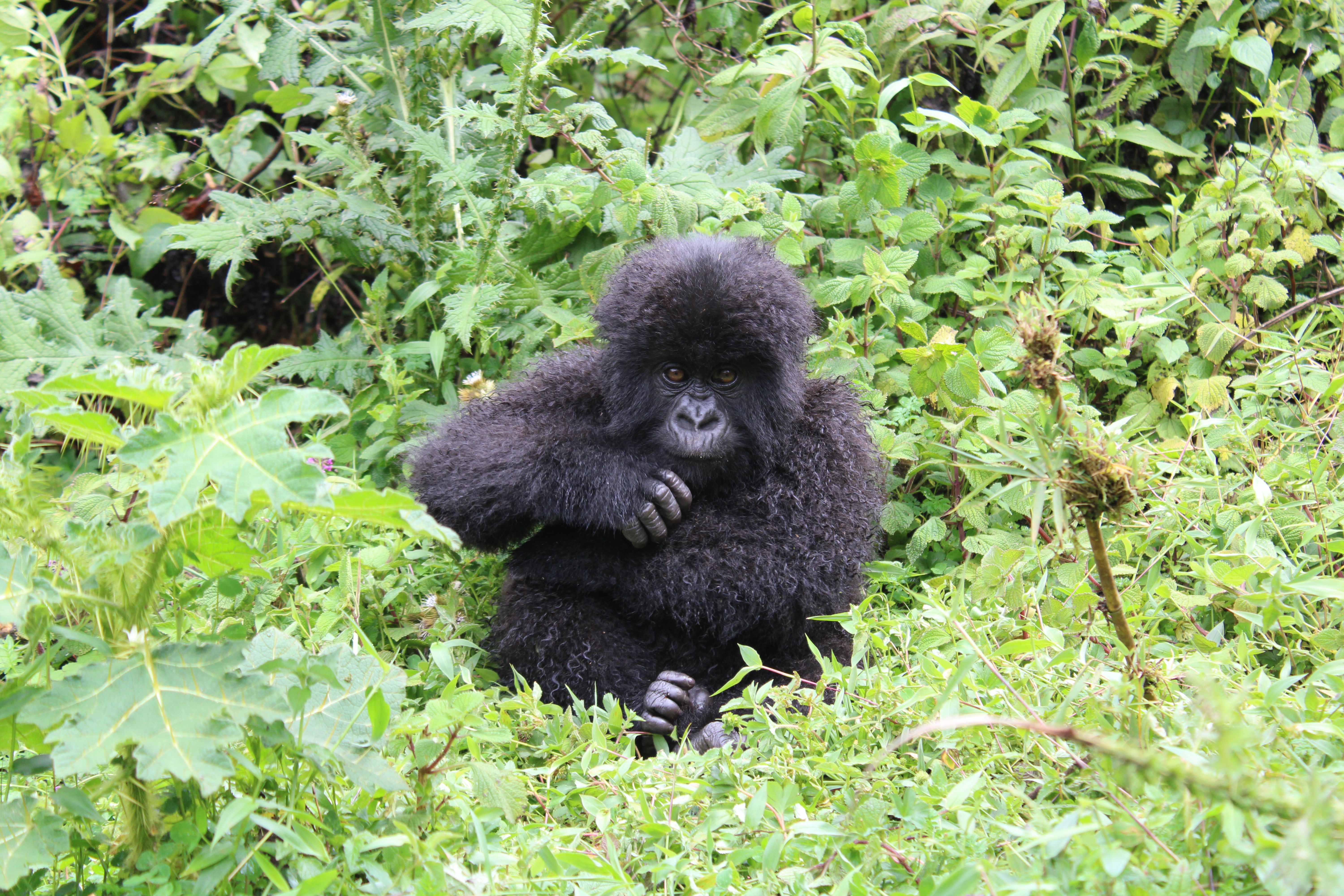
Gorilla Trekking in Ruhija, Complete Guide
November 25, 2026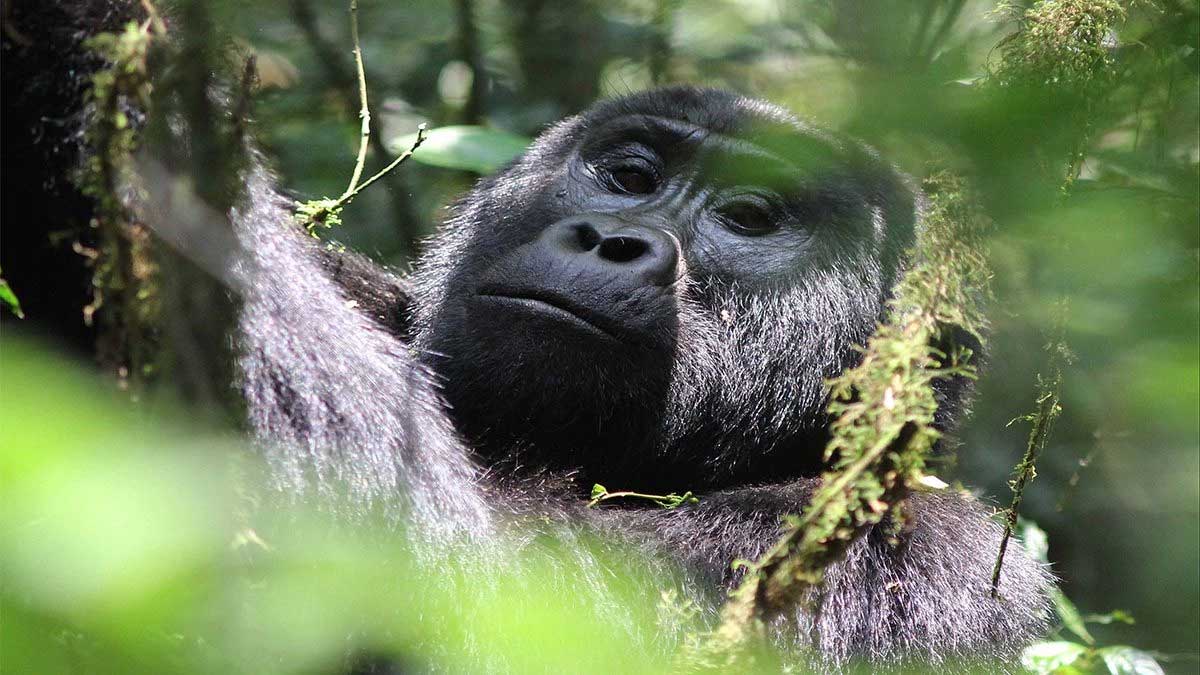
Gorilla trekking in Buhoma is one of the most memorable wildlife experiences available in Uganda. Located on the northern edge of Bwindi Impenetrable National Park, Buhoma is the original gateway to mountain gorilla tourism in the country. It is where Uganda’s gorilla trekking journey began, and today it remains one of the most popular destinations for visitors hoping to encounter endangered mountain gorillas in their natural rainforest habitat.
For travellers planning a Uganda safari, gorilla trekking in Buhoma offers an opportunity to explore an ancient tropical rainforest, observe a habituated mountain gorilla family at close range and learn about the conservation efforts protecting these extraordinary primates. The experience combines adventure, wildlife observation, cultural encounters and the beauty of one of Africa’s most remarkable protected areas.
However, knowing what to expect before arriving in Buhoma makes a significant difference to the overall experience. Gorilla trekking involves more than simply walking into the forest and finding gorillas. Visitors must prepare for an early morning briefing, a guided forest hike, changing weather conditions, steep terrain and strict wildlife conservation regulations. The duration and difficulty of the trek also depend on where the assigned gorilla family has moved.
At Exclusive Gorilla Journeys, we help travellers plan rewarding gorilla trekking experiences by arranging permits, accommodation, transport, experienced safari guides and carefully organised itineraries. Whether you are visiting Uganda for the first time or returning for another wildlife adventure, Buhoma offers an excellent introduction to mountain gorilla trekking.
This guide explains what to expect when gorilla trekking in Buhoma, from arriving at the sector and preparing for the trek to meeting the gorillas and choosing suitable accommodation.
Understanding Buhoma Gorilla Trekking Sector
Buhoma is situated in the northern part of Bwindi Impenetrable National Park in southwestern Uganda. It is one of the four main gorilla trekking sectors in the park, alongside Ruhija, Rushaga and Nkuringo. Each sector has its own trekking headquarters, habituated gorilla families and accommodation facilities.
Buhoma has particular historical importance because it became the first area in Uganda where mountain gorillas were habituated for tourism. The Mubare gorilla family was opened to visitors in 1993, establishing the foundation for the country’s mountain gorilla tourism industry.
Since then, Buhoma has developed into an established tourism destination with a range of accommodation facilities, community tourism activities, nature trails and visitor services. Its location also makes it an attractive destination for travellers combining gorilla trekking with wildlife safaris in other Ugandan national parks.
The sector is associated with several habituated gorilla families, including Mubare, Habinyanja, Rushegura and Katwe. The families available for trekking and their composition can change as gorillas move, groups split and conservation management arrangements develop.
Visitors should understand that a Buhoma gorilla trekking permit is associated with the Buhoma sector. It is important to book accommodation and organise transport around the correct trekking location rather than assuming that all Bwindi sectors are close to one another.
What Makes Gorilla Trekking in Buhoma Special?
One of the most appealing aspects of gorilla trekking in Buhoma is the opportunity to visit the original gorilla tourism destination in Uganda. The sector has decades of experience welcoming international visitors, and its established tourism infrastructure makes it a convenient starting point for many safari itineraries.
The forest surrounding Buhoma is rich in biodiversity. Its thick vegetation, towering trees, tangled roots, ferns, moss-covered branches and forest streams create a distinctive environment for wildlife exploration. During the trek, visitors may encounter different bird species, butterflies, forest plants and other primates.
Another important attraction is the opportunity to observe a habituated mountain gorilla family. These gorillas have undergone a gradual habituation process that allows them to tolerate the carefully controlled presence of people. They remain wild animals, however, and their behaviour is not staged or controlled for visitors.
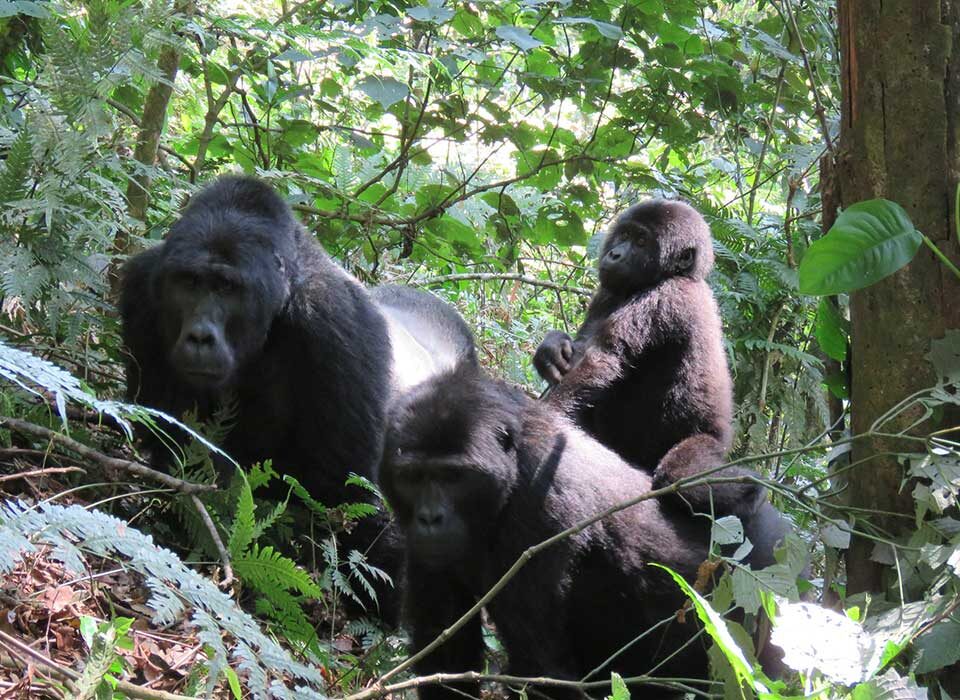
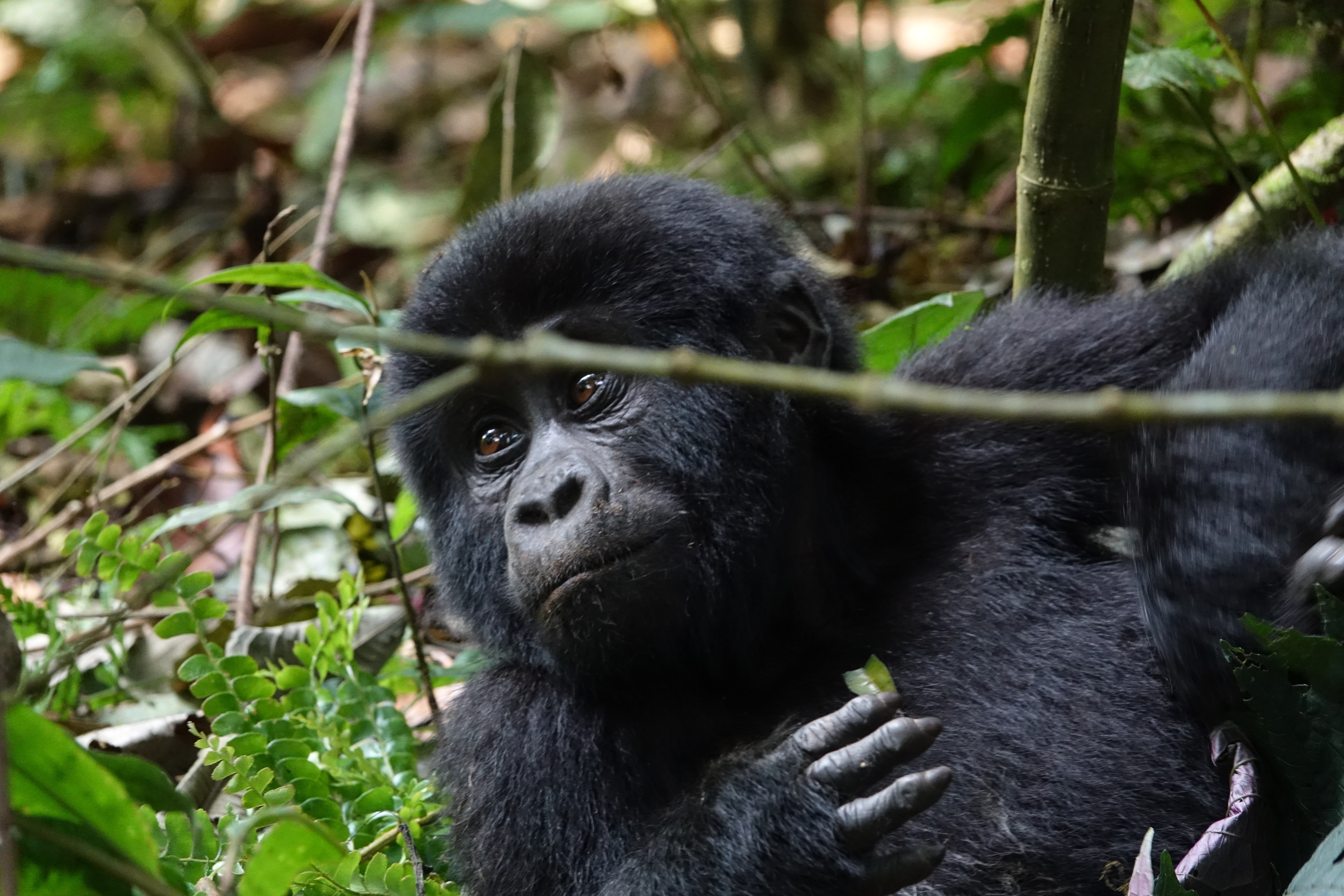
You may see a dominant silverback resting in the vegetation, mothers caring for their infants, juveniles playing with one another or younger gorillas climbing trees. Sometimes the family may be feeding quietly, while on other occasions the younger members may be particularly active.
The experience is special because every encounter is different. No two gorilla families behave in exactly the same way, and even visits to the same family can produce different observations.
What to Expect on Arrival in Buhoma
Your gorilla trekking experience begins before entering the forest. Travellers normally arrive in Buhoma at least one day before their scheduled trekking date, allowing sufficient time to check into their accommodation, relax and prepare for the following morning.
Upon arrival, you will notice that Buhoma has developed around the tourism activities associated with Bwindi. There are lodges, camps, restaurants, community facilities and small local businesses serving visitors and residents.
Depending on your accommodation, you may enjoy views of the surrounding hills, forest vegetation and valleys. Some lodges are situated close to the park boundary, making it convenient to reach the gorilla trekking briefing point on the following morning.
Your safari guide or lodge representative will normally explain the arrangements for the next day, including the expected departure time, breakfast arrangements and what to carry.
This is also a suitable opportunity to confirm that your gorilla permit details are correct. The permit must correspond to the Buhoma trekking sector and the date on which you intend to trek.
Visitors should avoid planning long activities immediately before trekking. A relaxed evening, an early dinner and sufficient sleep help ensure that you are physically prepared for the forest hike.
The Early Morning Gorilla Trekking Briefing
The actual gorilla trekking experience usually begins early in the morning at the Uganda Wildlife Authority visitor information centre in Buhoma.
Visitors are expected to arrive in time for registration and the mandatory briefing. The briefing generally takes place around 7:30 to 8:00 a.m., although the precise arrangements should be confirmed with the park authorities and your safari operator.
At the briefing centre, visitors present their gorilla permits and complete the necessary registration procedures. Park officials explain the trekking arrangements, introduce the conservation guidelines and provide important instructions about behaviour in the forest.
The briefing is particularly important because mountain gorillas are endangered wildlife that require careful protection. Visitors must understand how to behave around them, maintain the required distance and avoid actions that could disturb the animals.
The park authorities also organise visitors into trekking groups. Each habituated gorilla family can receive a maximum of eight tourists per day under the standard trekking arrangement.
Your group is assigned a particular gorilla family, and experienced park guides and trackers lead the expedition. The guides coordinate with trackers who have been monitoring the gorillas’ movements to help determine their approximate location.
The briefing also gives you an opportunity to ask questions about the trekking experience, discuss any physical limitations and arrange assistance where necessary.
Once the briefing is completed, you prepare to enter the forest.
Which Gorilla Families Can You Expect to Visit in Buhoma?
Buhoma is historically associated with several habituated mountain gorilla families. These include Mubare, Habinyanja, Rushegura and Katwe, although the current trekking allocation should always be confirmed when arranging a permit.
Mubare Gorilla Family
The Mubare family holds a special place in Uganda’s conservation history. It was the first mountain gorilla family habituated for tourism in Bwindi, opening to visitors in 1993.
The family helped establish Buhoma as Uganda’s original gorilla trekking destination. Visiting Mubare therefore offers more than an opportunity to observe mountain gorillas; it also connects visitors with the history of gorilla conservation tourism in the country.
Habinyanja Gorilla Family
The Habinyanja family is another established gorilla group associated with Buhoma. It is known for its social history and the dynamics that have shaped its development over the years.
Like other habituated families, its members have individual characteristics and social relationships. Visitors may observe different age groups interacting, feeding or resting together.
Rushegura Gorilla Family
Rushegura is another well-known family in Buhoma. Its history is associated with a group split from Habinyanja, illustrating how mountain gorilla family structures can change over time.
Observing the family provides an opportunity to appreciate the social organisation of mountain gorillas and the role of the dominant silverback in maintaining group cohesion.
Katwe Gorilla Family
Katwe is also associated with the Buhoma trekking area. Its availability and the arrangements for visiting it should be checked when securing a permit.
It is important to understand that visitors do not independently select a particular gorilla family simply because they prefer its history or size. The allocation is managed by park authorities, taking into account operational considerations, gorilla movements, conservation requirements and visitor circumstances.
At Exclusive Gorilla Journeys, we help travellers communicate relevant fitness or mobility concerns when arranging their trekking experience, although a particular family assignment cannot be guaranteed.
What Happens During the Gorilla Trekking Experience?
After the morning briefing, your trekking group begins the journey into Bwindi Impenetrable National Park. This is where the real adventure starts.
You will walk through a dense tropical rainforest accompanied by trained Uganda Wildlife Authority guides, trackers and rangers. The guides understand the forest environment and have experience navigating the trails used to reach habituated gorilla families.
The trekking route is not always a clearly defined path. Depending on the location of the gorillas, you may follow established forest trails, walk through thick vegetation, climb hillsides or cross small streams. Rangers may use machetes to clear sections of vegetation where necessary.
During the hike, your guide will explain different aspects of the forest ecosystem. You may learn about indigenous trees, medicinal plants, birdlife and other wildlife species that inhabit Bwindi.
The trackers communicate with the guides to provide updates about the gorilla family’s movements. This coordination helps the trekking team move in the appropriate direction.
The experience requires patience because mountain gorillas move freely throughout their natural habitat. They are not confined to a particular location or enclosure, and their movements cannot be predicted with complete accuracy.
Sometimes the gorillas are found relatively close to the starting point. On other occasions, visitors must walk for several hours before reaching the family.
The important thing to remember is that the journey itself forms part of the experience. Walking through Bwindi’s ancient rainforest provides an opportunity to appreciate an ecosystem that supports remarkable biodiversity.
How Long Does Gorilla Trekking in Buhoma Take?
One of the most common questions travellers ask when planning a Buhoma gorilla trekking safari concerns the duration of the trek.
There is no fixed trekking time because the gorilla families move through different parts of the forest. Their location on the morning of your visit determines how long you must walk before finding them.
Some treks may take approximately one hour to reach the gorillas, while others may require three, four or more hours of hiking. The entire experience can therefore occupy a substantial part of the day.
Several factors influence the duration of a Buhoma gorilla trek.
The first is the location of the assigned gorilla family. If the family is feeding or resting relatively close to the starting point, the trekking distance may be shorter. If it has moved deeper into the forest or towards higher ground, visitors may need to walk considerably farther.
The second factor is the terrain. Some routes involve steep slopes, uneven ground, muddy sections and thick vegetation. These conditions can affect walking speed, especially during the rainy season.
Weather conditions are another important consideration. Rain can make forest trails slippery, while mist and wet vegetation may affect visibility and movement.
The physical ability of the trekking group also influences the pace. Guides normally organise the experience according to the group’s circumstances and provide opportunities to rest when necessary.
Once the gorillas are located, visitors are permitted to spend a maximum of one hour observing them under the standard gorilla trekking arrangement. This period is strictly controlled to minimise disturbance and reduce the risk of disease transmission.
After the encounter, the group returns to the starting point or follows the designated exit route.
How Difficult Is Gorilla Trekking in Buhoma?
Gorilla trekking in Buhoma is a moderately challenging outdoor activity, although the actual difficulty varies considerably from one day to another.
Buhoma is sometimes considered a more accessible trekking sector than the steeper southern areas of Bwindi. However, this does not mean that every Buhoma trek is easy.
The forest is characterised by uneven terrain, steep slopes, dense vegetation and varying elevations. Some sections may require climbing uphill, while others involve descending through slippery ground.
Visitors should be prepared to walk for several hours in conditions that may be very different from ordinary hiking trails.
The challenge is not necessarily the distance alone. The combination of humidity, elevation, mud, vegetation and changing gradients can make the experience physically demanding.
Travellers with average fitness can generally prepare successfully for the activity by incorporating regular walking and hiking into their routine before travelling to Uganda.
If you have limited hiking experience, it is advisable to practise walking on uneven surfaces and gradually increase the distance and duration of your training.
You should also inform your safari operator about any relevant mobility concerns before the trekking date. This allows the necessary arrangements to be discussed with park authorities.
Can Beginners Go Gorilla Trekking in Buhoma?
Yes. Gorilla trekking is not reserved exclusively for experienced hikers or professional mountaineers.
First-time safari travellers can enjoy gorilla trekking in Buhoma provided they are physically prepared and able to manage the conditions of the forest.
You do not need previous experience tracking wildlife. The guides and trackers handle the navigation and coordinate the search for the gorillas.
Your responsibility is to follow instructions, maintain a reasonable walking pace and communicate with your guide if you need assistance.
Hiring a porter is another useful option. Porters can carry your backpack and provide physical assistance on challenging sections of the trail. Their services also create valuable employment opportunities for people living around the national park.
For visitors who are concerned about the difficulty of the trek, we recommend discussing their circumstances with Exclusive Gorilla Journeys before confirming the safari arrangements.
What Happens When You Finally Find the Mountain Gorillas?
Finding the gorillas is usually the most anticipated moment of the entire experience.
After following the trackers through the forest, your guide will eventually indicate that the family is nearby. At this stage, visitors are asked to prepare their cameras, follow instructions and maintain quiet behaviour.
The trackers and guides coordinate the final approach to ensure that visitors observe the gorillas without causing unnecessary disturbance.
When the family comes into view, you may initially notice vegetation moving or hear branches breaking as the animals feed. As the group approaches the designated observation area, the mountain gorillas gradually become visible.
The first animal you see might be a silverback, an adult female, a juvenile or a baby.
The dominant silverback is often one of the most impressive members of the family because of its size and distinctive silver hair across its back. Despite its powerful appearance, a habituated silverback may spend much of the encounter resting, feeding or observing its surroundings.
You may also see mothers carrying infants, young gorillas playing and juveniles climbing through the vegetation.
The behaviour of the gorillas varies. Some families remain relatively calm and spend much of their time feeding. Others may move through the forest while visitors observe them from the permitted distance.
Your guide will explain the behaviour you are witnessing and help you identify different members of the family where possible.
The encounter is limited to a maximum of one hour. This rule is important for protecting the health and welfare of the mountain gorillas.
What Is the Required Distance from the Gorillas?
Visitors must follow the distance instructions provided by the Uganda Wildlife Authority guides. The current gorilla tourism guidelines generally require visitors to maintain a minimum distance of seven metres from the gorillas, subject to ranger instructions and circumstances involving gorilla movements.
The purpose is to reduce the possibility of transmitting human diseases to gorillas and minimise disturbance.
Visitors must never attempt to touch, feed or provoke the animals. Even when a gorilla approaches, you should remain calm and follow the instructions of your guide.
Gorillas are powerful wild animals, and their natural behaviour must always be respected.
Can Gorillas Approach Visitors?
Yes. Mountain gorillas sometimes move closer to visitors while feeding, travelling or interacting with other family members.
If this happens, remain calm and follow the instructions of your guide. Avoid sudden movements, maintain a quiet posture and do not attempt to reach out or touch the animal.
Your guide understands how to interpret gorilla behaviour and will advise you on the appropriate response.
This is one reason why trekking with experienced park personnel is essential.
Gorilla Trekking Rules You Must Follow in Buhoma
Gorilla trekking takes place under strict conservation regulations designed to protect both visitors and mountain gorillas.
One of the most important requirements is maintaining the permitted distance from the animals. Visitors should never attempt to approach a gorilla independently or move closer for a photograph.
Photography is allowed, but flash photography is prohibited because it can disturb the animals. Cameras and mobile phones should be operated quietly, without sudden movements.
Visitors must avoid eating, drinking or smoking in the immediate presence of gorillas. Food and waste should never be left in the forest.
Anyone who feels unwell before trekking should inform the park authorities. Respiratory infections and other communicable illnesses can pose serious risks to mountain gorillas because they are biologically similar to humans.
Visitors are also expected to avoid spitting in the forest, littering or damaging vegetation.
During the encounter, talking should be kept to a minimum, and visitors must follow all instructions from the guides and rangers.
Children below 15 years are not permitted to participate in standard mountain gorilla trekking in Uganda. The minimum age requirement is an important consideration for families planning a safari.
These rules are not optional recommendations. They are essential measures supporting responsible tourism and the long-term survival of mountain gorillas.
What Should You Wear for Gorilla Trekking in Buhoma?
Proper clothing makes a significant difference to your comfort during the trek.
Bwindi is a tropical rainforest, and weather conditions can change quickly. Even when the morning begins with sunshine, rain may develop during the hike.
Long-sleeved shirts and long trekking trousers are recommended because they protect your skin from scratches, insects and contact with vegetation.
A lightweight waterproof jacket is particularly useful because rain showers are common in the forest.
Your footwear is equally important. Sturdy hiking boots with good grip provide better stability on slippery and uneven terrain. Shoes should be comfortable, properly fitted and already broken in before the trekking day.
Long socks that can be pulled over your trousers help prevent insects from entering your clothing.
Gardening or trekking gloves are also useful when holding vegetation for support. However, visitors should avoid grabbing unknown plants or disturbing the forest unnecessarily.
A hat can protect you from the sun, while a small daypack allows you to carry essential personal belongings.
The objective is to dress comfortably and practically rather than prioritise appearance. A gorilla trek involves walking through a natural rainforest, and suitable clothing helps you enjoy the experience without unnecessary discomfort.
What Should You Pack for the Buhoma Gorilla Trek?
Your daypack should contain the essentials needed for several hours in the forest.
Drinking water is particularly important because hiking in humid conditions can lead to dehydration. Carry enough water for the expected duration of the trek.
You may also bring a small amount of food or an energy snack to consume during an appropriate break away from the gorillas, following your guide’s instructions.
A waterproof cover for your backpack helps protect electronic equipment and personal belongings during rain.
Other useful items include a camera with sufficient battery power, extra memory cards, personal medication and a small packet of tissues.
Trekking poles can provide additional stability on steep sections, although their use should be discussed with your guide.
Avoid carrying unnecessary heavy items. A lighter backpack makes the hike more comfortable, particularly when climbing or descending steep forest slopes.
When Is the Best Time to Go Gorilla Trekking in Buhoma?
Gorilla trekking in Buhoma is available throughout the year. Mountain gorillas do not migrate seasonally in the same way as some other wildlife species, so visitors can organise trekking experiences in different months.
However, some months are generally more favourable for hiking because of differences in rainfall and trail conditions.
June to September
June, July, August and September are generally among the more favourable months for gorilla trekking in Buhoma. These months fall within the main drier period in southwestern Uganda.
Forest trails are often easier to navigate, and the reduced rainfall can make hiking more comfortable. This period is particularly popular with international travellers planning Uganda safaris during the northern hemisphere summer holidays.
Because demand is generally high, securing gorilla permits and suitable accommodation well in advance is advisable.
December to February
December, January and February provide another favourable period for visiting Buhoma. Rainfall is often relatively lower, although occasional showers can still occur because Bwindi is a tropical rainforest.
These months are suitable for travellers combining gorilla trekking with wildlife safaris in Queen Elizabeth National Park, Murchison Falls National Park or other Ugandan destinations.
March to May
March, April and May generally experience increased rainfall. Forest trails may become muddy and slippery, and some sections can be more challenging to navigate.
Nevertheless, gorilla trekking continues during this period. Travellers who do not mind wet conditions can still enjoy rewarding encounters with mountain gorillas.
October to November
October and November are another period when rainfall becomes more frequent. The forest is often lush and green, and the experience can be particularly appealing to nature enthusiasts.
Visitors should be prepared for wet trails and flexible trekking conditions.
It is important to remember that the weather in Bwindi is unpredictable. Even during relatively dry months, rainfall can occur, so waterproof clothing and suitable footwear should always be included in your packing arrangements.
Where to Stay During Gorilla Trekking in Buhoma
Accommodation is an important part of planning your Buhoma gorilla trekking safari. The sector has developed a variety of accommodation options catering to luxury travellers, midrange visitors and budget-conscious tourists.
Choosing accommodation close to the Buhoma trekking headquarters is particularly useful because the gorilla trekking briefing takes place early in the morning.
Luxury Accommodation in Buhoma
Luxury lodges in Buhoma provide comfortable accommodation, personalised services, quality dining and convenient access to the forest.
Properties such as Buhoma Lodge, Gorilla Forest Lodge and Sanctuary Gorilla Forest Camp are associated with the luxury accommodation experience in this area.
These properties appeal to travellers seeking an exclusive safari experience with comfortable rooms, attentive hospitality and attractive natural surroundings.
Some lodges offer private cottages, spacious verandas and views of the surrounding rainforest.
Luxury accommodation is particularly suitable for honeymooners, photographers, families and visitors who want to combine gorilla trekking with a high-quality Uganda safari.
Midrange Accommodation in Buhoma
Midrange lodges provide a balance between comfort, service and affordability.
They are suitable for visitors who want comfortable rooms, good meals and convenient access to the trekking headquarters without necessarily choosing the most expensive accommodation.
Facilities vary between properties, so it is advisable to confirm room arrangements, meals, hot water, electricity and other services before making a reservation.
Budget Accommodation in Buhoma
Budget accommodation is available for travellers who want to experience mountain gorilla trekking while keeping overall safari expenses manageable.
Guesthouses, community-oriented accommodation facilities and basic lodges provide alternatives to luxury properties.
Although facilities may be simpler, visitors can still enjoy the same essential gorilla trekking experience because the wildlife encounter is managed by the park authorities rather than determined by the accommodation category.
At Exclusive Gorilla Journeys, we help visitors select accommodation according to their budget, preferred comfort level and trekking arrangements.
How to Get to Buhoma for Gorilla Trekking
Buhoma can be reached by road or domestic flight, depending on your starting point, travel schedule and budget.
Travelling to Buhoma from Kampala
The road journey from Kampala to Buhoma is approximately 490 kilometres, depending on the route and exact starting point.
The journey generally takes around eight to ten hours, although traffic, road conditions, weather and stopovers can influence the total travel time.
A typical route passes through Masaka, Mbarara, Ntungamo, Kabale and onward towards Buhoma.
Travelling by road offers an opportunity to experience Uganda’s countryside, agricultural landscapes, towns and rolling hills.
A private 4×4 safari vehicle is recommended, particularly during rainy periods when some roads become difficult to navigate.
Travellers who prefer to reduce driving time can consider domestic flights from Entebbe to Kihihi Airstrip, followed by a road transfer to Buhoma.
Travelling to Buhoma from Kigali
Buhoma can also be reached from Kigali in Rwanda, making it possible to combine a Rwanda holiday with gorilla trekking in Uganda.
The journey involves crossing the Uganda-Rwanda border through an appropriate border crossing, such as Katuna or Cyanika, depending on the route and itinerary.
Travellers should ensure that they have the correct immigration documents and understand the applicable visa requirements before departure.
The actual driving time depends on the border crossing, road conditions and the location of the accommodation in Buhoma.
This option is attractive to visitors arriving through Kigali International Airport who want to experience Uganda’s mountain gorillas without first travelling to Entebbe.
Flying to Buhoma
Domestic flights provide an alternative for travellers who want to minimise long road transfers.
Scheduled or charter flight arrangements may be available to Kihihi Airstrip, depending on the airline’s operating schedule.
From Kihihi, visitors continue by road to Buhoma. The transfer normally takes approximately one to two hours, depending on the route and conditions.
Flights should be coordinated carefully with the gorilla trekking date and accommodation arrangements.
Other Activities to Enjoy in Buhoma Besides Gorilla Trekking
Although mountain gorillas are the main attraction, Buhoma offers several additional activities that can enrich your safari.
Guided Nature Walks
Buhoma has several forest trails that allow visitors to explore Bwindi’s biodiversity at a slower pace.
The Munyaga River Trail is particularly suitable for visitors interested in forest scenery, birds and smaller primates.
The Waterfall Trail offers an opportunity to explore the rainforest while walking towards beautiful forest waterfalls. Along the way, visitors may encounter butterflies, ferns, orchids and different bird species.
The Rushura Hill Trail provides opportunities to appreciate the wider landscape surrounding Bwindi, with views extending towards the western Rift Valley and neighbouring highlands when weather conditions permit.
These walks are suitable for visitors who want to appreciate the forest beyond the gorilla encounter.
Bird Watching in Buhoma
Bwindi is an important destination for birdwatching because of its rich avian biodiversity and Albertine Rift endemic species.
The forest supports numerous bird species, including colourful forest birds that attract birdwatchers from different parts of the world.
Birding walks can be organised with experienced local guides who understand the forest environment and know suitable locations for observing different species.
Visitors interested in bird photography should consider allocating an additional day to birdwatching rather than attempting to combine extensive birding with an already demanding gorilla trekking day.
Batwa Cultural Experience
The Batwa cultural experience offers an opportunity to learn about the history and cultural heritage of the Batwa people, who have longstanding historical connections with the forests of southwestern Uganda.
Community-based experiences may include explanations of traditional forest knowledge, medicinal plants, music, dance and aspects of historical forest life.
It is important to approach cultural activities respectfully and recognise the Batwa as communities with contemporary lives, rights and aspirations, rather than viewing them only through their historical relationship with the forest.
Participating in responsible community tourism can provide income opportunities and support locally organised cultural initiatives.
Community and Village Walks
Visitors can also arrange guided community walks around Buhoma.
These activities provide opportunities to learn about local agriculture, food preparation, crafts, everyday livelihoods and community development initiatives.
You may visit local craft outlets, interact with community members and learn about the relationship between tourism and conservation.
Community tourism adds another dimension to a gorilla trekking safari because it demonstrates how protected areas can contribute to livelihoods beyond the national park boundary.
How Much Does Gorilla Trekking in Buhoma Cost?
The cost of gorilla trekking in Buhoma depends on the permit category, accommodation, transport arrangements, number of safari days and additional activities.
The gorilla trekking permit is usually the most important individual expense.
Uganda Wildlife Authority manages gorilla permits, and prices are determined according to the visitor’s residency category and the applicable tariff.
The published standard tariff has included different rates for foreign non-residents, foreign residents, Rest of Africa visitors and East African citizens. Special low-season offers or tariff adjustments may also apply under particular conditions.
Because permit prices and eligibility requirements can change, visitors should confirm the current official tariff before making payment.
Apart from the permit, travellers should budget for accommodation, meals, transport, guide services, porter fees, international flights and any additional activities.
A luxury safari with premium accommodation and private transport will naturally cost more than a budget arrangement using simpler accommodation.
The duration of the safari also affects the total price. A two- or three-day Buhoma gorilla trekking safari has different costs from a longer itinerary combining Bwindi with Queen Elizabeth National Park, Kibale Forest or Murchison Falls.
At Exclusive Gorilla Journeys, we prepare safari arrangements according to individual travel preferences and budgets, helping visitors understand what is included before confirming their booking.
How to Book a Gorilla Trekking Permit in Buhoma
Gorilla permits should be secured before travelling to Bwindi, particularly when visiting during busy safari months.
The first step is selecting your preferred trekking date. You should also determine whether Buhoma is the most suitable sector based on your accommodation preferences, travel route and overall Uganda itinerary.
The next step is checking permit availability through the Uganda Wildlife Authority or arranging the booking through a recognised safari operator.
When booking through Exclusive Gorilla Journeys, we help coordinate the permit arrangements and ensure that your accommodation and transport correspond with the correct trekking sector.
Visitors should provide accurate passport details and the required information for the permit reservation.
Once the permit is confirmed, the remaining safari arrangements can be finalised, including accommodation, airport transfers, meals and activities.
It is advisable to avoid purchasing non-refundable international flights before confirming the availability of the required gorilla permits.
A gorilla permit is date-specific, and its availability can be limited because each habituated family receives only a restricted number of visitors per day.
How Many Days Should You Spend in Buhoma?
The recommended duration depends on your travel schedule and whether you intend to enjoy activities beyond gorilla trekking.
A two-day Buhoma safari can work for travellers with limited time, although it requires careful transport planning. Visitors should arrive in the area before the trekking date rather than attempting to travel long distances on the morning of the trek.
A three-day itinerary provides a more comfortable experience. It allows time for arrival, gorilla trekking and an additional activity such as a nature walk or cultural experience.
Travellers with more time can spend four or more days exploring Buhoma and other destinations in southwestern Uganda.
Additional days are particularly useful for birdwatchers, photographers, nature enthusiasts and visitors who want a slower-paced safari.
Sample Three-Day Gorilla Trekking Itinerary in Buhoma
A three-day itinerary provides a practical introduction to Buhoma and its mountain gorillas.
Day One: Transfer to Buhoma
Your safari begins with a transfer from Kampala, Entebbe or another agreed starting point.
Depending on your departure location, you may travel through Uganda’s scenic countryside, stopping for refreshments and lunch along the way.
Upon arrival in Buhoma, you check into your lodge and receive information about the following day’s gorilla trekking arrangements.
The afternoon can be spent relaxing at the lodge or enjoying the surrounding scenery.
Day Two: Gorilla Trekking in Buhoma
After an early breakfast, you proceed to the Uganda Wildlife Authority briefing centre.
Following registration and the conservation briefing, you are assigned a gorilla family and begin the forest hike with your guides and trackers.
The trekking duration depends on the family’s location. Once the gorillas are found, you spend a maximum of one hour observing their behaviour and taking photographs without flash.
After the encounter, you return to the starting point and receive your trekking completion documentation where applicable.
The afternoon is generally reserved for relaxation because the trek can be physically demanding.
Day Three: Buhoma Nature or Community Experience
After breakfast, you can enjoy a guided nature walk, birdwatching excursion or community visit.
This provides an opportunity to discover more about the natural and cultural attractions surrounding Bwindi.
Later, you begin your return journey or continue to another destination on your Uganda safari.
Is Gorilla Trekking in Buhoma Worth It?
Gorilla trekking in Buhoma is worth considering for anyone interested in experiencing Uganda’s mountain gorillas in their natural habitat.
The sector combines historical importance, established tourism facilities, diverse forest wildlife and access to habituated mountain gorilla families. Its northern location also makes it convenient for visitors combining Bwindi with Queen Elizabeth National Park, particularly the Ishasha sector.
Buhoma is especially attractive to first-time gorilla trekkers because of its established tourism infrastructure and range of accommodation options. However, visitors should not assume that every trek is easy. The forest terrain can be demanding, and the location of the gorillas determines the actual hiking experience.
The opportunity to spend an hour observing a mountain gorilla family is an experience that makes the journey worthwhile. Seeing a silverback interacting with its family, watching young gorillas playing and observing mothers caring for their infants creates lasting memories.
Beyond the gorillas, Buhoma offers opportunities to discover the remarkable biodiversity of Bwindi and interact with communities living around the protected forest.
Why Book Your Buhoma Gorilla Trekking Safari with Exclusive Gorilla Journeys?
Planning a successful gorilla trekking safari requires careful coordination. Securing a permit is only one part of the process. Visitors also need suitable accommodation, reliable transport, knowledgeable safari guides and an itinerary that allows enough time to enjoy the destination.
At Exclusive Gorilla Journeys, we specialise in organising gorilla trekking experiences in Uganda and Rwanda. Our aim is to make your journey comfortable, rewarding and properly organised from arrival to departure.
We assist with gorilla permit arrangements, accommodation reservations, private safari transportation and customised itineraries. Whether you prefer a luxury gorilla trekking holiday, a midrange safari or a budget-friendly adventure, we can help you identify suitable arrangements.
We also organise combined safari experiences for travellers who want to explore more of Uganda beyond Bwindi. These may include wildlife viewing in Queen Elizabeth National Park, chimpanzee tracking in Kibale Forest National Park and other destinations.
Our approach is to match the itinerary with your available time, budget, accommodation preferences and travel interests.
If you are planning to visit Uganda and would like to experience mountain gorilla trekking in Buhoma, contact Exclusive Gorilla Journeys to discuss your preferred travel dates and receive a customised safari quotation.
Frequently Asked Questions About Gorilla Trekking in Buhoma
Where is Buhoma Gorilla Trekking Sector Located?
Buhoma is located in the northern part of Bwindi Impenetrable National Park in southwestern Uganda. It is one of the four main gorilla trekking sectors in the park and the original location where Uganda’s gorilla tourism programme began.
How Long Does Gorilla Trekking Take in Buhoma?
The trek can take a few hours or considerably longer, depending on the location of the assigned gorilla family. Once the gorillas are found, visitors are allowed a maximum of one hour with them before returning from the forest.
Is Buhoma Suitable for First-Time Gorilla Trekkers?
Yes. Buhoma is a popular choice for first-time visitors because it has established tourism infrastructure, experienced guides and a variety of accommodation options. However, visitors should prepare for potentially steep and slippery forest trails.
How Many Gorilla Families Are Found in Buhoma?
Buhoma is associated with several habituated families, including Mubare, Habinyanja, Rushegura and Katwe. Family availability and trekking arrangements can change, so current information should be confirmed when booking.
Can I Choose My Gorilla Family in Buhoma?
Gorilla family allocation is managed by park authorities. Visitors can communicate relevant fitness or mobility concerns during the arrangements, but a particular family assignment cannot be guaranteed.
What Is the Minimum Age for Gorilla Trekking in Buhoma?
The minimum age for standard gorilla trekking in Uganda is 15 years. Visitors should provide accurate age and identification details when arranging their permits.
Is Gorilla Trekking in Buhoma Available Throughout the Year?
Yes. Gorilla trekking takes place throughout the year. June to September and December to February are generally favourable periods for hiking, while the wetter months can bring muddier and more slippery trails.
Do I Need a Porter for Gorilla Trekking in Buhoma?
Hiring a porter is not compulsory, but it is highly recommended, particularly for visitors who are concerned about the physical demands of the trek. Porters help carry backpacks and can provide assistance on challenging sections of the forest trail.
Can I Combine Buhoma Gorilla Trekking with a Wildlife Safari?
Yes. Buhoma can be combined with wildlife safaris in Queen Elizabeth National Park, chimpanzee tracking in Kibale Forest and other destinations in Uganda. A longer itinerary allows you to experience different ecosystems and wildlife attractions.
How Far in Advance Should I Book a Buhoma Gorilla Permit?
Booking several months in advance is advisable, particularly during popular travel periods. Early booking gives you a better opportunity to secure your preferred trekking date and coordinate accommodation and transport.