
Gorilla Trekking in Buhoma, What to Expect
November 25, 2026
Gorilla Trekking in Rushaga, Complete Guide
November 25, 2026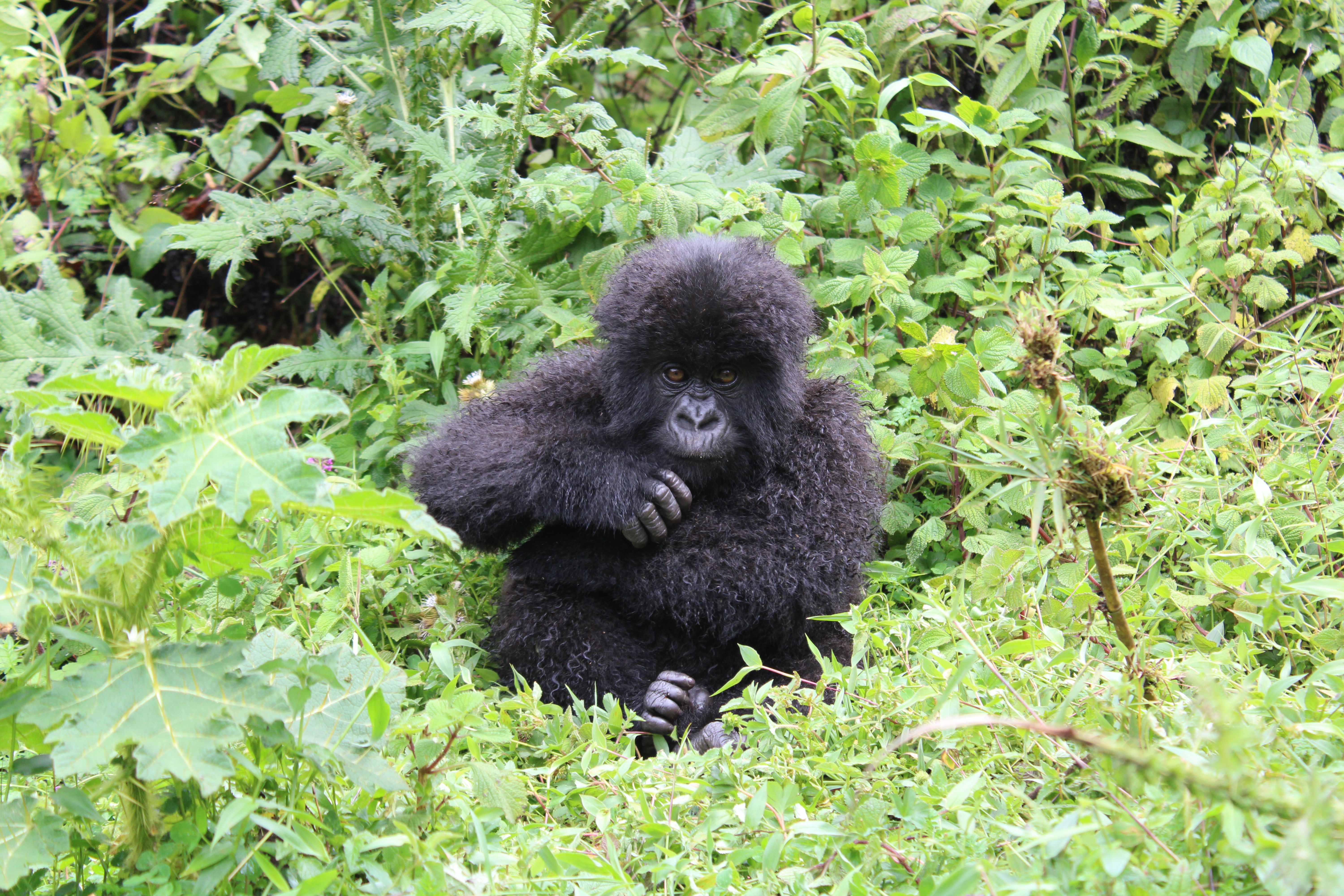
Gorilla trekking in Ruhija is one of the most rewarding wildlife experiences available in Uganda. Located in the eastern section of Bwindi Impenetrable National Park, Ruhija offers visitors an opportunity to encounter endangered mountain gorillas in their natural habitat while exploring one of Africa’s most remarkable tropical rainforests. The sector is particularly attractive to travellers who appreciate quieter wilderness experiences, beautiful mountain scenery, cooler temperatures and exceptional birdwatching opportunities.
Bwindi Impenetrable National Park is one of the world’s most important mountain gorilla conservation areas. Its ancient forest covers approximately 321 square kilometres of mountainous terrain in southwestern Uganda. The park is home to a significant population of endangered mountain gorillas, alongside numerous other mammals, reptiles, butterflies and bird species. Its steep valleys, thick vegetation, bamboo zones and forest-covered ridges create a remarkable environment for wildlife exploration.
Ruhija is one of the four main gorilla trekking sectors in Bwindi, alongside Buhoma, Rushaga and Nkuringo. Each sector has its own characteristics, trekking routes, accommodation facilities and gorilla families. Ruhija stands out because of its high elevation, peaceful atmosphere and exceptional biodiversity. It is also an excellent destination for combining gorilla trekking with guided forest walks and birdwatching.
At Exclusive Gorilla Journeys, we organise carefully planned gorilla trekking experiences that help visitors explore Uganda’s natural attractions comfortably and responsibly. Whether you are travelling independently, as a couple, with friends or as part of a private safari, Ruhija provides an unforgettable opportunity to experience mountain gorillas in the wild.
This complete guide explains everything you need to know about gorilla trekking in Ruhija, including the location, gorilla families, trekking experience, permit prices, accommodation, transport, the best time to visit, packing requirements and practical travel advice.
Where Is Ruhija Gorilla Trekking Sector Located?
Ruhija is situated in the eastern part of Bwindi Impenetrable National Park in southwestern Uganda. It lies within the mountainous Kigezi region, an area characterised by rolling hills, cultivated valleys, mist-covered mountains and traditional rural communities.
The sector is located at an elevation of approximately 2,300 metres above sea level, although the surrounding landscape includes higher and lower areas. Its altitude gives Ruhija a cooler climate than several other parts of Bwindi, particularly during early mornings and evenings.
Ruhija is accessed through Kabale District and is relatively convenient for visitors travelling from Kabale town or Lake Bunyonyi. Its geographical position also makes it an attractive option for travellers entering Uganda through Rwanda, particularly those arriving in Kigali and crossing through the Katuna or Cyanika border areas, depending on their itinerary.
The surrounding landscape is exceptionally beautiful. Visitors encounter terraced hillsides, forested mountains, small villages and spectacular views across the highlands. As travellers approach Ruhija, the landscape gradually becomes more mountainous, with thick vegetation and cool forest air creating a distinctive atmosphere.
Unlike some of the more developed tourism centres around Bwindi, Ruhija has a relatively peaceful setting. Accommodation facilities are available close to the trekking headquarters, although the choice is smaller than in Buhoma. This makes advance planning particularly important, especially during busy travel periods.
Why Choose Ruhija for Gorilla Trekking?
Choosing the right gorilla trekking sector is an important part of planning a Uganda safari. Although mountain gorilla trekking is available throughout the designated sectors of Bwindi, the experience can differ depending on the location, terrain, accommodation and surrounding attractions.
Ruhija is an excellent choice for visitors who want to explore the eastern side of Bwindi and experience a quieter mountain forest environment.
One of its greatest attractions is the natural environment. The sector occupies a high-altitude landscape with dense montane vegetation, steep slopes, deep valleys and impressive forest scenery. The combination of cool temperatures and thick vegetation creates a distinctive setting for gorilla trekking.
Ruhija is also particularly appealing to nature enthusiasts. In addition to mountain gorillas, the area supports remarkable birdlife, making it one of the most interesting destinations for birdwatchers visiting southwestern Uganda.
Another advantage is its location. Travellers combining gorilla trekking with Lake Bunyonyi, Kabale, Queen Elizabeth National Park or a cross-border safari from Rwanda can find Ruhija a convenient addition to their itinerary.
The sector is also suitable for travellers seeking a less crowded atmosphere. However, the number of visitors and trekking groups varies according to permit availability, season and gorilla family assignments. A quieter setting should not be interpreted as a guarantee of a private gorilla encounter.
For visitors who value nature, tranquillity, mountain scenery and a combination of primate encounters and birdwatching, Ruhija is an excellent destination.
Gorilla Families in Ruhija
Ruhija is home to several habituated mountain gorilla families that have been made available for tourism and conservation activities. These families include Bitukura, Oruzogo, Mukiza and Kyaguriro, although the availability and management of individual groups can change.
Mountain gorilla families are naturally dynamic. Their membership changes through births, deaths, movements, family splits and interactions between different groups. Silverbacks may establish new families, while individual gorillas sometimes move between groups.
The Bitukura Gorilla Family is among the well-known families associated with Ruhija. It has attracted visitors because of its interesting family structure and history of habituation. Its members provide an opportunity to observe the social relationships that characterise mountain gorilla communities.
The Oruzogo Gorilla Family is another recognised group in the sector. Like other habituated families, it has its own social organisation, with a dominant silverback playing an important role in maintaining family relationships and protecting members.
The Mukiza Gorilla Family is also associated with Ruhija. It provides another opportunity for visitors to observe the fascinating behaviour of mountain gorillas in their natural environment.
Kyaguriro is particularly notable because of its association with research and conservation work. Its history demonstrates the importance of scientific monitoring in understanding mountain gorilla behaviour, health, population dynamics and long-term conservation.
It is important to understand that visitors cannot independently select a particular gorilla family and expect to track it on a specific day. The Uganda Wildlife Authority manages trekking assignments, taking into account the location of the gorillas, operational considerations and visitor circumstances.
The family assigned to a trekking group is therefore determined through the official briefing and allocation process. This approach helps protect the gorillas while supporting an organised visitor experience.
What Makes Ruhija Different from Other Bwindi Sectors?
Bwindi has four principal gorilla trekking sectors, namely Buhoma, Ruhija, Rushaga and Nkuringo. Although they all provide opportunities to encounter mountain gorillas, they differ in location, accessibility, accommodation options and surrounding attractions.
Buhoma is located in the northern section of Bwindi and is one of the most established tourism areas in the park. It has a wider range of accommodation facilities and is popular with visitors combining gorilla trekking with Queen Elizabeth National Park.
Rushaga is situated in the southern part of Bwindi. It is known for its numerous habituated gorilla families and is the main location for the Gorilla Habituation Experience. Travellers interested in spending an extended period observing gorillas under the habituation programme generally consider Rushaga.
Nkuringo is another southern sector, positioned in a mountainous area with spectacular views of the surrounding landscape. Its challenging terrain and scenic accommodation make it attractive to travellers seeking a more adventurous experience.
Ruhija differs through its eastern location, high-altitude environment and strong birdwatching appeal. Its forest trails pass through beautiful montane vegetation, while the surrounding hills provide impressive views.
For travellers who want to combine gorilla trekking with birdwatching and nature walks, Ruhija offers a particularly attractive experience. Its location also makes it suitable for itineraries involving Kabale and Lake Bunyonyi.
The best sector ultimately depends on your travel plans, accommodation preferences, physical ability, available permits and the route you intend to follow through Uganda.
How Gorilla Trekking in Ruhija Works
Gorilla trekking in Ruhija is organised by the Uganda Wildlife Authority, which manages Bwindi Impenetrable National Park and oversees visitor activities involving mountain gorillas.
The experience begins with obtaining a valid gorilla trekking permit for the correct date and sector. Once the permit is secured, visitors arrange accommodation, transportation and other safari services.
On the trekking day, visitors report to the designated Ruhija gorilla trekking headquarters for registration and briefing. It is important to arrive early enough to complete the necessary procedures before the trek begins.
During the briefing, park officials explain the trekking guidelines, conservation regulations and safety procedures. Visitors are also assigned to available gorilla families and organised into trekking groups.
A maximum of eight visitors can visit a habituated gorilla family per day under the standard trekking arrangement. Each group is accompanied by trained park personnel who understand the forest environment and gorilla behaviour.
After the briefing, the trekking group enters the forest with its guides and ranger escorts. Trackers normally begin locating the gorilla families before visitors set out. They communicate information about the gorillas’ movements to help the trekking team identify the appropriate direction.
The duration of the trek varies considerably. Some groups may reach their assigned gorillas after a relatively short walk, while others may spend several hours moving through steep terrain and dense vegetation.
When the gorillas are located, visitors are allowed a maximum of one hour with the family under the standard trekking experience.
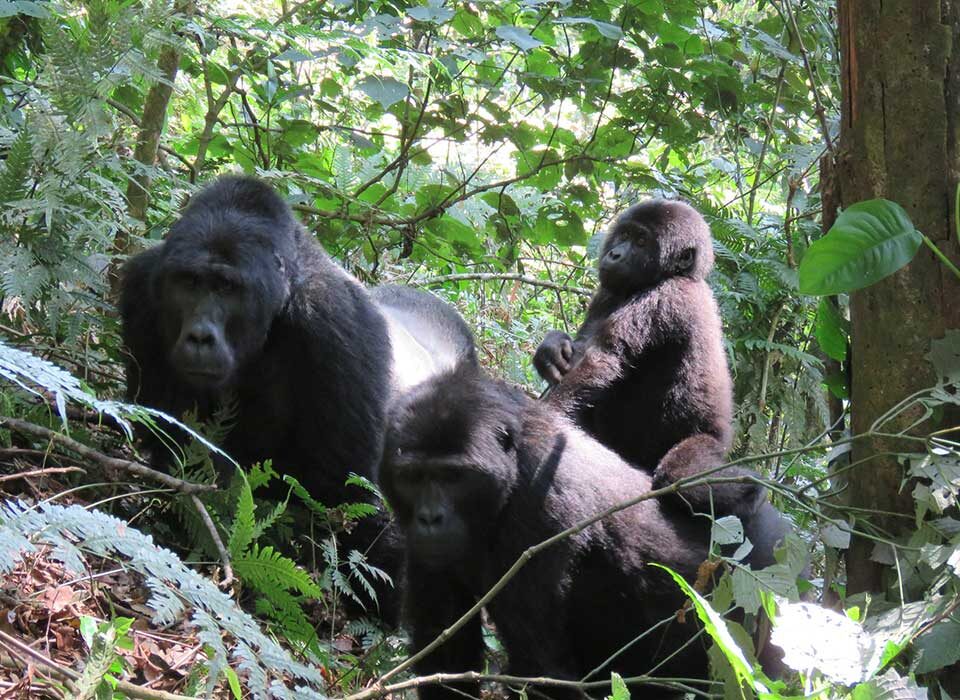
During this time, visitors can observe the gorillas feeding, resting, moving through vegetation, interacting with family members and caring for their young. The experience provides an extraordinary opportunity to understand the behaviour of these endangered primates.
Once the observation period ends, the group leaves the gorillas and returns to the designated meeting point.
The trekking experience can be physically demanding, but the opportunity to encounter mountain gorillas in their natural habitat makes the effort worthwhile.
What to Expect During a Gorilla Trek in Ruhija
Gorilla trekking in Ruhija is an adventure through a natural forest environment rather than a conventional wildlife viewing activity.
The experience involves walking through thick vegetation, climbing hillsides, crossing uneven ground and sometimes navigating muddy trails. Visitors should be prepared for changing terrain and unpredictable weather.
The forest is characterised by dense vegetation, tall trees, tangled undergrowth, vines, ferns and bamboo in some areas. Depending on the gorilla family’s location, the trekking route may pass through steep slopes, narrow paths and sections without clearly defined trails.
The high altitude is another important consideration. Visitors who are not accustomed to walking at elevations above 2,000 metres may notice that physical activity feels more demanding. Taking a steady pace and following the guide’s instructions can make the experience more manageable.
The weather can also change quickly. A morning that begins with sunshine may develop into mist or rain, making the forest floor slippery.
During the trek, visitors may hear birds calling through the forest, encounter butterflies and observe other forest wildlife. The natural environment is an important part of the experience, even before the gorillas are found.
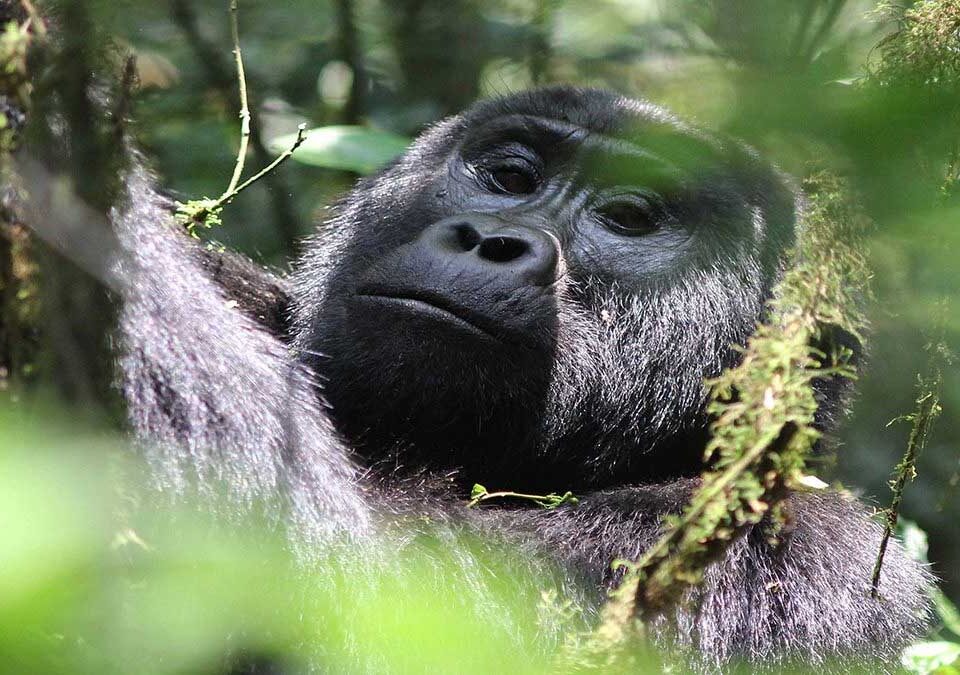
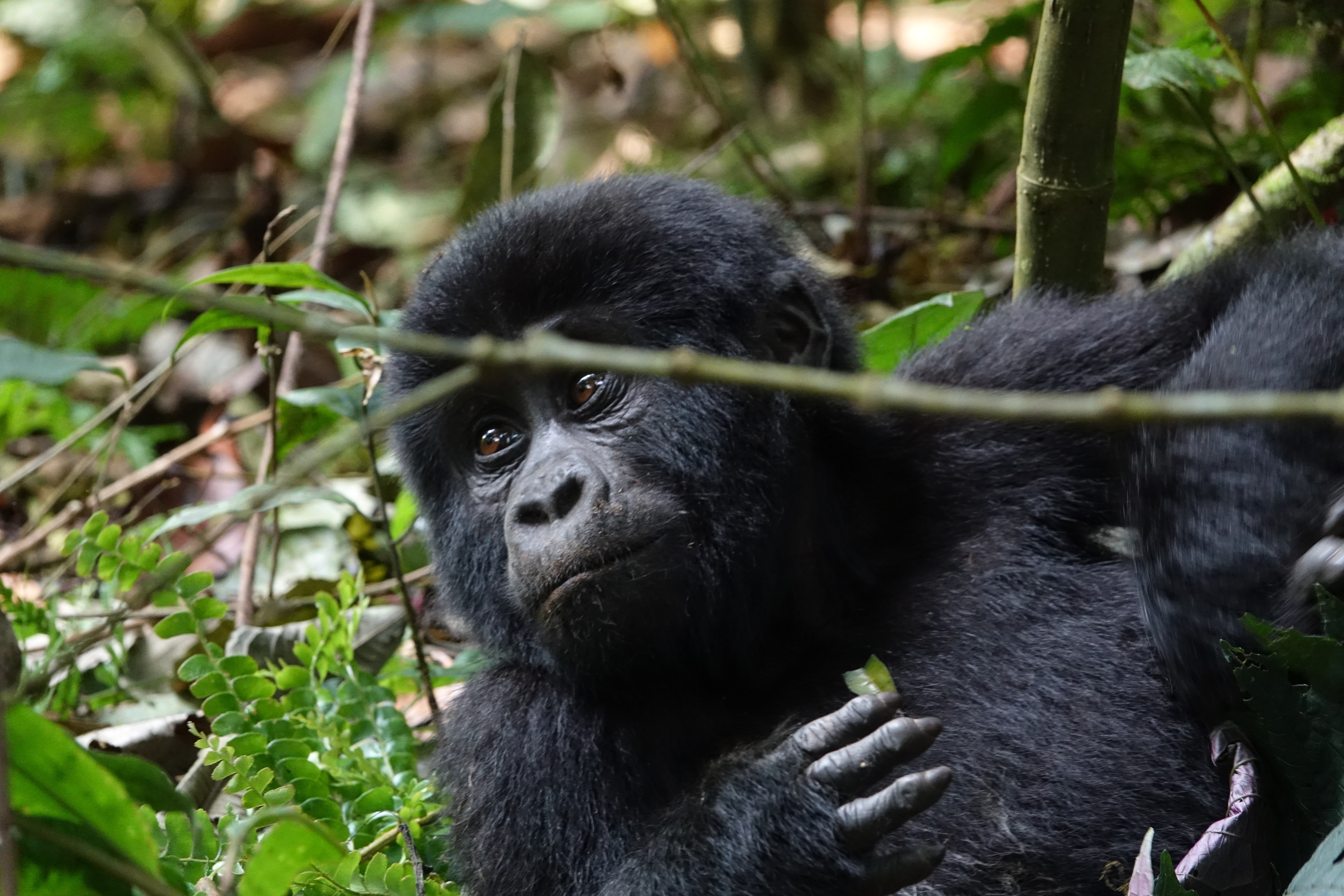
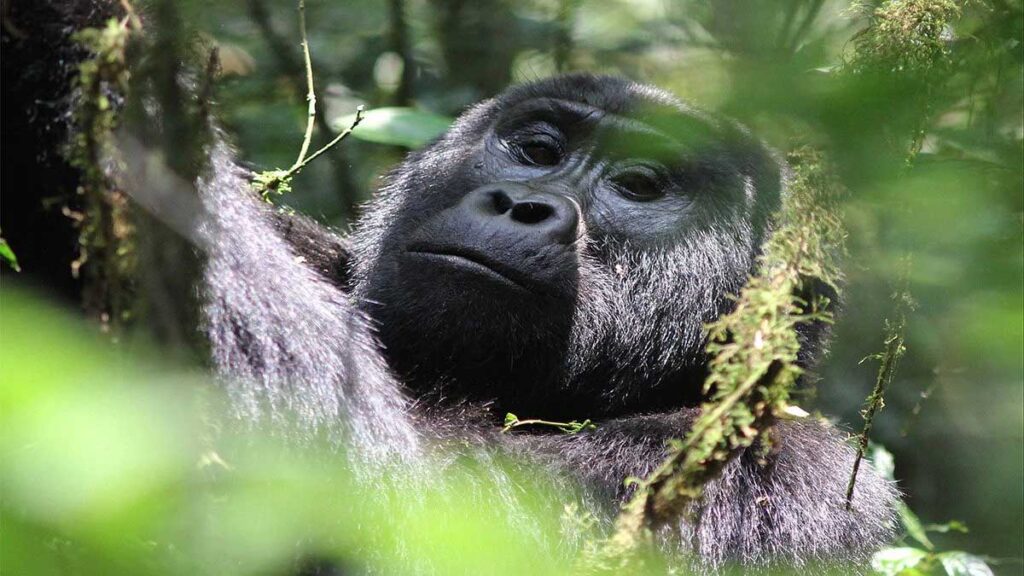
The encounter itself is often the most memorable part of the adventure. Seeing a mountain gorilla feeding peacefully, a silverback watching over its family or a young gorilla playing among vegetation provides a powerful connection with wildlife.
Photography is permitted under the applicable park regulations, provided visitors maintain the required distance and avoid disturbing the animals.
How Difficult Is Gorilla Trekking in Ruhija?
Gorilla trekking in Ruhija can range from moderately challenging to strenuous, depending on the location of the assigned gorilla family and the prevailing trail conditions.
The sector’s high elevation and mountainous landscape are important factors. Some routes involve considerable climbing, while others pass through relatively manageable terrain.
Visitors should not assume that every trek will involve the same amount of physical effort. The gorillas move freely through the forest, and their location changes from day to day. Consequently, the trekking distance and difficulty cannot be guaranteed in advance.
The high altitude may also affect visitors who are not accustomed to mountainous environments. Walking uphill while navigating thick vegetation requires stamina, balance and patience.
Nevertheless, gorilla trekking does not require professional mountaineering skills. Visitors with reasonable fitness levels can participate successfully when properly prepared.
We recommend beginning physical preparation several weeks before travelling. Walking regularly, practising uphill hikes and improving general endurance can help prepare your body for the forest environment.
Visitors should communicate any mobility limitations or relevant physical concerns to their safari organiser before booking. This allows the team to discuss appropriate arrangements and available support.
Porters can also be hired at the trekking headquarters. They assist with carrying bags and providing support along difficult sections of the trail. Hiring a porter is an excellent way to support local livelihoods while making the trek more comfortable.
Gorilla Trekking Permit Prices in Ruhija
A valid gorilla trekking permit is compulsory for anyone wishing to participate in the standard mountain gorilla trekking experience in Ruhija.
The Uganda Wildlife Authority determines the permit prices, and the same official rates apply to the designated trekking sectors in Bwindi. Visitors do not pay a different gorilla permit price simply because they choose Ruhija instead of Buhoma, Rushaga or Nkuringo.
For foreign non-residents, the standard gorilla trekking permit costs USD 800 per person under the published standard tariff. Foreign residents pay USD 700, visitors from the rest of Africa pay USD 500, and East African citizens pay UGX 300,000.
Uganda has also introduced discounted low-season gorilla trekking permits for April, May and November. Under the announced arrangement, foreign non-residents pay USD 600, while foreign residents pay USD 500. These discounted permits cannot be rescheduled, so travellers should confirm their dates carefully before purchasing.
The announced revised tariff taking effect on 1 January 2027 retains the standard gorilla trekking price of USD 800 for foreign non-residents, USD 700 for foreign residents, USD 500 for visitors from the rest of Africa and UGX 300,000 for East African citizens.
These prices are per person and apply to the standard gorilla trekking experience. Visitor categories are determined by the applicable eligibility and documentation requirements.
The permit generally covers the gorilla trekking activity, the ranger guide, park entry for the activity day and the applicable community conservation contribution. It does not automatically include accommodation, meals, private transport, porter services or other safari activities.
At Exclusive Gorilla Journeys, we encourage travellers to confirm the applicable permit category and price before making payment, particularly when booking across different tariff periods.
How to Book a Gorilla Trekking Permit for Ruhija
Booking a gorilla trekking permit is one of the most important steps when organising a safari to Ruhija.
Permits are limited because only a restricted number of visitors are allowed to visit each habituated gorilla family per day. Demand can be particularly high during popular international holiday periods.
The first step is to identify your preferred trekking date. You should also establish the number of people participating and the sector where you want to trek.
Once these details are confirmed, permit availability can be checked through the Uganda Wildlife Authority’s reservation system or an authorised tour operator.
Foreign non-resident visitors must purchase their permits through a tour operator licensed by the Uganda Tourism Board, in accordance with the applicable UWA booking guidelines.
After confirming availability, the booking details and payment requirements should be verified before completing the purchase.
It is advisable to secure the permit before making non-refundable accommodation or transport arrangements. This helps prevent situations where a traveller has already booked a lodge in Ruhija but cannot obtain a permit for the desired date.
Travellers should provide accurate passport details and ensure that the permit information corresponds with their intended trekking date.
Exclusive Gorilla Journeys can assist with checking permit availability, organising the reservation process and coordinating the other arrangements required for a successful gorilla trekking safari.
Best Time for Gorilla Trekking in Ruhija
Gorilla trekking in Ruhija is available throughout the year because mountain gorillas live in the forest permanently. However, the weather and trail conditions vary according to the seasons.
Uganda generally experiences two broad dry periods and two rainy periods. These seasonal patterns influence trekking conditions, road accessibility, forest vegetation and the overall travel experience.
The drier months are generally June, July, August, September, December, January and February. During these periods, rainfall is often less frequent, and forest trails may be easier to navigate.
June, July and August are particularly popular months for gorilla trekking. Many international visitors plan their Uganda safaris during this period because of the generally favourable conditions.
December and January are also attractive months. The festive season brings increased travel demand, making early permit and accommodation reservations important.
The main rainy periods generally occur from March to May and September to November. Rainfall can make forest trails slippery and increase the difficulty of walking through thick vegetation.
However, the rainy season also has advantages. The forest becomes particularly lush, birdlife remains rewarding and the landscape takes on a beautiful green appearance.
The introduction of discounted low-season gorilla permits for April, May and November provides an additional reason for eligible travellers to consider these months. Visitors should remember that the discounted permits cannot be rescheduled.
There is no universally perfect month for gorilla trekking in Ruhija. The best time depends on your budget, preferred weather conditions, availability of permits and willingness to experience the forest during wetter periods.
Where to Stay During Gorilla Trekking in Ruhija
Choosing suitable accommodation is essential when planning a gorilla trekking safari in Ruhija. Staying close to the trekking headquarters makes it easier to attend the early morning briefing without having to travel long distances before the activity.
Ruhija has several accommodation facilities catering to different budgets and travel preferences. Visitors can choose from comfortable mid-range lodges, tented camps, budget guesthouses and smaller nature-oriented accommodation establishments.
Luxury and Comfortable Accommodation
Travellers looking for a comfortable stay can consider lodges offering private cottages, attractive forest views, good dining facilities and personalised hospitality.
Some properties around Ruhija provide comfortable rooms, private bathrooms, fireplaces or warm bedding to make evenings more enjoyable in the cool highland environment.
Because the number of high-end accommodation facilities is relatively limited, visitors seeking premium services should make reservations early. It is also important to establish the actual distance between the selected lodge and the Ruhija trekking headquarters.
Mid-Range Accommodation
Mid-range lodges are suitable for travellers seeking a balance between comfort, location and affordability.
Bakiga Lodge and Gorilla Mist Camp are among the accommodation options associated with the Ruhija area. These establishments provide a convenient base for visitors interested in exploring the sector.
Many mid-range facilities offer private rooms, en-suite bathrooms, meals and scenic surroundings. Their location can also make it easier to organise additional activities such as birdwatching and guided nature walks.
Budget Accommodation
Budget accommodation is available for visitors who prefer to spend less on lodging while prioritising the gorilla trekking experience.
Broadbill Forest Camp, Ruhija Gorilla Friends Resort and Campsite and other smaller guesthouses provide options for travellers seeking relatively affordable accommodation.
Facilities vary between properties, so visitors should confirm room arrangements, bathroom facilities, meal availability, electricity, hot water and transport arrangements before making a reservation.
Why Staying Near the Trekking Headquarters Matters
One of the most important accommodation considerations is proximity to the gorilla trekking starting point.
Ruhija is a mountainous destination, and early morning road transfers can be affected by mist, rain and road conditions. Staying nearby reduces unnecessary travel and helps visitors arrive comfortably before the briefing.
At Exclusive Gorilla Journeys, we recommend selecting accommodation according to the confirmed trekking sector rather than choosing a lodge simply because it appears attractive in photographs or offers a lower price.
A well-positioned lodge can make the entire gorilla trekking experience more convenient.
How to Get to Ruhija for Gorilla Trekking
Ruhija can be accessed by road from Kampala, Entebbe, Kabale, Kigali and other destinations in southwestern Uganda. Visitors can also use domestic flights to shorten the journey, followed by a road transfer to the sector.
The best route depends on your starting point, travel schedule and the other destinations included in your safari.
Getting to Ruhija from Kampala
Travelling from Kampala to Ruhija involves driving through southwestern Uganda, generally following the Kampala-Masaka-Mbarara-Kabale route.
From Kabale, the journey continues towards Ruhija through the mountainous countryside. The final section involves winding roads and changing road surfaces.
The complete journey can take approximately eight to ten hours, depending on traffic, road conditions, weather and stopovers.
Travellers should avoid scheduling the entire journey immediately before their trekking day. An overnight stay in Kabale or near Lake Bunyonyi can make the journey more comfortable.
A private 4×4 safari vehicle is recommended because the roads approaching Ruhija can become difficult during rainy conditions.
Getting to Ruhija from Kigali
Ruhija is also accessible from Kigali, Rwanda, making it an attractive destination for travellers who want to combine Rwanda and Uganda in one safari.
The journey involves crossing the Uganda-Rwanda border through an appropriate border post, such as Katuna or Cyanika, depending on the route.
The route through Katuna provides access towards Kabale, from where visitors continue to Ruhija. Travel time is affected by border formalities, traffic and road conditions.
Travellers approaching through Rwanda should check their immigration requirements carefully. They must ensure that they have the correct documentation for entering Uganda and, where necessary, returning to Rwanda.
This route is particularly attractive to visitors combining gorilla trekking in Uganda with other activities in Rwanda.
Getting to Ruhija by Air
Travellers who want to reduce the amount of time spent driving can consider domestic flights from Entebbe or Kajjansi to southwestern Uganda.
Kihihi and Kisoro are among the airstrips used for accessing Bwindi and the surrounding tourism areas. However, neither should be assumed to be immediately adjacent to Ruhija.
A further road transfer is required after landing, and the most appropriate airstrip depends on the flight schedule and the complete safari route.
Flight availability, luggage restrictions and transfer arrangements should be confirmed before booking.
For visitors with limited time, a fly-in safari can make it possible to combine gorilla trekking with other destinations while avoiding several hours of road travel.
Birdwatching in Ruhija
Ruhija is one of the most interesting birdwatching destinations in Bwindi Impenetrable National Park. Its high-altitude forest environment supports a remarkable variety of bird species, including several Albertine Rift endemics.
Birdwatching is an excellent additional activity for travellers who want to experience more than gorilla trekking during their stay.
The surrounding forest provides habitats for numerous species, including forest specialists that are difficult to observe in other environments.
One of the most important birdwatching attractions is the African Green Broadbill, a highly sought-after species among bird enthusiasts.
Other notable species associated with the broader Bwindi forest include the Ruwenzori Turaco, Handsome Francolin, Grauer’s Rush Warbler and several other Albertine Rift forest birds.
Birdwatching excursions are normally conducted with experienced local guides who understand bird calls, feeding behaviour and preferred habitats.
Visitors should carry binoculars and appropriate clothing because birdwatching often involves spending extended periods walking through forest trails.
Exploring Mubwindi Swamp
Mubwindi Swamp is among the best-known birdwatching locations associated with Ruhija.
The trail leading to the swamp passes through beautiful montane forest and provides opportunities to observe different bird species and appreciate the park’s ecological diversity.
The walk can be physically demanding because of the uneven terrain and elevation changes. Visitors should allow sufficient time and arrange a knowledgeable guide.
Mubwindi Swamp is particularly attractive to specialist birdwatchers hoping to encounter rare Albertine Rift species.
The Bamboo Trail
The bamboo zone around Ruhija offers another interesting opportunity for nature exploration.
The trail passes through distinctive vegetation and provides opportunities to appreciate the transition between different forest habitats.
Visitors may encounter various bird species and other forest wildlife while enjoying the surrounding mountain scenery.
These additional activities make Ruhija an excellent destination for travellers who have more than one day available in Bwindi.
Other Activities to Enjoy Around Ruhija
Although gorilla trekking is the main attraction, visitors can enjoy several additional activities during their stay.
Guided nature walks provide opportunities to explore the forest beyond the main gorilla trekking experience. These walks help visitors appreciate the vegetation, ecological importance and smaller wildlife species that contribute to Bwindi’s biodiversity.
Community visits offer another way to understand the lives of people living around the national park. Visitors can learn about traditional livelihoods, farming practices, local food, cultural activities and the relationship between surrounding communities and conservation.
Lake Bunyonyi is another attraction that can be included in a Ruhija itinerary. Located in the Kabale highlands, the lake is famous for its beautiful islands, scenic surroundings and opportunities for relaxation.
Visitors can enjoy boat excursions, canoeing, birdwatching and peaceful lakeside accommodation.
A visit to Lake Bunyonyi before or after gorilla trekking provides a welcome change of scenery and creates a more varied southwestern Uganda safari.
Travellers with additional time can also include Queen Elizabeth National Park, where game drives and boat safaris provide opportunities to encounter a different range of wildlife.
What to Pack for Gorilla Trekking in Ruhija
Packing appropriately is essential for a comfortable gorilla trekking experience. Ruhija’s high altitude means that temperatures are often cooler than in many other parts of Uganda.
The forest environment also experiences frequent rainfall, and conditions can change quickly.
Visitors should bring comfortable waterproof hiking boots with good grip. The trails may become muddy, slippery and uneven, making appropriate footwear particularly important.
Long-sleeved shirts and long trousers provide protection against scratches, insects and vegetation. Clothing should be comfortable and suitable for walking through thick forest.
A waterproof jacket or raincoat is strongly recommended. Even during relatively dry months, visitors should be prepared for unexpected showers.
Warm clothing is also important for early mornings and evenings. A fleece jacket or sweater can make a considerable difference when temperatures drop.
A small backpack is useful for carrying drinking water, snacks for before or after the encounter, personal items and other trekking essentials. Food and drinks must not be consumed in the presence of the gorillas.
Gardening gloves can help protect your hands when holding vegetation for support along steep sections of the trail.
A walking stick can also be useful, particularly for visitors who need additional stability on uneven ground. These are sometimes available at the trekking headquarters.
Visitors interested in photography should carry appropriate equipment and spare batteries. However, equipment should be manageable enough to avoid making the walk unnecessarily difficult.
Gorilla Trekking Rules and Regulations in Ruhija
Mountain gorillas are endangered animals, and their conservation depends on responsible tourism and strict protection measures.
All visitors participating in gorilla trekking must follow the guidelines provided by the Uganda Wildlife Authority and the ranger team.
The minimum age for gorilla trekking in Uganda is 15 years. Children below this age are not permitted to participate in the standard trekking activity.
Visitors should not enter the forest to track gorillas if they are suffering from an infectious illness, particularly a cold, cough or flu. Mountain gorillas are vulnerable to several human respiratory infections.
During the encounter, visitors must maintain the prescribed distance from the gorillas. The standard UWA guidance specifies a minimum distance of 10 metres.
Visitors should avoid touching the gorillas, attempting to feed them or making sudden movements that could disturb their behaviour.
Eating, drinking and smoking are prohibited while observing the gorillas. If a visitor needs to cough or sneeze, they should turn away and cover their mouth and nose.
Flash photography should not be used. Visitors should also avoid loud conversations, shouting and unnecessary movements.
The maximum observation period is one hour for standard gorilla trekking. This restriction helps minimise disturbance to the gorillas and supports responsible tourism.
Visitors must follow the instructions of the ranger guides throughout the experience. The guides are responsible for managing the encounter and ensuring that the group behaves appropriately.
These regulations are essential for protecting mountain gorillas and ensuring that future generations can continue experiencing them in their natural environment.
How Much Does a Gorilla Trekking Safari in Ruhija Cost?
The overall cost of a gorilla trekking safari in Ruhija depends on several factors, including the permit price, accommodation category, transport, meals, number of travel days and additional activities.
The gorilla trekking permit is normally the largest individual activity expense for international visitors.
Accommodation costs vary considerably. Budget guesthouses and campsites are generally less expensive than premium lodges offering private cottages and extensive services.
Transport is another important consideration. A private 4×4 safari vehicle with a professional driver-guide provides flexibility and convenience, particularly when travelling through mountainous areas.
The number of people travelling together can also influence the cost per person. Couples, families and small private groups may share certain transport expenses.
Visitors should also budget for additional expenses such as porter services, personal purchases, tips, travel insurance and optional activities.
For an accurate safari quotation, the itinerary should be prepared around the actual travel dates, permit category, accommodation preferences and starting location.
Exclusive Gorilla Journeys helps travellers organise safari packages that bring these different expenses together into a clear travel arrangement.
Suggested Gorilla Trekking Itinerary for Ruhija
A two-day or three-day visit to Ruhija can provide sufficient time for gorilla trekking and an additional nature experience.
Two-Day Ruhija Gorilla Trekking Safari
The first day involves travelling from Kampala, Entebbe or another starting point towards Ruhija. Visitors enjoy the beautiful scenery of southwestern Uganda before checking into their accommodation.
After arrival, the remainder of the day can be spent relaxing, enjoying the surrounding landscape and preparing for the following morning’s activity.
On the second day, visitors attend the early morning gorilla trekking briefing at the Ruhija headquarters. After completing the trek and spending the permitted hour with the gorillas, they return to the lodge.
Depending on the departure arrangements, visitors can then begin their return journey or continue to another destination.
Three-Day Ruhija Gorilla Trekking and Birdwatching Safari
A three-day itinerary provides more time to explore the destination.
On the first day, travellers transfer to Ruhija and check into their lodge.
The second day is dedicated to gorilla trekking. Visitors spend the day exploring the forest and experiencing the mountain gorilla encounter.
On the third day, visitors can enjoy a guided birdwatching excursion, explore the Mubwindi Swamp trail or participate in another nature activity before continuing to their next destination.
This itinerary is particularly suitable for bird enthusiasts and travellers who prefer a more relaxed experience.
Responsible Tourism and Mountain Gorilla Conservation
Gorilla trekking in Ruhija contributes to the protection of endangered mountain gorillas and the wider Bwindi ecosystem.
The tourism industry creates economic opportunities for communities surrounding the national park while generating revenue that supports conservation management.
Mountain gorillas face several threats, including habitat pressure, human-related diseases and other environmental challenges. Conservation programmes therefore require continuous monitoring, habitat protection and cooperation between park authorities and surrounding communities.
Tourism helps support these efforts by creating financial incentives for protecting wildlife and maintaining the forest.
Local residents also benefit through employment opportunities in guiding, accommodation, transport, porter services, cultural tourism and other hospitality activities.
Hiring a local porter is one practical way visitors can contribute directly to the local economy.
Responsible travellers should respect community traditions, avoid littering and follow all park regulations.
By choosing a professionally organised gorilla trekking safari, visitors can enjoy the experience while supporting conservation and responsible tourism.
Why Book Gorilla Trekking in Ruhija with Exclusive Gorilla Journeys?
Organising a successful gorilla trekking safari involves more than purchasing a permit. Travellers must coordinate accommodation, transport, border formalities where applicable, park arrangements and other activities.
Exclusive Gorilla Journeys helps visitors organise these arrangements into a convenient and well-planned safari.
Our approach focuses on understanding the traveller’s interests, available time, budget and preferred accommodation category before preparing an itinerary.
We assist with gorilla permit reservations, accommodation arrangements, private transportation and guided safari experiences.
For visitors travelling from Kampala or Entebbe, we can coordinate the road transfer to Ruhija and incorporate suitable stopovers where necessary.
For international visitors arriving through Kigali, we can help organise cross-border transportation and include the relevant travel arrangements in the itinerary.
We also assist visitors interested in combining gorilla trekking with birdwatching, Lake Bunyonyi, Queen Elizabeth National Park and other destinations in Uganda.
Our objective is to make the planning process straightforward while ensuring that every traveller understands the arrangements involved in their safari.
Whether you are planning a short gorilla trekking trip or an extended Uganda wildlife adventure, Exclusive Gorilla Journeys can help you organise an experience suited to your travel expectations.
Frequently Asked Questions About Gorilla Trekking in Ruhija
Is Ruhija a good place for gorilla trekking?
Yes. Ruhija is an excellent destination for mountain gorilla trekking. It offers access to habituated gorilla families, beautiful montane forest, a peaceful environment and exceptional birdwatching opportunities.
How many gorilla families are found in Ruhija?
Ruhija has been associated with several habituated gorilla families, including Bitukura, Oruzogo, Mukiza and Kyaguriro. Family availability and management arrangements can change, so current trekking assignments should be confirmed when booking.
How much is a gorilla permit in Ruhija?
The standard permit for foreign non-residents costs USD 800 per person under the published tariff. Discounted permits costing USD 600 are available for foreign non-residents during April, May and November, subject to the applicable conditions. Other visitor categories have different rates.
How long does gorilla trekking take in Ruhija?
The trekking duration depends on the location of the assigned gorilla family. Some visitors may find the gorillas relatively quickly, while others may spend several hours walking through the forest. The standard encounter lasts a maximum of one hour.
Is Ruhija difficult for gorilla trekking?
Ruhija can be moderately challenging or strenuous because of its high altitude, steep slopes and thick vegetation. Visitors should prepare physically and wear suitable hiking equipment.
Can I choose which gorilla family to visit?
Visitors cannot independently guarantee a particular gorilla family. Assignments are organised by park authorities during the morning briefing, taking into account the available groups and operational considerations.
What is the minimum age for gorilla trekking in Ruhija?
The minimum age is 15 years. Visitors must meet this requirement before participating in the standard gorilla trekking experience.
Is Ruhija colder than Buhoma?
Ruhija generally experiences cooler conditions because it is situated at a higher elevation. Visitors should carry warm clothing, particularly for early mornings and evenings.
Can I visit Ruhija from Kigali?
Yes. Ruhija can be accessed from Kigali through the Uganda-Rwanda border. The route via Katuna and Kabale is one option, depending on the itinerary and prevailing road conditions.
Are there luxury lodges in Ruhija?
Ruhija has a smaller selection of accommodation than Buhoma, but visitors can find comfortable lodges, tented camps and other accommodation facilities. Reservations should be made early to secure the preferred property.
Can I combine gorilla trekking with birdwatching?
Yes. Ruhija is particularly attractive to birdwatchers. Mubwindi Swamp and the surrounding forest trails provide excellent opportunities to explore the region’s birdlife.
Is it possible to trek gorillas in Ruhija throughout the year?
Yes. Gorilla trekking takes place throughout the year, although weather conditions and trail accessibility vary seasonally. Visitors should make advance arrangements regardless of their preferred travel month.
Conclusion: Plan Your Gorilla Trekking Safari in Ruhija
Gorilla trekking in Ruhija offers an extraordinary opportunity to encounter endangered mountain gorillas in one of Africa’s most beautiful forest environments. Its high-altitude location, peaceful atmosphere, remarkable birdlife and spectacular scenery make it a rewarding destination for wildlife enthusiasts and adventurous travellers.
From observing the fascinating behaviour of mountain gorilla families to exploring the forest trails around Mubwindi Swamp, Ruhija provides experiences that extend beyond the standard gorilla trekking encounter.
Although the mountainous terrain and changing weather require proper preparation, the rewards are exceptional. With the right permit, suitable accommodation, reliable transport and professional guidance, visitors can enjoy a memorable safari in this remarkable part of Uganda.
At Exclusive Gorilla Journeys, we are committed to helping travellers discover the beauty of Bwindi and experience mountain gorilla trekking responsibly. Contact us to organise your Ruhija gorilla trekking safari and explore the natural wonders of southwestern Uganda.