How to Get to Bwindi from Kampala
November 4, 2026
Bwindi Gorilla Trekking from Kigali
November 4, 2026
Getting to Bwindi Impenetrable National Park from Kigali is one of the most convenient ways to experience gorilla trekking in Uganda, particularly for travellers who are already visiting Rwanda or flying into Kigali International Airport. The journey offers an opportunity to explore two neighbouring East African countries while enjoying spectacular landscapes, beautiful countryside, rolling hills, traditional communities and the extraordinary mountain forests of southwestern Uganda.
For travellers planning a gorilla trekking safari, travelling from Kigali to Bwindi can be considerably more convenient than flying into Entebbe International Airport and driving across Uganda. Kigali is geographically closer to several of Bwindi’s gorilla trekking sectors, making it an attractive arrival point for international visitors who want to combine Rwanda and Uganda in one safari.
At Exclusive Gorilla Journeys, we help travellers organise seamless gorilla trekking experiences, including international arrivals, cross-border transfers, accommodation, Uganda gorilla permits and safari arrangements. Understanding the available routes, border crossing procedures, driving distances and travel requirements is essential when planning this journey.
Although Rwanda has its own famous gorilla trekking destination in Volcanoes National Park, Uganda’s Bwindi Impenetrable National Park offers a different experience, with several trekking sectors, numerous habituated gorilla families and opportunities to explore one of Africa’s most remarkable tropical rainforests.
This guide explains how to get to Bwindi from Kigali, the best border crossing to use, the available transport options, travel times, road conditions, visa requirements and how to organise a successful gorilla trekking safari in Uganda.
Why Travel to Bwindi from Kigali?
Kigali is an excellent starting point for travellers planning gorilla trekking in Uganda. Rwanda and Uganda share a border, and their southwestern regions are relatively close to one another. This geographical advantage makes it possible to travel from Kigali to Bwindi by road without having to undertake the much longer journey from central Uganda.
One of the main reasons travellers choose Kigali is the shorter transfer time to southern Bwindi. Depending on the specific trekking sector, border crossing, traffic and road conditions, the journey can take approximately four to six hours. This is particularly attractive to visitors with limited time who want to experience Uganda’s mountain gorillas without spending an entire day travelling from Entebbe.
Another advantage is the opportunity to combine gorilla trekking in Rwanda and Uganda. Travellers can arrive in Kigali, explore Rwanda, cross into Uganda for gorilla trekking and return to Kigali for their international departure. Alternatively, they can begin with Uganda’s Bwindi forest and continue to Rwanda’s Volcanoes National Park.
The journey also provides an opportunity to experience the beautiful landscapes of both countries. Rwanda’s famous hills gradually give way to Uganda’s mountainous southwestern countryside, where terraced farms, rural settlements, volcanic landscapes and forested highlands create a memorable travel experience.
For visitors interested in comparing gorilla trekking destinations, travelling from Kigali to Bwindi provides access to Uganda’s different trekking sectors, each offering its own terrain, accommodation options and gorilla families.
Understanding the Location of Bwindi Impenetrable National Park
Before arranging transportation from Kigali, it is important to understand where Bwindi is located and how its different trekking sectors are distributed.
Bwindi Impenetrable National Park is situated in southwestern Uganda, close to the Democratic Republic of Congo and Rwanda. It is internationally recognised for its endangered mountain gorilla population and its extraordinary biodiversity.
The park covers approximately 321 square kilometres of mountainous tropical rainforest. Its rugged landscape includes steep valleys, forested ridges, thick vegetation and numerous streams. These geographical features make gorilla trekking an exciting experience but also mean that visitors need to identify the correct park entrance before travelling.
Bwindi is divided into four principal gorilla trekking sectors: Buhoma, Ruhija, Rushaga and Nkuringo.
These sectors are located in different parts of the forest and are accessed through different roads. Consequently, the most convenient route from Kigali depends on the location of your booked gorilla trekking permit and accommodation.
The southern sectors, particularly Rushaga and Nkuringo, are generally the most convenient for visitors travelling through the Cyanika border crossing. The journey to Buhoma and Ruhija requires additional driving, depending on the chosen route and road conditions.
Travellers should therefore avoid booking accommodation simply because it is advertised as being near Bwindi. It is important to confirm that the lodge is located in the same trekking sector as the gorilla permit or that a practical transfer arrangement has been made.
The Best Routes from Kigali to Bwindi
There are two principal routes from Kigali to Bwindi: the Cyanika border crossing and the Katuna border crossing. Choosing between them depends primarily on which gorilla trekking sector you intend to visit.
Route One: Kigali to Bwindi Through Cyanika Border
The Cyanika border crossing is generally the best option for visitors heading to the southern part of Bwindi Impenetrable National Park. It provides convenient access to Rushaga and Nkuringo, as well as Mgahinga Gorilla National Park.
The journey starts in Kigali, where travellers take the northwestern road towards Musanze, formerly known as Ruhengeri. This route passes through Rwanda’s beautiful countryside, characterised by cultivated hillsides, small villages, banana plantations and spectacular mountain scenery.
From Musanze, the road continues towards Cyanika, where Rwanda shares an international border with Uganda. After completing immigration procedures, visitors enter Uganda through Kisoro District.
Kisoro is an important tourism centre in southwestern Uganda and serves as a gateway to the southern gorilla trekking sectors. The town is surrounded by beautiful highland scenery and lies close to the Virunga volcanic mountain range.
From Kisoro, travellers continue towards Bwindi through winding mountain roads. Visitors heading to Rushaga and Nkuringo follow different access roads depending on their accommodation and designated gorilla trekking headquarters.
The total journey from Kigali to Rushaga or Nkuringo generally takes approximately four to five hours under favourable conditions. However, travellers should allow additional time for border procedures, traffic, weather and road conditions.
The Cyanika route is particularly attractive to travellers staying in Rwanda’s Musanze area after visiting Volcanoes National Park. It allows them to move between Rwanda and Uganda without returning to Kigali before continuing their safari.
Why Choose the Cyanika Route?
The Cyanika route is particularly suitable for visitors whose gorilla permits are booked in Rushaga or Nkuringo. It also provides convenient access to Kisoro town, Lake Mutanda and Mgahinga Gorilla National Park.
Another advantage is the opportunity to experience the beautiful Virunga highlands. The scenery changes considerably as travellers move from Rwanda’s cultivated hills into Uganda’s mountainous countryside.
However, Cyanika is a border crossing with operating hours that should be confirmed before departure. Travellers should plan to arrive during daylight rather than assume that immigration services will be available throughout the night.
Route Two: Kigali to Bwindi Through Katuna Border
The Katuna border crossing, also known as Gatuna on the Rwandan side, is another important route connecting Kigali with southwestern Uganda.
This route is particularly useful for visitors heading to the northern and eastern sections of Bwindi, including Buhoma and Ruhija.
Travellers departing from Kigali follow the road towards northern Rwanda before proceeding to the Katuna border. The journey passes through scenic rural communities and agricultural landscapes before reaching the international crossing.
After completing the immigration procedures, visitors enter Uganda and continue towards Kabale District.
Kabale is one of the main towns in southwestern Uganda and an important access point for travellers visiting Bwindi, Lake Bunyonyi and other attractions in the Kigezi region.
From Kabale, the journey continues towards the appropriate Bwindi sector. Travellers heading to Ruhija follow the mountainous road leading into the eastern part of the forest, while those visiting Buhoma continue towards the northern section through the relevant connecting roads.
The journey from Kigali to Ruhija generally takes approximately four to five hours, while travelling to Buhoma can take approximately six to seven hours, depending on the exact destination, road conditions and border procedures.
The Katuna route is particularly convenient for travellers who want to visit Lake Bunyonyi before or after gorilla trekking.
Why Choose the Katuna Route?
The Katuna crossing provides convenient access to Kabale and the northern and eastern parts of Bwindi. It is a suitable alternative for travellers whose permits are allocated to Ruhija or Buhoma.
It also offers opportunities to explore southwestern Uganda’s beautiful highlands. Visitors can enjoy views of cultivated hillsides, traditional settlements and the scenic surroundings of Lake Bunyonyi.
Unlike the Cyanika route, which is particularly useful for southern Bwindi, Katuna is a more practical option for reaching the northern and eastern sectors.
Travellers should nevertheless confirm the best route with their safari operator because road conditions and the exact location of their accommodation can influence the most convenient approach.
Which Border Crossing Is Best for Your Bwindi Gorilla Trekking Sector?
Choosing the correct border crossing is one of the most important parts of planning a journey from Kigali to Bwindi.
Although both Cyanika and Katuna connect Rwanda with southwestern Uganda, they serve different geographical routes.
The following comparison provides a practical guide.
| Bwindi destination | Recommended border | Approximate journey from Kigali |
|---|---|---|
| Rushaga | Cyanika | 4–5 hours |
| Nkuringo | Cyanika | 4–5 hours |
| Ruhija | Katuna | 4–5 hours |
| Buhoma | Katuna | 6–7 hours |
These are planning estimates rather than guaranteed travel times. Actual journeys may take longer depending on weather, traffic, border formalities and the condition of the final access roads.
It is particularly important to understand that a gorilla permit is associated with a designated trekking sector. A visitor holding a Rushaga permit should not assume that accommodation in Buhoma is conveniently located simply because both destinations are within Bwindi.
At Exclusive Gorilla Journeys, we recommend organising transportation after confirming the gorilla permit location and accommodation. This ensures that visitors arrive at the correct briefing centre on time.
Step-by-Step Guide to Travelling from Kigali to Bwindi
Step 1: Arrive at Kigali International Airport
The journey normally begins at Kigali International Airport, Rwanda’s principal international airport.
The airport receives international flights from several destinations, making Kigali a convenient arrival point for travellers planning gorilla trekking in Uganda.
After landing, visitors complete immigration formalities, collect their luggage and meet their safari driver or transfer representative.
If you have arranged your journey through Exclusive Gorilla Journeys, your driver can meet you at the airport or your hotel in Kigali and transfer you directly towards southwestern Uganda.
Travellers arriving late in the evening should consider spending a night in Kigali before continuing to Bwindi the following morning. This is especially important when using the Cyanika crossing because its operating hours should be confirmed in advance.
It is also advisable to have your accommodation details, passport, Uganda visa approval and gorilla permit confirmation readily accessible.
Step 2: Drive from Kigali Towards Musanze or Katuna
The next stage depends on your selected border crossing.
For travellers heading to Rushaga or Nkuringo, the journey follows the Kigali–Musanze road towards Cyanika. This route offers beautiful views of Rwanda’s agricultural countryside and the Virunga mountain region.
For visitors travelling to Buhoma or Ruhija, the Katuna route is generally more practical. The road leads towards the Uganda border and continues to Kabale.
Both routes offer opportunities to appreciate Rwanda’s countryside, where farming activities, rural settlements and green hills form an important part of everyday life.
Travellers should allow sufficient time for the journey rather than rushing towards the border. Weather conditions, road traffic and occasional stops can influence the overall driving time.
Step 3: Complete the Rwanda-Uganda Border Crossing
Crossing from Rwanda into Uganda is a straightforward process when travellers have the correct documents.
At the border, visitors complete the required immigration procedures and present their passports and applicable entry authorisation.
Travellers may be required to provide information about their destination, accommodation and purpose of travel. Visitors should answer immigration questions accurately and keep their travel documents accessible.
If you are travelling with a private safari vehicle, your driver will also handle the necessary vehicle documentation and customs formalities.
The amount of time spent at the border varies. Some travellers complete the process relatively quickly, while others may experience delays during busy periods or when additional document verification is required.
It is advisable to allocate approximately 30 to 60 minutes for border procedures, while allowing a larger buffer when planning an important connection or same-day activity.
Step 4: Continue to Kisoro or Kabale
After completing the border formalities, travellers continue into Uganda.
Visitors using Cyanika generally proceed towards Kisoro, which provides access to the southern Bwindi sectors.
Those using Katuna continue towards Kabale, from where they can access Ruhija and Buhoma.
Kisoro and Kabale are useful places to stop for refreshments, fuel and other travel necessities. However, visitors should avoid unnecessary delays if they have a long transfer ahead or need to reach their lodge before sunset.
Step 5: Transfer to Your Bwindi Accommodation
The final stage involves travelling from Kisoro or Kabale to your accommodation in the relevant Bwindi sector.
This is often the most challenging part of the journey because Bwindi is a mountainous rainforest with steep slopes and winding access roads.
Some accommodation facilities are located close to the trekking headquarters, while others are situated further away along rural roads.
Visitors should therefore confirm their lodge’s precise location before booking a transfer.
For travellers arriving from Kigali, spending the night near the correct trekking sector is highly recommended. This reduces the risk of arriving late for the gorilla trekking briefing the following morning.
Transport Options from Kigali to Bwindi
There are several ways to travel from Kigali to Bwindi Impenetrable National Park. The most appropriate option depends on your budget, travel preferences, group size and the location of your gorilla trekking permit.
Private 4×4 Safari Vehicle
Hiring a private 4×4 safari vehicle is one of the most convenient ways to travel from Kigali to Bwindi.
This option is particularly suitable for international visitors who want a comfortable, flexible and well-organised transfer. A professional safari driver familiar with the Rwanda-Uganda border crossing and Bwindi’s mountain roads makes the journey considerably easier.
A private vehicle allows travellers to depart at a convenient time, stop for photographs, enjoy refreshments and explore interesting places along the way.
It also provides flexibility when travelling with luggage, camera equipment and other personal belongings.
For visitors travelling during the rainy seasons, a 4×4 vehicle is strongly recommended because some access roads leading to Bwindi become muddy, slippery and difficult to navigate.
At Exclusive Gorilla Journeys, we recommend suitable safari vehicles depending on the number of travellers, luggage requirements and the specific trekking sector. Our objective is to make the transfer comfortable while ensuring visitors reach their accommodation safely.
Shared Safari Transfers
Shared transfers can be an economical option for visitors who are travelling alone or in small groups and want to reduce transportation expenses.
Under this arrangement, travellers share a vehicle with other visitors heading towards a similar destination.
The main advantage is that transportation expenses can be divided among passengers. However, shared transfers may have fixed departure schedules and limited flexibility.
The availability of shared transfers from Kigali to particular Bwindi sectors should be confirmed before booking. Not every service operates daily, and some arrangements may involve changing vehicles at the border.
Travellers should also establish whether the transfer includes transportation to their exact lodge or only to a nearby town.
Public Transport from Kigali to Bwindi
Public transport is another possible way to travel between Kigali and southwestern Uganda, although it requires more planning and patience.
Buses and other passenger vehicles operate between major towns in Rwanda and Uganda. Travellers can use available services towards the Uganda border and continue through local transport connections.
However, reaching Bwindi using public transportation is not always straightforward.
The park’s different trekking sectors are situated away from the main towns, and public transport connections to remote lodges and trekking headquarters may be limited.
For example, reaching Kisoro from the Cyanika crossing is easier than finding onward transport to a specific lodge in Rushaga or Nkuringo.
Similarly, visitors travelling through Katuna may need to arrange additional transportation from Kabale to Ruhija or Buhoma.
Public transport also creates challenges when carrying luggage, arriving at remote accommodation and coordinating the early morning gorilla trekking briefing.
For these reasons, we recommend private transportation for travellers who have booked a gorilla trekking permit, particularly those visiting Bwindi for the first time.
Self-Driving from Kigali to Bwindi
Self-driving is possible for travellers who prefer independent travel and have experience driving in East Africa.
However, cross-border self-driving requires additional preparation.
Travellers should confirm that their rental company permits the vehicle to cross into Uganda. They should also obtain the necessary vehicle authorisation, insurance and supporting documentation.
A valid driving licence is essential, and the vehicle must comply with the applicable entry and road-use requirements.
It is important to understand that a rental agreement permitting driving within Rwanda does not automatically authorise cross-border travel into Uganda.
The final roads leading to some Bwindi lodges are steep, narrow and unpaved. Drivers unfamiliar with mountain roads may find these sections particularly challenging, especially after heavy rainfall.
If you choose self-driving, consider using a suitable high-clearance 4×4 vehicle and planning your journey during daylight hours.
Kigali to Bwindi by Air: Is Flying Possible?
Travellers sometimes ask whether they can fly directly from Kigali to Bwindi instead of travelling by road.
There is no regular direct commercial flight from Kigali International Airport to Bwindi Impenetrable National Park.
However, visitors can consider flying into Uganda through Entebbe International Airport and arranging a domestic flight towards the southern or northern parts of Bwindi.
The nearest useful airstrips include Kisoro Airstrip and Kihihi Airstrip.
Kisoro Airstrip is particularly convenient for visitors heading to Rushaga and Nkuringo, while Kihihi Airstrip is useful for those visiting Buhoma and some northern accommodation facilities.
Domestic flights can reduce the amount of time spent travelling by road, although they involve additional arrangements and costs.
For visitors already in Kigali, driving across the border is generally the more practical option because it avoids travelling back through Entebbe.
Important Travel Documents Required When Travelling from Kigali to Bwindi
Travelling from Rwanda to Uganda requires visitors to comply with the immigration regulations of both countries.
Having the correct documentation before leaving Kigali helps prevent unnecessary delays and complications at the border.
A Valid Passport
International travellers should carry a valid passport when crossing from Rwanda into Uganda.
Your passport should generally have at least six months of remaining validity, and it should have sufficient blank pages for immigration requirements where applicable.
The passport is one of the most important documents because immigration officials use it to verify your identity, nationality and travel authorisation.
Ensure that your passport details match the information used when applying for your Uganda gorilla permit and visa.
Uganda Tourist Visa
Most international visitors who require a visa to enter Uganda must obtain the appropriate entry authorisation before travelling.
Uganda’s ordinary single-entry tourist visa costs USD 50 and can be granted for a stay of up to three months, subject to immigration approval.
Applications are made through the official Uganda electronic immigration system.
Travellers should complete their applications in advance and wait for approval before departing Kigali.
The application generally requires a passport biodata page, a recent photograph, travel itinerary and supporting accommodation or tour information.
It is important to understand that visa requirements depend on nationality. Some nationalities are exempt from Uganda’s visa requirements.
Travellers should check their eligibility rather than automatically applying for a visa.
East African Tourist Visa
The East African Tourist Visa is particularly useful for international visitors planning to explore both Rwanda and Uganda during one trip.
This joint tourist visa allows multiple entries into Uganda, Rwanda and Kenya for tourism purposes over a validity period of 90 days.
It is particularly convenient for travellers arriving in Kigali, visiting Rwanda’s Volcanoes National Park and subsequently crossing into Uganda for gorilla trekking in Bwindi.
The East African Tourist Visa costs USD 100.
One important requirement is that the visa must be issued by the country through which the traveller first enters the participating countries. Therefore, visitors arriving in Kigali should apply through Rwanda if Rwanda is their first entry point.
Travellers should also understand that the visa is intended for tourism and does not authorise employment.
For visitors planning to combine Rwanda and Uganda, the East African Tourist Visa can be more practical than obtaining separate tourist visas, provided they meet the eligibility requirements.
Yellow Fever Vaccination Requirements
Yellow fever vaccination requirements should be checked before travelling because entry regulations can change.
Uganda’s Directorate of Citizenship and Immigration Control published an official notice on 2 October 2026 stating that a yellow fever vaccination certificate is no longer mandatory for entry into Uganda.
This is an important recent change for visitors planning their journeys.
However, travellers should distinguish between immigration entry requirements and medical travel recommendations. Yellow fever vaccination may still be recommended depending on the traveller’s itinerary and individual circumstances.
Visitors should check the latest health requirements for both Rwanda and Uganda before departure, particularly when travelling onward to other East African destinations.
Gorilla Trekking Permit Confirmation
A valid Uganda gorilla trekking permit is essential for visitors planning to track mountain gorillas in Bwindi.
The permit confirms the designated trekking date and entry sector.
Visitors should carry their permit confirmation and ensure that the information corresponds with their passport details.
Gorilla permits are limited because mountain gorilla tourism is carefully regulated to protect the animals and their natural habitat.
For this reason, visitors should arrange their permits well in advance, especially when travelling during popular holiday periods.
Exclusive Gorilla Journeys assists visitors with securing Uganda gorilla permits and organising the other arrangements required for a successful trekking experience.
Understanding the Distance from Kigali to Bwindi
The distance between Kigali and Bwindi varies depending on the selected trekking sector and border crossing.
The southern sectors are generally the most convenient for travellers arriving through Cyanika, while the northern and eastern sectors are better accessed through Katuna.
The approximate road distances vary according to the route taken, the location of the lodge and the exact trekking headquarters.
Some useful planning estimates are as follows.
Rushaga and Nkuringo are approximately 170 to 215 kilometres from Kigali by road, depending on the route and specific destination.
Ruhija is approximately 170 kilometres away by the Katuna route, while Buhoma is generally farther, with an approximate road distance of over 230 kilometres depending on the selected route.
These figures should be treated as indicative rather than fixed navigation distances. Road networks, diversions and the location of accommodation can change the actual distance.
The important consideration is not simply how many kilometres separate Kigali and Bwindi, but how long it takes to reach the correct trekking headquarters.
What Are the Road Conditions from Kigali to Bwindi?
Road conditions are an important consideration when planning a journey from Kigali to Bwindi.
Rwanda has a well-developed road network, and the main highways connecting Kigali with Musanze and the Uganda border are generally in good condition.
The roads are largely paved, allowing relatively comfortable driving through the countryside.
After crossing into Uganda, road conditions depend on the chosen route.
The main roads connecting Kisoro and Kabale with surrounding towns include paved sections. However, roads leading to the different Bwindi trekking sectors may include unpaved sections.
The roads around Rushaga and Nkuringo are particularly mountainous, with winding sections and steep gradients.
Ruhija is also accessed through mountainous terrain, while some approaches to Buhoma involve rough rural roads.
During rainy periods, these roads can become muddy and slippery. Heavy rainfall may also increase travel times, particularly on the final approaches to lodges.
A suitable 4×4 vehicle offers better traction and ground clearance, making it a practical choice for this journey.
Travellers should avoid assuming that a short distance on a map automatically translates into a quick drive. Mountain roads require lower speeds, and drivers need to navigate carefully.
Best Time to Travel from Kigali to Bwindi
Bwindi can be visited throughout the year, and the journey from Kigali is possible in different seasons.
However, weather conditions influence road accessibility, driving comfort and the general trekking experience.
Dry Season
The drier months are generally favourable for travelling from Kigali to Bwindi.
Uganda traditionally experiences two relatively drier periods, from June to August and December to February.
During these months, roads leading to the different trekking sectors are often easier to navigate because there is less rainfall.
The forest trails may also be less muddy, making gorilla trekking more comfortable for visitors.
However, Bwindi is a tropical rainforest, meaning rainfall can occur even during the traditionally dry months.
Travellers should therefore carry appropriate rain protection regardless of their departure season.
The dry season is popular among international visitors, so accommodation and gorilla permits should be arranged early.
Rainy Season
Bwindi experiences two main rainy periods, traditionally from March to May and September to November.
During these months, rainfall can make some access roads more difficult to navigate.
The countryside becomes particularly green, and the forest often appears lush and mist-covered.
Although the rainy season may present transportation challenges, gorilla trekking continues throughout the year.
Visitors should use suitable footwear, waterproof clothing and appropriate vehicles when travelling during wetter months.
It is also advisable to avoid scheduling very tight transfers between Kigali and important activities in Bwindi.
A flexible itinerary provides a better experience because unexpected rainfall can affect driving times.
Where to Stay When Travelling from Kigali to Bwindi
Choosing suitable accommodation is an important part of planning a successful gorilla trekking safari.
Bwindi has a wide selection of accommodation facilities, ranging from budget guesthouses and comfortable midrange lodges to luxury safari properties.
The best accommodation depends on the gorilla trekking sector indicated on your permit.
Accommodation in Rushaga
Rushaga is one of the most popular southern sectors of Bwindi.
It offers access to several habituated gorilla families and is a convenient destination for visitors travelling from Kigali through Cyanika.
The area has accommodation options for different budgets, including safari lodges with beautiful views of the surrounding mountains and forest.
Staying in Rushaga is particularly practical for visitors with permits issued for this sector because it reduces the morning transfer to the trekking headquarters.
Accommodation in Nkuringo
Nkuringo is known for its dramatic mountain scenery and spectacular views towards the Virunga volcanic landscape.
The sector offers an exclusive atmosphere, making it attractive to travellers seeking a quieter and more scenic gorilla trekking experience.
Accommodation ranges from comfortable safari lodges to high-end properties overlooking the surrounding mountains.
Visitors travelling from Kigali can reach Nkuringo through Cyanika and Kisoro.
Because the final roads are winding and mountainous, staying close to the trekking headquarters is particularly important.
Accommodation in Ruhija
Ruhija is situated in the eastern part of Bwindi and is known for its high-altitude forest environment.
The area offers a peaceful setting surrounded by montane vegetation and beautiful landscapes.
Accommodation facilities include budget and midrange options as well as comfortable safari lodges.
Visitors travelling from Kigali generally use the Katuna border and continue through Kabale.
Accommodation in Buhoma
Buhoma is the northern trekking sector of Bwindi and one of the most established gorilla tourism destinations in Uganda.
It has a wide range of accommodation facilities, including luxury lodges, midrange properties and budget guesthouses.
The area is also suitable for visitors interested in forest walks, birdwatching and cultural experiences.
Travellers arriving from Kigali generally use the Katuna border and continue towards Kabale before reaching Buhoma.
Since the drive is longer than the journey to southern Bwindi, an early departure from Kigali is advisable.
What to Expect When You Arrive in Bwindi
Arriving in Bwindi is an exciting part of the journey because the environment changes considerably as you approach the rainforest.
The surrounding countryside becomes increasingly mountainous, and the road winds through rural communities, cultivated hillsides and forested landscapes.
Depending on your accommodation, you may enjoy spectacular views of the forest canopy, distant mountains and valleys.
After checking into your lodge, you can relax, enjoy a meal and prepare for the following day’s gorilla trekking activity.
Visitors should confirm their trekking sector and briefing location with their safari operator before going to bed.
Gorilla trekking usually begins with a morning briefing conducted by Uganda Wildlife Authority staff at the designated trekking headquarters.
During the briefing, visitors receive information about trekking procedures, conservation guidelines and the behaviour expected when encountering mountain gorillas.
After the briefing, visitors are allocated to gorilla families according to the applicable trekking arrangements and proceed into the forest with authorised guides and trackers.
The trek may take a few hours or considerably longer depending on the location and movements of the gorilla family.
Once the gorillas are located, visitors are allowed a strictly regulated observation period, generally limited to one hour for standard gorilla trekking.
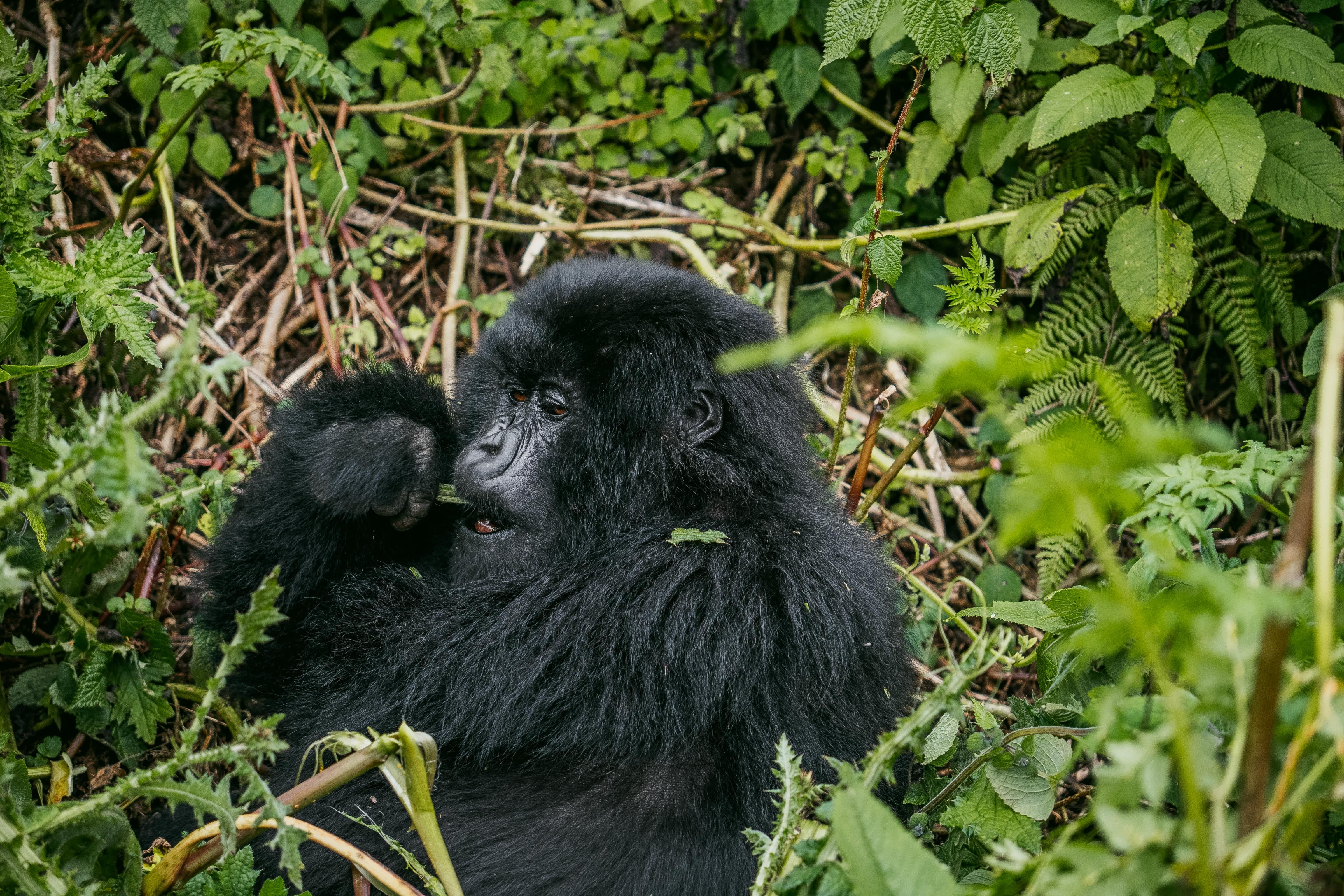
This experience provides an extraordinary opportunity to observe mountain gorillas in their natural habitat, including their feeding, grooming, resting and social interactions.
Can You Combine Gorilla Trekking in Rwanda and Uganda?
Yes. Travelling from Kigali to Bwindi makes it possible to combine gorilla trekking in Rwanda and Uganda within one safari.
This is an attractive option for travellers who want to experience the mountain gorillas in two different protected areas.
Rwanda’s Volcanoes National Park is internationally recognised for mountain gorilla trekking and is conveniently located near Musanze.
Uganda’s Bwindi Impenetrable National Park offers a different experience, with four trekking sectors and a substantial population of habituated mountain gorilla families.
One advantage of combining these destinations is that visitors can compare the different forest environments, landscapes and tourism experiences.
A combined safari can begin in Kigali, followed by gorilla trekking in Volcanoes National Park. Visitors can then travel towards Cyanika and continue into Uganda for another gorilla trekking experience in Bwindi.
Alternatively, travellers can begin with Bwindi and return to Rwanda for their final activities.
When organising such an itinerary, it is important to secure permits for both countries before confirming all other arrangements.
Gorilla permits are subject to availability, and the trekking dates should determine the order of travel.
The East African Tourist Visa may also be a convenient option for eligible travellers visiting both countries.
Exclusive Gorilla Journeys can assist with planning combined Uganda and Rwanda gorilla trekking experiences, including permits, transfers and accommodation.
Other Attractions to Visit Along the Kigali-Bwindi Route
The journey from Kigali to Bwindi is not simply a transportation exercise. It also provides opportunities to explore interesting destinations in Rwanda and Uganda.
Travellers with additional time can incorporate some of these attractions into their safari itinerary.
Kigali City
Kigali is one of East Africa’s most organised and attractive capital cities.
Visitors can explore its modern neighbourhoods, local markets, restaurants and cultural attractions before travelling to Uganda.
The Kigali Genocide Memorial is an important historical site where visitors learn about the 1994 Genocide against the Tutsi and its consequences.
A city tour can be arranged before departure for travellers who want to understand Rwanda’s history and contemporary culture.
Musanze
Musanze is an important tourism destination in northern Rwanda and a convenient stop for travellers using the Cyanika border.
The town provides access to Volcanoes National Park and several tourism experiences associated with the Virunga mountain region.
Visitors can explore local communities, enjoy mountain scenery and experience Rwanda’s rural countryside.
Those who have already visited Volcanoes National Park can use Musanze as a convenient transit point before crossing into Uganda.
Lake Bunyonyi
Lake Bunyonyi is one of Uganda’s most beautiful highland lakes.
It is located near Kabale and is an attractive destination for travellers using the Katuna route.
The lake is famous for its numerous islands, surrounding terraced hills and peaceful atmosphere.
Visitors can enjoy canoeing, boat excursions, birdwatching and relaxing at lakeside accommodation.
Lake Bunyonyi is particularly suitable for travellers who want to spend an additional night in southwestern Uganda before or after gorilla trekking.
Lake Mutanda
Lake Mutanda is another beautiful destination in southwestern Uganda.
It lies close to Kisoro and offers spectacular views of the Virunga volcanoes.
Visitors can enjoy canoeing, boat rides, nature walks and photography while appreciating the peaceful surroundings.
The lake is particularly convenient for travellers using Cyanika to reach Rushaga, Nkuringo and Mgahinga.
It can be incorporated into a gorilla trekking safari as a relaxing activity before or after exploring Bwindi.
Mgahinga Gorilla National Park
Mgahinga Gorilla National Park is another important mountain gorilla destination in southwestern Uganda.
The park forms part of the larger Virunga Conservation Area and protects mountain gorillas, golden monkeys and other wildlife.
Visitors can participate in gorilla trekking, golden monkey tracking and guided mountain hiking activities.
Its proximity to Cyanika makes it a convenient addition to an itinerary involving Kigali and southern Bwindi.
How Much Does It Cost to Travel from Kigali to Bwindi?
The cost of travelling from Kigali to Bwindi depends on the type of transportation, accommodation, gorilla permit and additional safari activities.
There is no single fixed price for the entire journey because travellers have different budgets and preferences.
Transportation Costs
Private transportation generally costs more than shared transfers or public transport.
The final price depends on the vehicle type, number of travellers, route, duration of the safari and whether the vehicle will remain available for other activities.
A private 4×4 transfer is particularly useful for visitors who want a comfortable journey and direct transportation to their lodge.
When requesting a quotation, establish whether the price includes the Rwanda-Uganda border transfer, fuel, driver accommodation, vehicle insurance and any additional transportation arrangements.
Gorilla Permit Costs
Uganda gorilla trekking permits are a major component of the safari budget.
As of November 2026, the standard Uganda gorilla trekking permit for foreign non-residents costs USD 800 per person. Foreign residents and East African citizens have different applicable rates.
The gorilla habituation experience in Uganda is a separate activity with a different permit price and longer observation opportunity.
Permit fees and categories should be confirmed with the Uganda Wildlife Authority or an authorised booking operator before payment.
It is important to remember that a gorilla permit is separate from transportation and accommodation costs.
Accommodation Costs
Bwindi offers different accommodation categories, allowing travellers to choose according to their budgets.
Budget properties provide basic accommodation and essential facilities, while midrange lodges offer additional comfort and services.
Luxury lodges provide premium accommodation, quality dining, scenic locations and additional hospitality services.
Visitors should consider the distance between their accommodation and trekking headquarters when comparing prices.
A slightly more expensive lodge located close to the trekking starting point may be more convenient than a cheaper property requiring a long early-morning transfer.
Additional Safari Expenses
Travellers should also budget for meals, drinks, tips, travel insurance, personal purchases and optional activities.
Depending on nationality and travel arrangements, visa expenses may also apply.
It is advisable to obtain a comprehensive safari quotation showing what is included and excluded before confirming the trip.
This helps avoid unexpected expenses during the journey.
A Suggested Three-Day Kigali to Bwindi Gorilla Trekking Itinerary
A three-day safari is one of the practical ways to organise a gorilla trekking experience in Uganda when arriving through Kigali.
The following itinerary is particularly suitable for visitors planning to trek in Rushaga or Nkuringo.
Day One: Kigali to Bwindi Impenetrable National Park
Your safari begins with a pickup from Kigali International Airport or your hotel in Kigali.
After meeting your driver, you travel towards Musanze and continue to the Cyanika border crossing.
You complete the immigration procedures and enter Uganda before proceeding towards Kisoro.
Depending on your trekking sector, you continue to Rushaga or Nkuringo and check into your accommodation.
The afternoon can be spent relaxing at the lodge, enjoying the surrounding scenery and preparing for the following day’s gorilla trekking adventure.
Day Two: Gorilla Trekking in Bwindi
After an early breakfast, you transfer to the designated gorilla trekking headquarters.
You attend the morning briefing, where park officials explain the trekking regulations and allocate visitors to gorilla families.
You then enter the forest accompanied by authorised guides and trackers.
The duration of the trek depends on the location of the gorillas and the terrain.
Once the gorilla family is found, you spend the permitted observation time experiencing these remarkable animals in their natural environment.
After completing the trek, you return to the lodge to relax and enjoy your evening.
Day Three: Bwindi to Kigali
After breakfast, you begin your return journey towards Kigali.
Depending on your departure schedule, you can travel through Cyanika or use the most appropriate border crossing for your itinerary.
After completing immigration formalities, you continue towards Kigali International Airport or your hotel.
Travellers with later international flights can consider a short stop in Musanze or Kigali for additional sightseeing.
This itinerary is particularly suitable for travellers with limited time, although an additional night in Bwindi or Kigali provides more flexibility and reduces the pressure of travelling on consecutive days.
For visitors trekking in Buhoma or Ruhija, the itinerary should be adjusted to use the Katuna route.
Important Tips for Travelling from Kigali to Bwindi
Planning ahead makes the journey considerably easier, particularly for international visitors crossing from Rwanda into Uganda for the first time.
Book Your Gorilla Permit Before Travelling
Gorilla trekking permits are limited, and availability can be restricted during busy travel periods.
Visitors should confirm their preferred trekking date and sector before finalising their transportation and accommodation.
Booking early is particularly important for travellers who have specific dates or want to stay at particular lodges.
Choose Accommodation Near Your Trekking Sector
Bwindi is a large forest with geographically separated trekking sectors.
A lodge in Rushaga may not be conveniently located for visitors with a Buhoma permit. Similarly, travelling between Nkuringo and Ruhija can involve considerable driving.
Always match your accommodation to your gorilla permit.
Start Your Journey Early
An early departure from Kigali provides additional time for border procedures and unexpected delays.
This is especially important for travellers using Cyanika, where border operating hours should be confirmed before departure.
Arriving at your lodge during daylight is also preferable because some roads leading to Bwindi are difficult to navigate at night.
Carry Some Local Currency
Uganda uses the Ugandan shilling, while Rwanda uses the Rwandan franc.
Travellers should carry an appropriate amount of money for personal expenses, refreshments and incidental purchases.
Major expenses such as gorilla permits and accommodation can generally be arranged in advance through the safari operator.
It is advisable to use authorised currency exchange facilities and avoid exchanging large amounts of money with unauthorised individuals.
Purchase Appropriate Travel Insurance
Travel insurance is an important consideration when organising an international gorilla trekking safari.
Visitors should consider insurance that covers medical emergencies, evacuation, trip interruption and other relevant travel risks.
Because Bwindi is situated in a remote mountainous region, accessing specialised medical facilities may require additional transportation arrangements.
Visitors should carefully review their insurance coverage before departure.
Pack for Mountain Rainforest Conditions
Although Kigali may experience favourable weather when you depart, Bwindi’s rainforest environment can be considerably different.
Rainfall can occur throughout the year, and temperatures may be cooler at higher elevations.
Pack comfortable trekking clothes, waterproof outerwear, sturdy hiking boots and other essential items for forest exploration.
A small daypack is also useful for carrying drinking water, snacks and personal necessities during the trek.
Confirm All Cross-Border Arrangements
If you are using a private vehicle, confirm whether it will cross the border with you or whether you will change vehicles after completing immigration procedures.
Where a vehicle crosses, the operator or rental company must arrange the appropriate documentation and insurance.
You should also confirm that your driver is familiar with the selected border crossing and the access roads to your accommodation.
Why Book Your Kigali to Bwindi Safari with Exclusive Gorilla Journeys?
Organising a cross-border gorilla trekking safari involves more than simply arranging transportation between two countries.
Visitors need to coordinate international arrivals, immigration procedures, gorilla permits, accommodation, vehicle arrangements and trekking schedules.
At Exclusive Gorilla Journeys, we specialise in organising gorilla trekking experiences in Uganda and Rwanda, helping visitors enjoy memorable wildlife adventures with carefully planned travel arrangements.
Our services include gorilla permit arrangements, private safari transportation, accommodation reservations and customised safari itineraries.
We understand the importance of choosing the correct border crossing according to your trekking sector. Whether you are visiting Rushaga, Nkuringo, Ruhija or Buhoma, we help organise a practical transfer from Kigali to your destination.
We also assist travellers interested in combining Uganda and Rwanda gorilla trekking experiences.
Our safari arrangements can be customised according to your travel dates, accommodation preferences, available time and budget.
Whether you are planning a short three-day gorilla trekking safari or an extended East African adventure, Exclusive Gorilla Journeys can help you organise the essential arrangements.
Book Your Kigali to Bwindi Gorilla Trekking Safari
If you are planning to travel from Kigali to Bwindi, contact Exclusive Gorilla Journeys to arrange your Uganda gorilla permit, accommodation and cross-border transportation.
Our team will help you select the most suitable trekking sector, choose the appropriate border crossing and organise a safari itinerary that makes your journey comfortable and memorable.
Frequently Asked Questions About Getting to Bwindi from Kigali
1. How long does it take to drive from Kigali to Bwindi?
The journey generally takes approximately four to seven hours, depending on the trekking sector, border crossing and road conditions. Rushaga and Nkuringo are generally reached in four to five hours through Cyanika, while Buhoma may take six to seven hours through Katuna.
2. What is the nearest border crossing from Kigali to Bwindi?
Cyanika is the most convenient border crossing for visitors heading to the southern sectors of Bwindi, particularly Rushaga and Nkuringo. Katuna is generally more suitable for visitors travelling to Ruhija and Buhoma.
3. Can I fly into Kigali and trek gorillas in Uganda?
Yes. International visitors can fly into Kigali International Airport, travel by road across the Rwanda-Uganda border and continue to Bwindi for gorilla trekking. This is one of the most convenient ways to access Uganda’s southern gorilla trekking sectors.
4. Do I need a visa to travel from Rwanda to Uganda?
Visa requirements depend on your nationality. Most visitors who require a visa need a valid Uganda tourist visa or an eligible East African Tourist Visa. Travellers should check their nationality’s requirements and obtain the necessary authorisation before departure.
5. Can I use the East African Tourist Visa when travelling from Kigali to Bwindi?
Yes. The East African Tourist Visa allows eligible international visitors to travel between Rwanda, Uganda and Kenya for tourism purposes. It is valid for 90 days and allows multiple entries into the participating countries. It must be issued by the country of first entry.
6. Is the road from Kigali to Bwindi in good condition?
The main roads in Rwanda are generally in good condition, while the Ugandan roads leading to Bwindi vary. Some sections are paved, but the final approaches to the trekking sectors can be rough, steep and unpaved. A 4×4 vehicle is recommended.
7. Can I travel from Kigali to Bwindi in one day?
Yes. Travellers can depart Kigali in the morning, cross into Uganda and reach their Bwindi accommodation on the same day. The journey is particularly convenient for visitors heading to Rushaga and Nkuringo.
8. Which Bwindi sector is closest to Kigali?
Rushaga and Ruhija are among the closest sectors by road, depending on the selected route. Rushaga is conveniently accessed through Cyanika, while Ruhija is generally accessed through Katuna.
9. Can I trek gorillas in both Rwanda and Uganda?
Yes. Visitors can organise gorilla trekking in Rwanda’s Volcanoes National Park and Uganda’s Bwindi Impenetrable National Park within one itinerary. Separate gorilla permits are required for each destination.
10. Is it safe to travel from Kigali to Bwindi?
The journey is a commonly used tourist route between Rwanda and Uganda. Visitors should use recognised border crossings, carry valid travel documents, arrange reliable transportation and follow current travel advisories. Hiring an experienced safari driver is particularly helpful when navigating the mountainous roads around Bwindi.
11. Should I stay overnight in Kigali before travelling to Bwindi?
An overnight stay is recommended if your international flight arrives late or if you want to begin the journey early the following morning. Visitors arriving early may travel directly to Bwindi, provided they have sufficient time to complete the journey and border formalities.
12. Can Exclusive Gorilla Journeys arrange transportation from Kigali to Bwindi?
Yes. Exclusive Gorilla Journeys can organise private safari transportation, Uganda gorilla permits, accommodation and customised itineraries for visitors travelling from Kigali to Bwindi.
Conclusion
Travelling from Kigali to Bwindi Impenetrable National Park is an excellent option for international visitors who want to experience Uganda’s mountain gorillas without undertaking the longer journey from Entebbe.
The Cyanika border provides convenient access to Rushaga and Nkuringo, while the Katuna crossing is generally more suitable for Buhoma and Ruhija. Both routes offer beautiful scenery and opportunities to explore the countryside of Rwanda and southwestern Uganda.
Successful planning requires choosing the correct border crossing, arranging the appropriate travel documents, securing a gorilla trekking permit and booking accommodation near the designated trekking sector.
With suitable transportation and an experienced safari operator, the journey can be comfortable and rewarding.
Exclusive Gorilla Journeys is ready to help you organise your journey from Kigali to Bwindi, ensuring that your gorilla trekking adventure in Uganda begins with the right travel arrangements.